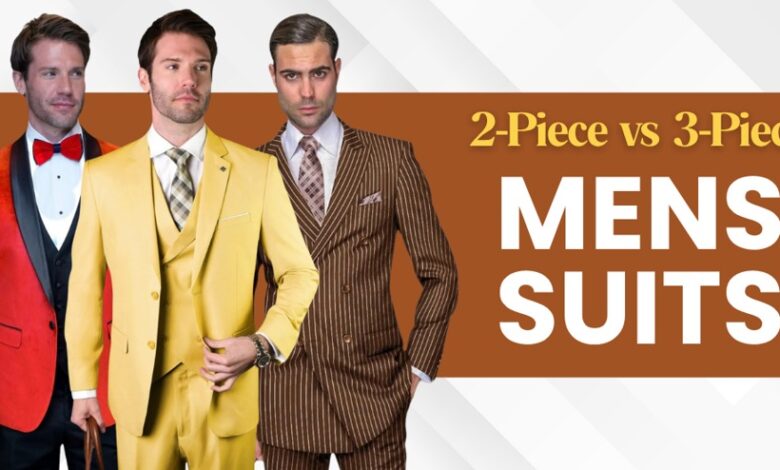
2-Piece vs 3-Piece Mens Suits: Understanding the Difference & A Complete Fit Guide

Few garments carry as much authority as a well-fitted suit. Yet when you start shopping, one question comes up almost immediately: should you go with a two-piece or a three-piece? Your choice comes down to the occasion, the weather, your body shape, and the look you want to achieve. This guide explains the key differences between the two styles, when each works best, and how to ensure your choice fits comfortably and looks polished.
What Is a 2-Piece Suit?
A two-piece suit includes a jacket and matching trousers. It is the most common option in modern wardrobes because it is versatile, easy to wear, and suitable for a wide range of settings. You can wear the full set together for a polished look, or separate the pieces and mix them with other items. The jacket can pair with chinos, while the trousers can work with a knit or a casual shirt.
Best suited for:
- Daily office wear
- Business meetings and interviews
- Weddings as a guest
- Dinners, parties, and social events
- Warm weather, since fewer layers keep you cooler
What Is a 3-Piece Suit?
A three-piece suit adds a waistcoat (vest) to the jacket and trousers. The waistcoat sits snugly over the shirt and under the jacket, creating a clean vertical line that elongates the torso and gives the outfit a sharper, more formal presence. It also lets you remove the jacket during an event and still look put together.
Best suited for:
- Weddings, especially for the groom and groomsmen
- Formal evening events
- Important presentations and court appearances
- Cooler seasons, thanks to the extra layer of warmth
- Anyone who wants a distinguished, classic appearance
Key Differences at a Glance
| Feature | 2-Piece Suit | 3-Piece Suit |
| Components | Jacket and trousers | Jacket, waistcoat, trousers |
| Formality | Business to semi-formal | Formal to black-tie adjacent |
| Warmth | Lighter | Warmer |
| Versatility | Very high | Moderate, though the waistcoat can be worn alone |
| Visual effect | Clean and modern | Structured and refined |
| Price | Generally lower | Generally higher |
Choosing Between Them
Think about the occasion. If the event calls for a strong statement, such as a wedding ceremony or a gala, the three-piece is hard to beat. For regular workdays or relaxed gatherings, a two-piece is more practical.
Consider the weather. In hot, humid regions, an extra layer can feel heavy. In cooler months, the waistcoat adds welcome warmth without the bulk of an overcoat.
Look at your build. A waistcoat can sharpen a slim frame and streamline the midsection. If you carry extra weight around the stomach, a well-fitted waistcoat can offer a smooth line, but a poorly sized one will pull at the buttons. In that case, a two-piece with a well-cut jacket may be the better pick.
Plan your wardrobe. If you can only buy one suit right now, a two-piece in navy or charcoal offers the most flexibility. As your collection grows, adding a three-piece gives you a dressier option for big moments. When you are ready to explore options, browse a range of mens suits in both styles to compare cuts, colors, and fabrics side by side.
Popular Colors and Fabrics
- Navy: The most dependable shade, suitable for nearly every occasion.
- Charcoal grey: A serious, sophisticated choice that works from boardroom to banquet.
- Black: Best reserved for evening events and formal ceremonies.
- Light grey and tan: Great for spring and summer weddings and daytime events.
- Deep green, burgundy, and brown: Fashion-forward options for those who want to stand out.
For fabrics, wool remains the gold standard because it breathes, drapes well, and resists wrinkles. Wool blends add durability, linen blends keep you cool in summer, and flannel brings a soft, warm feel for winter.
The Complete Fit Guide
Fit is what separates a good suit from a great one. Even an expensive suit looks ordinary if it does not fit well, while a modest one can look sharp when tailored correctly.
The Jacket
- Shoulders: The seam should end exactly where your shoulder ends. If it hangs over, the jacket is too large; if it pulls, it is too small.
- Chest: You should be able to button the jacket without the fabric forming an X-shaped crease.
- Length: The jacket should cover your seat. As a general guideline, the hem should fall around the middle of your hand when your arms rest naturally at your sides.
- Sleeves: The sleeves should finish at the wrist bone, leaving roughly ¼ to ½ inch of your shirt cuff visible.
- Waist: A slight taper adds shape without restricting movement.
The Waistcoat
- It should sit flat against the torso without gaping or pulling.
- The bottom edge should cover the waistband of the trousers.
- The bottom button is traditionally left undone.
- It should be snug enough to hold its shape yet allow comfortable breathing and sitting.
The Trousers
- Waist: They should sit comfortably at your natural waist without needing a tight belt.
- Rise: A mid-rise offers comfort and a flattering line for most men.
- Leg shape: Slim, straight, and tapered cuts all work, depending on your build and preference.
- Break: A slight or no break at the hem gives a modern profile, while a medium break leans classic.
- Length: The hem should rest lightly on the top of your shoes.
Understanding Different Fits
- Slim fit: Close to the body with narrower lapels and trousers. Ideal for lean builds.
- Classic fit: More room through the chest and waist, offering comfort and a traditional silhouette.
- Tailored fit: A middle ground that follows the body’s lines without clinging.
- Modern fit: Slightly roomier than slim but more contoured than classic.
If you are between sizes, choose the larger one and have it altered. A tailor can take in fabric far more easily than add it.
Styling Tips
- Pick the right shirt. White and light blue are timeless, and they allow your suit to take center stage.
- Choose ties and pocket squares thoughtfully. Coordinate colors without matching them exactly.
- Match your belt and shoes. Leather shades should align, with black for dark suits and brown for tan, navy, and green.
- Keep accessories minimal. A quality watch, simple cufflinks, or a lapel pin is plenty.
- Mind the socks. They should cover your calves and either match the trousers or add a subtle accent.
Caring for Your Suit
- Rotate your suits rather than wearing the same one on consecutive days.
- Use wide, shaped hangers to protect the shoulders.
- Brush after wearing to remove dust and lint.
- Steam out wrinkles instead of pressing directly.
- Dry clean only when necessary, since frequent cleaning wears down the fibers.
- Store in breathable garment bags, not plastic.
Conclusion
Choosing between a two-piece and a three-piece suit comes down to occasion, climate, build, and personal style. The two-piece offers everyday flexibility and a clean, modern look, while the three-piece delivers added formality, warmth, and a commanding presence. Whichever you pick, proper fit matters most: shoulders that lie flat, sleeves that end at the wrist, and trousers that fall cleanly over your shoes. Invest in good tailoring, select colors that suit your wardrobe, and care for your suit properly, and it will serve you well for years to come.