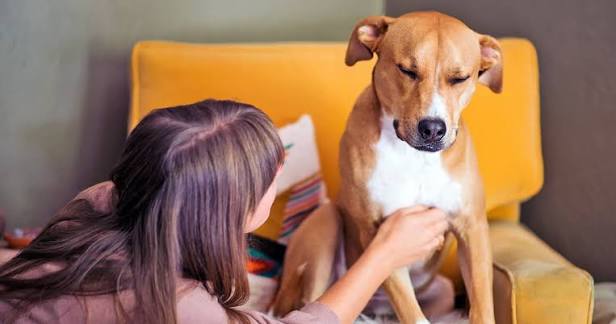

Your dog will not limp into the room and announce a 7 out of 10. She will wag anyway. She will eat anyway. That’s the part that gets owners every single time: dogs are wired to mask discomfort, so the first obvious sign is often the one you notice months late.
Here’s the deal. You don’t need a veterinary degree to catch the quiet signals. You need a baseline, a routine, and a rough sense of what’s worth a phone call. I’ve watched plenty of owners describe a “sudden” limp that, once we walked backward through the last few weeks, turned out to be a slow build nobody named.
So let’s get practical. Below you’ll find the subtle tells most people miss, a five minute weekly check you can actually stick to, and how comfort support fits in once your vet has weighed in (more on options like CBD for Dogs for Pain further down, because timing matters here).
What does a dog in pain actually look like?
Rarely dramatic. The textbook image of a yelping dog applies to sudden injury. Ongoing soreness, the kind that creeps up with age or flares with weather, shows up in behavior instead of sound.
Watch for a dog who used to launch off the sofa and now pauses. Watch for the one who takes the stairs one at a time, or swings wide around the coffee table like it owes her money. Some dogs get clingy. Others get snappy when you touch a spot they’d never have minded before. Both are communication.
According to the American Veterinary Medical Association, animals are skilled at hiding signs of illness and discomfort, which is exactly why regular observation beats waiting for obvious symptoms. That’s not a scare tactic. It’s just how their instincts work.
One more tell that surprises people: a dog who stops jumping into the car. We read that as stubbornness. It’s usually a math problem. The jump hurts, so she declines the math.
The five minute Sunday check
Pick one day a week and run the same sequence. Consistency is what turns you into a decent detector, because you’re comparing against last Sunday, not against some imagined normal.
- The treat stretch. Hold a treat low and to the side, then slightly behind her. A dog with a sore neck or back will move her feet instead of her spine.
- The slow groom. Run your hands down each leg, over the shoulders, along the spine. You’re feeling for heat, swelling, or a flinch. Stop where she tenses. Don’t push through it.
- The rise and shine. Watch her get up from a lying position. Stiff first steps that loosen after a minute are a classic pattern worth mentioning to your vet.
- The appetite read. Note any change in how eagerly she takes food. Picky isn’t a personality for most dogs. It’s information.
Write it down, even if it’s three words on your phone. Owners who track for a month walk into an appointment with a story instead of a shrug, and that story helps.
Where comfort support fits, and where it doesn’t
This is the part where I’ll be blunt. No supplement, oil, chew, or powder replaces a diagnosis. If your dog is suddenly lame, yelping, or off food for more than a day, you’re calling your vet. Full stop.
For the long, low grade stuff, the everyday stiffness and the soreness that shows up after a hard hike, owners increasingly look at support products alongside their vet’s plan. Products in this space usually pair a hemp extract with ingredients like turmeric or frankincense, and the selling point is comfort and mobility rather than a cure. If that’s a route you’re considering, bring it to your vet as a question, not an announcement. Dosage, interactions with other medications, and whether it’s appropriate at all are vet calls.
One practical note from watching people try this: start with a single change. If you introduce a new food, a new supplement, and a new harness in the same week, you’ll have no idea which one helped or which one caused the loose stool. Slow is boring and boring works.
Behavior changes that deserve a call
Some shifts aren’t for the watch list. Call your vet if your dog snaps when lifted, guards a limb, cries during normal movement, or starts panting heavily at rest. Those patterns point toward pain that needs a professional look, and the Merck Veterinary Manual is a solid reference for understanding how pain gets assessed in animals when you want to read up before the appointment.
Also worth knowing: some supplements marketed for pets are sold without the same oversight as drugs. The U.S. Food and Drug Administration has guidance on pet supplements and what claims companies can and can’t make, so it’s fair to ask a brand for lab testing and ingredient sourcing. If they can’t produce it, that tells you something.
The blanket test nobody talks about
Here’s a small trick I’ve handed to more owners than I can count. Lay a thin blanket on the floor and watch your dog settle onto it. Dogs with sore hips often circle longer than usual, or choose the blanket over the bare floor because the padding feels better. If your dog suddenly prefers soft surfaces after years of sleeping on tile, that’s a quiet vote for comfort.
Pair that with a camera on the room while you’re at work. Owners who film their dog during the day catch stiffness at its worst, right after long naps. You’ll never see that at 6 p.m. when she’s warmed up and excited to see you.
Building the routine that catches it early
Do the Sunday check. Film a short clip once a month of your dog walking away from you and toward you. Note the date on any change in appetite, sleep spot, or willingness to play. That’s it. That’s the system, and it costs you nothing.
If something’s off, you’ll have evidence instead of a feeling, and your vet can work with evidence. If nothing’s off, you’ve spent a few minutes a week learning your dog’s normal, which is the only way anyone spots abnormal fast. Keep the changes small, keep your vet in the loop, and let your dog be the one who decides whether a jump is still worth attempting.
What’s one habit your dog has quietly dropped in the last year? That’s probably your first clue, and it’s sitting right there waiting for you to notice it.