
Concrete might look tough, but it’s more vulnerable than most people realize. Left untreated, it absorbs moisture, cracks under pressure, and wears down faster than most property owners expect. That’s a costly problem for warehouses, garages, and industrial facilities that rely on their floors to hold up under constant traffic.
This is where protective coatings come into play. Rather than waiting for cracks, stains, or pitting to force an expensive replacement, more property owners are choosing to reinforce their concrete from the start. A well-applied coating doesn’t just patch up a surface — it changes how that surface performs for years to come.
This shift isn’t just about looks, either. Businesses are recognizing that a coated floor reduces maintenance costs, improves safety, and extends the life of a space that would otherwise need constant repair. The result is a smarter, more sustainable way to protect one of the most overworked surfaces in any building.
Why Untreated Concrete Doesn’t Hold Up
Concrete is porous by nature, which means it soaks up oil, water, and chemicals like a sponge. Over time, this absorption weakens the surface from within, leading to cracking, spalling, and discoloration. Add in the daily wear of foot traffic, vehicles, or heavy equipment, and it’s no surprise that untreated floors deteriorate faster than owners anticipate.
Temperature swings make this worse. Concrete expands and contracts with heat and cold, and repeated cycles create hairline fractures that grow into larger structural issues. In colder climates, moisture that seeps into these cracks can freeze and expand, accelerating the damage even further.
None of this is inevitable. A high-quality coating acts as a barrier between the concrete and the elements that break it down, whether that’s spilled chemicals in a manufacturing plant or road salt tracked into a garage all winter long.
What Makes a Coating System Actually Last
Not all coatings are created equal, and the difference often comes down to what they’re made of. Epoxy coatings are popular for their strength and chemical resistance, making them a solid choice for industrial environments. Polyurea and polyaspartic coatings, on the other hand, cure faster and offer more flexibility, which helps them resist cracking in spaces with heavy vibration or temperature shifts.
The application process matters just as much as the material. A coating applied over a poorly prepped surface will peel or bubble within months, no matter how advanced the formula is. Proper surface grinding, moisture testing, and crack repair before application are what separate a coating that lasts five years from one that lasts fifteen.
Thickness and layering also play a role. Multi-layer systems, often paired with a top-coat sealant, provide better resistance to abrasion and UV exposure than a single thin layer ever could.
Where These Coatings Make the Biggest Difference
Industrial and commercial spaces see the most dramatic benefits from concrete coatings, largely because their floors endure the heaviest use. Warehouses dealing with forklift traffic, manufacturing plants exposed to chemical spills, and food processing facilities that require constant sanitation all depend on floors that can handle daily abuse without breaking down.
Garages and automotive shops benefit in a different way. Oil stains, tire marks, and hot tire pickup are common headaches for untreated concrete, but a coated floor resists staining and cleans up in minutes rather than hours.
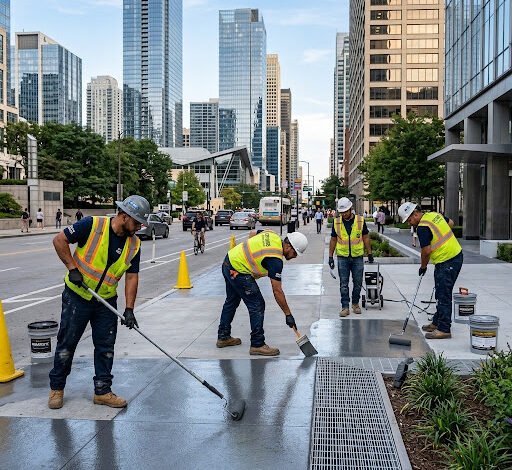
Even outdoor spaces like loading docks and walkways gain protection from coatings designed to withstand UV rays and weather exposure. In each of these cases, the coating isn’t just cosmetic — it’s a functional upgrade that reduces long-term maintenance and keeps the space safer for everyone using it.
Durability Doesn’t Have to Come at the Cost of Style
One misconception about protective coatings is that function and appearance are mutually exclusive. That hasn’t been true for a while. Modern coating systems come in a wide range of colors, finishes, and even decorative flake or metallic options that let property owners customize the look of their space while still gaining all the protective benefits.
Showrooms, retail spaces, and offices increasingly use coated concrete floors as a design feature rather than a purely practical one. A glossy, seamless finish can make a warehouse floor look as polished as a showroom, all while resisting the same wear and tear that would damage an untreated surface.
This combination of durability and design flexibility is part of why coated concrete has moved beyond strictly industrial applications and into commercial and even residential spaces.
Choosing a Coating Solution Built to Perform
Long-lasting protection that reduces maintenance costs and keeps concrete floors performing under pressure is exactly what Carbon Concrete Coatings delivers. Rather than offering a one-size-fits-all solution, the approach here focuses on matching the right coating system to the specific demands of a space, whether that’s a high-traffic warehouse, a busy auto shop, or a commercial storefront looking to combine durability with a polished finish.
Every project starts with proper surface preparation, since a coating is only as good as the foundation it’s applied to. From there, the right formulation is selected based on exposure to chemicals, foot or vehicle traffic, and environmental conditions, ensuring the finished floor holds up for years rather than months.
Property owners who invest in a quality coating system aren’t just avoiding future repairs. They’re extending the usable life of their concrete, improving safety underfoot, and often transforming the overall look of their space in the process. That’s a return on investment that pays off well beyond the initial application.