
Losing electricity during a storm isn’t just inconvenient. It can mean spoiled groceries, a flooded basement without a working sump pump, or medical equipment that suddenly goes silent. For homeowners across the region, these moments reveal just how much daily life depends on a steady power supply.
That’s where a reliable generator system comes in. Rather than waiting out an outage in the dark, homeowners with a properly installed and maintained generator can keep their lights on, their refrigerators running, and their families comfortable no matter what’s happening outside. But not all generator installations are created equal, and the difference between a system that works flawlessly and one that fails at the worst possible moment often comes down to who installed it.
This post walks through why generator readiness matters, what a professional installation actually involves, and how ongoing maintenance keeps a system dependable for years to come.
Why Every Home Needs a Backup Power Plan
Power outages are becoming less predictable, not more. Severe weather events, aging grid infrastructure, and rising electricity demand all contribute to more frequent and longer-lasting outages in communities that once rarely experienced them.
A backup generator isn’t a luxury reserved for extreme climates anymore. It’s quickly becoming a standard part of responsible homeownership, similar to having a fire extinguisher or a security system. Consider what’s typically at stake during an extended outage:
- Food safety: Refrigerators and freezers can only keep food safe for a few hours without power.
- Home safety: Sump pumps, security systems, and HVAC systems all rely on consistent electricity.
- Medical needs: Many households depend on powered medical devices that simply can’t go offline.
- Comfort and convenience: Heating and cooling systems, water heaters, and everyday appliances all stop functioning without power.
A well-installed generator addresses each of these concerns automatically, often switching on within seconds of an outage without any manual intervention required.
What Separates a Quality Generator Installation From a Risky One
Installing a generator involves far more than placing a unit in the backyard and connecting a few wires. It requires careful electrical planning, code compliance, and an understanding of how a home’s entire electrical system works together.
Proper Sizing Matters More Than Most Homeowners Realize
One of the most common mistakes in generator installation is choosing a unit that’s either too small or unnecessarily large for the home’s needs. A generator that’s undersized may fail to power essential systems during an outage, while an oversized unit wastes money on fuel and upfront costs. A thorough load assessment, factoring in appliances, HVAC systems, and any specialty equipment, ensures the generator matches the home’s actual demands.
Transfer Switches Keep Everyone Safe
A transfer switch automatically shifts a home’s power source from the grid to the generator during an outage, and back again once power is restored. Without a properly installed transfer switch, there’s a serious risk of backfeeding electricity into the grid, which can endanger utility workers and violate local electrical codes. This is a step that should never be handled without licensed electrical expertise.
Fuel Type and Placement Affect Long-Term Performance
Whether a generator runs on natural gas, propane, or diesel affects everything from runtime to maintenance schedules. Placement also matters for safety and performance, generators need proper clearance from windows, doors, and combustible materials, along with protection from flooding and debris.
How Regular Maintenance Extends the Life of a Generator System
Even the best-installed generator won’t perform reliably without regular upkeep. Like any mechanical system, generators need routine attention to stay ready for the moment they’re needed most.
Standard maintenance typically includes:
- Oil and filter changes to keep the engine running smoothly.
- Battery testing since a dead battery is one of the most common reasons generators fail to start.
- Load testing to confirm the unit can actually handle the home’s electrical demand under real conditions.
- Inspection of fuel lines and connections to catch leaks or wear before they become failures.
Skipping maintenance doesn’t just risk a generator’s performance. It can void manufacturer warranties and lead to costly repairs down the line. A generator that hasn’t been serviced in years is essentially a gamble, and it’s one most homeowners don’t realize they’re taking until the power actually goes out.
Choosing a Team That Understands Both Generators and Home Electrical Systems
Generator work sits at the intersection of two specialties: generator mechanics and residential electrical systems. A technician who understands only one half of that equation can leave homeowners with a system that runs but isn’t properly integrated, or one that’s wired correctly but poorly maintained.
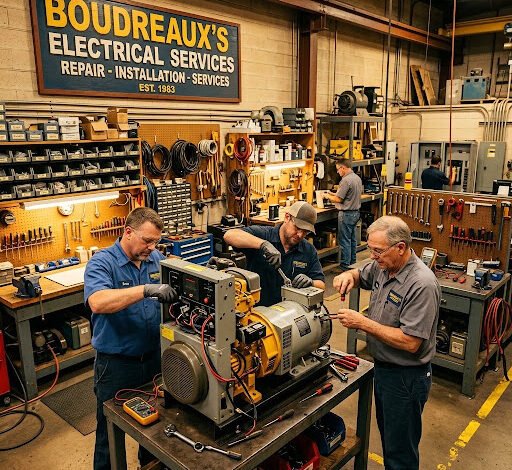
Boudreaux’s Electrical Services brings together licensed electrical expertise and dedicated generator experience to give homeowners confidence that their entire backup power system, from the switch and panel to the generator itself, is built to perform when it matters most. With a focus on proper installation, code-compliant wiring, and consistent maintenance support, the team helps homeowners move from worrying about the next outage to feeling genuinely prepared for it.
Ready for Peace of Mind During the Next Outage?
Power outages will keep happening. What’s within a homeowner’s control is how prepared their home is when one strikes. A properly sized, correctly installed, and well-maintained generator system turns a stressful situation into a minor inconvenience.
If the next storm, grid failure, or unexpected outage shouldn’t mean sitting in the dark, now is the time to have a generator system evaluated, installed, or serviced by a team that treats it as more than just a side offering. Reach out today to schedule a consultation and take the first step toward a home that stays powered no matter what.