Why Proper Duct Sealing Matters for Energy Efficiency, Consistent Temperatures, and Better Heating and Cooling Results

Heating and cooling systems play an important role in maintaining comfortable indoor environments throughout the year. However, the performance of an HVAC system depends on more than the condition of the heating or cooling equipment itself. The ductwork that carries conditioned air throughout a building also needs to remain properly connected and sealed. When ducts develop gaps, cracks, loose joints, or damaged sections, conditioned air can escape before reaching its intended destination. This can contribute to uneven temperatures, unnecessary energy use, and reduced system performance. Duct sealing is a practical way to address many of these problems and help improve the overall efficiency of an existing air distribution system.
Understanding the Purpose of Ductwork
Ductwork serves as the pathway through which conditioned air travels from HVAC equipment to individual rooms and other occupied areas. Supply ducts deliver heated or cooled air, while return ducts carry indoor air back toward the equipment for another conditioning cycle. For this process to work efficiently, air should travel through the intended pathways rather than escaping through openings or poorly connected joints. Duct sealing can help maintain the integrity of these pathways by addressing accessible leaks and weak connections. Understanding the purpose of ductwork makes it easier to recognize why its condition can influence comfort, efficiency, and overall HVAC operation.
What Causes Duct Leaks?
Duct leaks can develop gradually as materials age and connections experience repeated vibration, temperature changes, and movement. Sealants may deteriorate, fasteners can loosen, and joints may separate slightly over time. Physical damage can also occur when ductwork is accessed during repairs, renovations, or other building projects. Some duct systems may have been poorly sealed during their original installation, leaving gaps that become more noticeable as the system ages. Duct sealing can address many of these accessible openings, although the correct repair approach depends on the type of ductwork, the location of the leak, and the severity of the damage.
Recognizing Signs of Duct Problems
Not every duct leak is immediately visible, but certain symptoms can indicate that an inspection may be useful. Rooms that remain noticeably warmer or cooler than surrounding spaces can sometimes indicate airflow problems. Weak airflow from certain vents, unusual whistling noises, excessive dust near duct connections, or HVAC equipment that seems to operate for unusually long periods may also deserve attention. Duct sealing may help when these symptoms are caused by leakage, but similar problems can result from blocked filters, restricted vents, poor insulation, equipment issues, or system design. A professional evaluation can help determine whether duct leakage is actually contributing to the problem.
The Connection Between Ducts and Energy Efficiency
An HVAC system uses energy to heat or cool air before distributing it throughout a building. When conditioned air escapes through duct leaks, some of the energy used to condition that air does not provide the intended benefit. The system may need to operate longer to maintain the desired indoor temperature. Duct sealing can reduce this unwanted air loss when leakage is a significant contributor to the problem. The amount of improvement depends on factors such as the size and location of the leaks, duct design, insulation, equipment condition, and overall system performance. Sealing ducts should therefore be considered as one part of a broader efficiency strategy.
Supporting More Consistent Indoor Temperatures
Uneven temperatures can make certain areas of a building uncomfortable even when the thermostat indicates that the desired temperature has been reached. If supply ducts leak substantially, some rooms may receive less conditioned air than intended. Duct sealing can help more of the air produced by the HVAC system reach the rooms connected to the affected ductwork. This may contribute to more consistent temperatures and better airflow distribution. However, temperature differences can also result from poor insulation, blocked registers, inadequate system design, oversized or undersized equipment, and other factors. Addressing duct leakage is most useful when it is confirmed as part of the overall problem.
Inspecting Supply Ducts
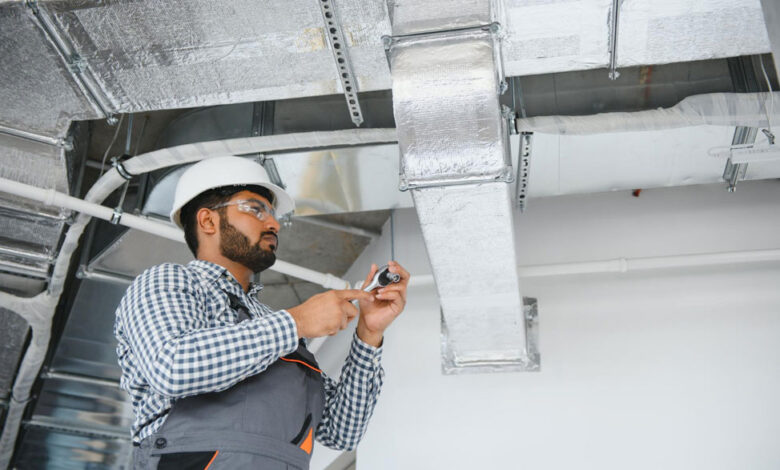
Supply ducts carry conditioned air toward occupied areas, making their condition particularly important. During an inspection, technicians may examine joints, seams, transitions, connections, and areas where ducts pass through walls or ceilings. Visible gaps and damaged sections may provide evidence of leakage, while some leaks may require diagnostic testing to locate. Duct sealing should focus on actual leakage points rather than applying sealant indiscriminately. Proper surface preparation can also affect the durability of a repair. An inspection can determine whether individual connections need sealing, reinforcement, repair, or complete replacement.
Paying Attention to Return Ducts
Return ductwork is just as important as supply ductwork because it brings air back to the HVAC equipment. If return ducts leak, they may draw air from surrounding spaces that are not intended to supply the system. This can be particularly important when return ducts are located in attics, crawl spaces, garages, basements, or other areas outside the main conditioned environment. Duct sealing can help reduce unwanted air movement through these openings. Maintaining properly connected return ducts can also support more balanced HVAC operation. A complete inspection should therefore include both supply and return pathways rather than focusing on supply vents alone.
Ductwork in Unconditioned Spaces
Ducts located outside conditioned areas may experience greater consequences from leakage because the surrounding environment can have significantly different temperatures. A supply duct passing through a hot or cold area may lose some of its effectiveness if air escapes before reaching the intended room. Duct sealing can reduce leakage at joints and seams, while suitable insulation can help control heat transfer through the duct surface. These two measures address different concerns and may both be appropriate depending on the system. Evaluating the condition of ductwork in unconditioned spaces can identify opportunities to improve overall air distribution.
Choosing Appropriate Sealing Materials
Different duct systems may require different repair materials. Depending on the application, technicians may use approved duct sealants, mastic, compatible tapes, mechanical fasteners, or replacement components. Duct sealing materials should be appropriate for the duct surface and operating conditions. Ordinary household tape is not necessarily suitable for permanent HVAC duct repairs because it may deteriorate under certain temperature or environmental conditions. Before applying any sealing product, the affected surface should generally be accessible and properly prepared. Selecting the correct material and applying it according to the manufacturer’s requirements can improve the reliability of the repair.
Why Surface Preparation Matters
A sealing material can only perform properly when it bonds effectively to the surface being repaired. Dust, grease, moisture, loose debris, or deteriorated material can interfere with adhesion and reduce the durability of a repair. Duct sealing should therefore include appropriate preparation of the affected area before the sealant or other repair material is applied. Severely damaged duct sections may need to be repaired or replaced instead of simply covered with sealant. Taking the time to prepare surfaces properly can help prevent premature failure and reduce the need for repeated repairs.
Repairing Damaged Duct Sections
Some duct problems extend beyond small gaps or seams. Ductwork may become crushed, torn, disconnected, corroded, or structurally weakened. In these situations, applying sealant over the damaged area may not provide a lasting solution. The affected section may need to be repaired, reinforced, or replaced before the connections are sealed. Duct sealing works best when the underlying ductwork is structurally sound. A professional technician can assess the extent of damage and determine whether a targeted repair or replacement is more appropriate. Addressing serious damage properly can improve both airflow and the long-term reliability of the system.
Improving Airflow Through Better Duct Integrity
Proper airflow depends on more than the HVAC equipment’s ability to produce conditioned air. The distribution system must also deliver that air effectively. Large leaks can reduce the amount of air reaching certain areas and may contribute to pressure imbalances within the system. Duct sealing can help preserve airflow by reducing unwanted openings throughout the duct network. Improved duct integrity may also make it easier for the system to deliver air consistently. If airflow remains weak after duct repairs, other causes such as blocked filters, closed dampers, restrictions, or equipment problems should be investigated.
Indoor Air Quality Considerations
Duct leakage can sometimes affect indoor air quality, particularly when return duct openings are located in dusty or contaminated areas. A return leak may allow unwanted particles or air from surrounding spaces to enter the HVAC system. Supply leaks can also release conditioned air into areas where it is not intended to go. Duct sealing can reduce these unintended exchanges when leaks are properly identified and repaired. However, sealing ducts does not replace other indoor air quality practices. Regular filter replacement, humidity management, equipment maintenance, and appropriate cleaning remain important parts of maintaining healthier indoor conditions.
The Relationship Between Sealing and Insulation
Duct sealing and duct insulation are related but perform different functions. Sealing addresses unwanted air movement through openings, joints, and seams. Insulation helps slow heat transfer between the air inside the duct and the surrounding environment. A duct can have adequate insulation and still leak conditioned air if its connections are not properly sealed. Similarly, a tightly sealed duct can still experience heat gain or heat loss when insulation is inadequate in a location where insulation is needed. A comprehensive inspection can determine whether the system would benefit from improvements to sealing, insulation, or both.
Testing for Duct Leakage
Visible inspection is useful, but some leaks are too small or inaccessible to identify easily. Depending on the system and project requirements, professionals may use specialized testing methods to evaluate duct leakage and airflow. Testing can help establish the condition of the system before repairs and provide information about whether the work produced meaningful improvements afterward. Duct sealing can be more effective when repairs are guided by testing rather than based solely on visible defects. For larger systems, testing may also help prioritize repairs by identifying sections with significant leakage.
Benefits of Professional Evaluation
A professional HVAC technician can evaluate ductwork as part of the entire heating and cooling system. This is useful because symptoms such as uneven temperatures, high energy use, or weak airflow can have several possible causes. Duct sealing may be beneficial if leakage is identified, but other issues may need attention at the same time. A technician can inspect supply and return ducts, evaluate accessible connections, check insulation, and identify damaged areas. A complete evaluation helps ensure that repair work addresses the actual cause of the problem rather than treating only the most obvious symptom.
Maintaining Ductwork After Repairs
Ductwork can change over time even after repairs have been completed. Building movement, vibration, temperature changes, remodeling, pests, and aging materials can create new weaknesses. Periodic inspections can identify developing problems before they become extensive. Duct sealing may need to be performed again in areas where new leaks appear or where additional duct sections are installed. Property owners should also keep vents unobstructed and maintain HVAC filters according to the equipment manufacturer’s recommendations. Regular system maintenance can support good airflow and help protect the condition of the duct network.
Combining Duct Repairs With HVAC Maintenance
Ductwork should be considered part of the complete HVAC system rather than an isolated component. Equipment that is dirty, poorly maintained, incorrectly sized, or experiencing mechanical problems may continue to perform poorly even after duct leaks are repaired. Duct sealing can be combined with routine HVAC inspections, filter replacement, coil maintenance, airflow checks, and other appropriate service. Looking at the system as a whole helps identify the factors that affect performance. Coordinated maintenance may also reduce the likelihood that property owners spend money addressing a duct issue while another major HVAC problem remains unresolved.
Planning a Duct Sealing Project
Before beginning repairs, property owners should understand what areas of the duct system will be inspected and what type of work may be required. A professional can identify accessible leakage points, damaged sections, insulation concerns, and areas where replacement may be more appropriate. Duct sealing should be prioritized according to the location and severity of leaks. It is also useful to discuss repair materials, access requirements, testing, and expected results. A clear plan helps prevent unnecessary work and allows property owners to understand what the project is intended to accomplish.
Long-Term Advantages of Properly Maintained Ductwork
Well-maintained ductwork can support more predictable airflow and help an HVAC system deliver conditioned air to its intended destinations. Duct sealing can reduce unnecessary leakage and may improve the effectiveness of a properly functioning system. Better duct integrity can also contribute to more consistent indoor temperatures when leakage was a significant cause of uneven airflow. The exact benefits vary depending on the building, duct design, equipment, insulation, and existing leakage level. Even when energy improvements are modest, maintaining ductwork can still be valuable as part of responsible HVAC maintenance.
Conclusion
The condition of an HVAC system’s ductwork can have a meaningful effect on energy efficiency, airflow, and indoor comfort. Gaps, loose connections, damaged sections, and deteriorated seals can allow conditioned air to escape before it reaches the areas where it is needed. Duct sealing provides an effective approach for addressing many accessible leakage points when appropriate materials and repair methods are used. A thorough evaluation should consider supply and return ducts, insulation, damaged components, and ductwork located in unconditioned areas. Combining duct repairs with regular HVAC maintenance and appropriate testing can provide a more complete approach to system performance. By maintaining duct integrity and addressing leaks when they are discovered, property owners can support more consistent temperatures, better air distribution, and efficient operation of their heating and cooling systems.