Designing Better Play Spaces: A Complete Guide to Creative, Safe, and Engaging Playgrounds

Playgrounds are much more than collections of swings, slides, climbing structures, and colorful surfaces. A thoughtfully planned play space can encourage children to move, explore, socialize, imagine, and develop confidence through everyday play. This is why custom playground design has become an important approach for creating environments that respond to the needs of the children who will actually use them. Rather than relying on a standard arrangement of equipment, a customized playground can combine different play experiences into one cohesive environment while making better use of the available space.
A successful playground begins with an understanding of how children interact with their surroundings. Young children are naturally curious, and they learn by touching, climbing, balancing, running, jumping, hiding, and experimenting. A well-designed play area gives them opportunities to perform these activities at different levels of difficulty. It can also encourage children to play together, communicate with one another, and develop social skills naturally. When the design is carefully considered, the playground becomes an environment for physical activity, creativity, learning, and social development rather than simply a place filled with equipment.
Understanding the Purpose of Playground Design
The first step in creating a successful playground is determining what the space is expected to achieve. Different playgrounds serve different groups and purposes, so there is no universal design that works perfectly for every situation. A play area intended for toddlers may need low platforms, gentle climbing features, sensory elements, and easy-to-supervise layouts. A space intended for older children may require more challenging climbing structures, balancing activities, interactive components, and opportunities for adventurous play.
Purpose should influence every major design decision. The designer needs to consider the expected age range, the number of children who may use the playground, the available space, the desired types of activity, accessibility requirements, supervision needs, and long-term maintenance. These considerations help transform an empty area into a functional environment.
A strong design also considers how children move through the space. Equipment should not be positioned randomly. Instead, pathways, activity zones, open areas, and quiet spaces can be arranged so that children can move naturally from one experience to another. This creates a playground that feels organized without restricting children’s freedom to explore.
Creating a Variety of Play Experiences
Children do not all play in the same way. Some enjoy climbing as high as possible, while others prefer imaginative games, sensory activities, or quieter forms of exploration. For this reason, variety is one of the most valuable principles in playground planning.
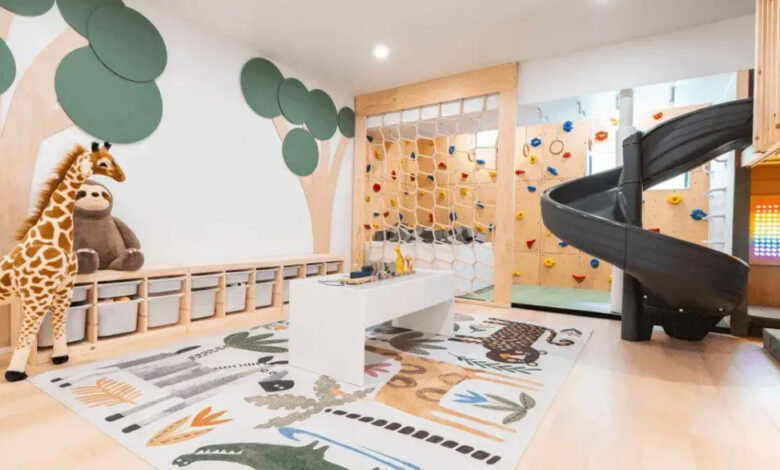
A balanced play area can include physical challenges such as climbing walls, overhead structures, slides, balance beams, and stepping elements. It can also incorporate imaginative features such as playhouses, tunnels, themed structures, pretend shops, or interactive panels. Sensory components can provide opportunities to explore different textures, sounds, colors, movements, and patterns.
Variety also helps children return to the same playground repeatedly without becoming bored. A structure that offers several ways to interact with it can remain interesting for much longer than equipment designed for only one type of activity. For example, a climbing structure might include ramps, ladders, nets, platforms, and tunnels. Children can choose different routes depending on their abilities and confidence levels.
This approach also supports different developmental stages. A younger child may use a low climbing element to practice balance, while an older child may challenge themselves with a more difficult route. The same environment can therefore accommodate a broad range of users when its components are selected carefully.
The Importance of Safety in Every Design Decision
Safety should be integrated into the design process from the beginning rather than added as an afterthought. A visually attractive playground is not successful if children cannot use it safely. Designers need to consider fall zones, equipment spacing, structural stability, surface materials, access points, visibility, and potential collision areas.
The layout should provide sufficient clearance around moving equipment such as swings. Slides and climbing structures should have appropriate access and exit areas. Pathways should be arranged to reduce unnecessary conflicts between children who are running and those who are using stationary equipment.
Playground surfaces are equally important. Appropriate impact-absorbing surfaces can help reduce the severity of injuries associated with falls. The right material depends on factors such as equipment height, maintenance requirements, drainage, climate, and expected usage. Whatever surface is selected, it should be installed and maintained according to applicable safety standards.
Regular inspections are also essential. Even high-quality equipment can experience wear over time. Fasteners may loosen, surfaces can deteriorate, and materials can become damaged through weather and frequent use. A playground maintenance program should therefore include routine inspections, cleaning, repairs, and replacement of worn components.
Designing for Different Abilities
Inclusive playgrounds allow children with different physical, sensory, and developmental abilities to participate in play together. Accessibility should be considered throughout the entire design instead of being limited to adding one accessible, while ramps and transfer systems can help children reach elevated play components. Ground-level activities can piece of equipment.
Accessible pathways can connect different areas of the playground, while ramps and transfer systems can help children reach elevated play components. Ground-level activities can provide meaningful alternatives for children who may not be able to access every elevated structure.
Inclusive design can also benefit caregivers and families. Seating areas, clear sightlines, accessible pathways, and convenient entrances make the environment easier for everyone to use. Whenory needs should also be considered. Some children may benefit from quiet spaces where they can take a break from highly stimulating activity. Others may enjoy tactile panels, musical elements, textured surfaces, or interactive features. Providing different levels of stimulation gives children greater control over how they accessibility is thoughtfully integrated, the playground becomes a shared space rather than an environment that separates children based on ability.
Sensory needs should also be considered. Some children may benefit from quiet spaces where they can take a break from highly stimulating activity. Others may enjoy tactile panels, musical elements, textured surfaces, or interactive features. Providing different levels of stimulation gives children greater control over how they experience the environment.
Making the Most of Available Space
Limited space does not necessarily prevent the creation of an engaging playground. Effective planning can help designers make use of both horizontal and vertical dimensions. Multi-level structures can provide climbing, sliding, balancing, and imaginative activities within a relatively compact footprint.
However, maximizing space should never mean overcrowding the playground. Children need room to move, and equipment needs adequate safety clearances. A smaller number of thoughtfully selected elements can sometimes provide a better experience than filling every available area with equipment.
Designers can divide the space into activity zones. One section might focus on activeaping can also help define different parts of the playground. Trees, planting areas, shade structures, and natural features can create visual boundaries without making the environment feel enclosed. Natural elements can contribute movement, another on imaginative play, and another on sensory or quiet activities. Open areas can provide flexibility for running games, group activities, and informal play.
Landscaping can also help define different parts of the playground. Trees, planting areas, shade structures, and natural features can create visual boundaries without making the environment feel enclosed. Natural elements can contribute to the atmosphere of the space while providing additional opportunities for exploration.
Encouraging Im. In fact, some of the most valuable playground features are those that can be interpreted in different ways. A simple, imaginative and Creative Play
A playground does not need to prescribe exactly how children should play. In fact, some of the most valuable playground features are those that can be interpreted in different ways. A simple platform might become a castle, spaceship, mountain, shop, or stage depending on the children’s imagination.
This flexibility encourages children to create their own games rather than simply following predetermined activities. Imaginative play can involve storytelling, role-playing, cooperation, negotiation, and problem-solving. Children learn to establish rules, communicate ideas, and adapt when other children introduce new ideas.
Design elements such as tunnels, small houses, bridges, open platforms, observation points, and interactive panels can provide a foundation for imaginative activities. The key is to create enough structure to inspire play while leaving room for, but they should be selected carefully. A design inspired by nature, exploration, transportation, animals, or fantasy can create a distinctive visual identity while allowing children to decide what the structure represents.
Themes can also be incorporated into playgrounds, but they should be selected carefully. A design inspired by nature, exploration, transportation, animals, or fantasy can create a distinctive visual identity while still supporting multiple types of play.
Using Color, Texture, and Form Effectively
Visual design has a significant influence on how a playground feels. Color can make a space appear energetic, welcoming, calm, or playful. However, using too much competition adds another dimension. Different surfaces can encourage children to touch, walk, climb, and explore. Smooth materials can contrast with textured colors can make the environment visually overwhelming. A coordinated palette can create a more cohesive appearance while still making individual play elements easy to recognize.
Texture adds another dimension. Different surfaces can encourage children to touch, walk, climb, and explore. Smooth materials can contrast with textured panels, natural surfaces, rubberized areas, or wooden components. These differences can create sensory experiences without requiring complicated technology.
Shapes and forms can also influence children’s interaction with the environment. Curved structures may create a softer visual appearance, while geometric forms can produce a more modern aesthetic. The most effective choice depends on the overall concept and the intended play experiences.
Good design balances appearance with function. Decorative elements should not interfere with visibility, accessibility, safety, or maintenance. Every visual feature should contribute to the overall experience rather than simply filling empty space.
Incorporating Nature Into Play Areas
Natural elements can make playgrounds feel more inviting and varied. Trees can provide shade, while planting areas can introduce changes in color and texture throughout the year. Logs, boulders, timber features, sand, and other natural materials can create opportunities for open-ended exploration when incorporated safely.
Nature-based play can also help children observe seasonal changes and develop curiosity about their surroundings. A planting area, for example, can become an informal learning feature where children observe leaves, flowers, insects, and other natural processes.
Natural design does not mean abandoning manufactured equipment. Instead, natural features can be combined with traditional play structures to create a more diverse environment. The result can be a playground that supports both structured physical activity and spontaneous exploration.
Considering Supervision and Visibility
A playground should be designed so caregivers and supervisors can easily observe children. Poor visibility can create unnecessary challenges, particularly when the play area contains multiple structures or enclosed spaces.
Clear sightlines are especially important around entrances, exits, climbing areas, and other high-activity zones. Tall structures and dense landscaping should be positioned carefully so that they do not create hidden areas that are difficult to monitor.
Seating can be placed strategically around the playground to provide comfortable observation points. Shade is also important because caregivers are more likely to remain near the play area when seating is comfortable and protected from harsh weather conditions.
Supervision-friendly design benefits children as well. When adults can easily understand the layout, they can respond more quickly when a child needs assistance or when an unexpected situation occurs.
Choosing Materials for Durability and Maintenance
Playgrounds are exposed to constant use and changing environmental conditions, so materials need to be selected for durability. Equipment may experience rain, sunlight, temperature changes, dirt, and repeated physical stress. Choosing appropriate materials can require protective coatings to reduce corrosion. Plastic components should be suitable for outdoor conditions, while timber requires appropriate treatment and maintenance. Fast maintenance requirements and extend the useful life of the playground.
Metal components may require protective coatings to reduce corrosion. Plastic components should be suitable for outdoor conditions, while timber requires appropriate treatment and maintenance. Fasteners and connecting components should be designed for playground applications and inspected regularly.
Maintenance should be considered during the design stage. Components that are difficult to access may become challenging to repair. Similarly, complicated surfaces may require more frequent cleaning. A practical design considers not only how they can remain engaging as their abilities change. This can be achieved by incorporating a playground will look on its opening day but also how it will perform years later.
Building a Playground That Grows With Children
Children develop quickly, so a playground should offer challenges that can remain engaging as their abilities change. This can be achieved by incorporating different difficulty levels into the same environment.
Low-level activities can provide confidence-building experiences for younger children or beginners. More advanced routes can challenge older or more experienced users. This creates a natural progression in which children can gradually move from simple activities to more demanding ones.
Adjustable or modular elements may also provide flexibility over time. If the needs of the user group change, certain components can potentially be replaced or rearranged without rebuilding the entire playground. This can make the original investment more adaptable.
A playground that grows with its users can remain valuable for a longer period. Instead of designing solely for one age group, planners can consider how different users will interact with the environment. A successful playground does not happen by accident. The design process should begin with research and consultation. Understanding the intended users, available space, budget, safety requirements, maintenance expectations, and desired activities can evaluate circulation patterns, activity zones, accessibility, visibility, and aesthetics requirements and long-term operation. Drainage, ground preparation, utility locations, shade, seating, fencing, entrances, and maintenance access are addressed before construction, the fewer unexpected problems are likely to emerge later. A thoughtful design process also makes it easier to balance a creative or educational environment. It provides children with a place to exercise, socialize, explore, and develop independence. The benefits can extend beyond physical activity because play is also at different stages of development.
Planning the Design Process
A successful playground does not happen by accident. The design process should begin with research and consultation. Understanding the intended users, available space, budget, safety requirements, maintenance expectations, and desired activities provides a strong foundation.
Concept development can then explore different layouts and combinations of equipment. Designers can evaluate circulation patterns, activity zones, accessibility, visibility, and aesthetics before the final configuration is selected.
Detailed planning should also consider installation requirements and long-term operation. Drainage, ground preparation, utility locations, shade, seating, fencing, entrances, and maintenance access can all affect the final result.
The more carefully these factors are addressed before construction, the fewer unexpected problems are likely to emerge later. A thoughtful design process also makes it easier to balance creative ambitions with practical requirements.
The Long-Term Value of Thoughtful Playground Design
A well-planned playground can become an important part of a community or educational environment. It provides children with a place to exercise, socialize, explore, and develop independence. The benefits can extend beyond physical activity because play also supports communication, creativity, decision-making, and emotional development.
The value of a playground should therefore not be measured solely by the number of pieces of equipment it contains. A smaller, carefully planned space can offer a richer experience than a larger area with poorly coordinated elements.
The strongest custom playground design approaches combine safety, accessibility, creativity, durability, and developmental value. They recognize that children need different types of experiences and that successful play environments should encourage both active and imaginative play. By considering these elements together, designers can create spaces that are enjoyable from the first visit and remain useful for years.
Conclusion
Creating an effective playground requires much more than selecting attractive equipment. It involves understanding how children play, how they move through space, how they interact with one another, and what they need at different stages of development. Safety, accessibility, visibility, durability, sensory variety, imaginative opportunities, and maintenance all need to work together within one cohesive concept.
A thoughtfully developed custom playground design can transform an ordinary outdoor area into an engaging environment where children can challenge themselves, develop physical skills, build friendships, and explore their creativity. The most successful playgrounds are not simply collections of equipment; they are carefully planned spaces that give children opportunities to decide how they want to play.
When design decisions are made with both immediate enjoyment and long-term value in mind, a playground can become a lasting destination for active learning and discovery. Whether the space is large or compact, the goal remains the same: create an environment that is safe, inclusive, stimulating, durable, and flexible enough to support the many different ways children naturally play.