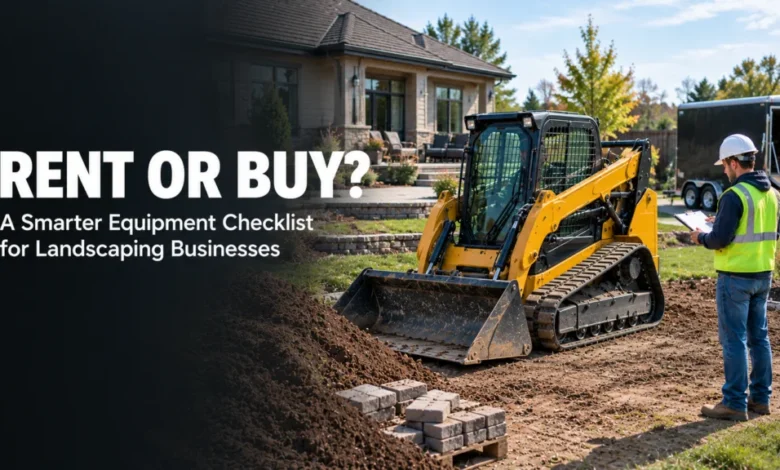

Landscaping businesses often need compact equipment to move soil, spread gravel, clear garden waste, and prepare outdoor spaces. A mini track loader can help with these jobs, but purchasing one is a bigger commitment than renting. The right decision depends on how often you use the machine, the type of projects you handle, and your business budget.
Choosing the right mini track loader depends on your workload, site conditions, and budget. Explore the available models and consider how often you will use the equipment. Comparing rental fees with the cost of ownership can help you make a sensible investment without putting unnecessary pressure on your business finances.
1. Review Your Regular Workload
Start by looking at the jobs your landscaping business completes throughout the year. Do you regularly move soil, transport mulch, clear debris, or prepare ground for new lawns? Or do you only need compact equipment for a few large projects each season?
If your team uses a loader on most working days, buying may make sense over time. Regular use can make ownership more practical, especially when the machine supports the services your business provides.
However, if demand changes with the season or your projects rarely require a loader, renting may be the better choice. It lets you access equipment when needed without taking on the ongoing responsibilities of ownership.
2. Compare Renting and Buying Costs
The rental rate or purchase price is only one part of the total cost. Landscaping businesses should consider transport, maintenance, storage, insurance, and any attachments required for the work.
Use this checklist to compare your options:
| Cost or Factor | Renting | Buying |
| Initial expense | Usually lower, with payment based on the rental agreement | Higher upfront cost or financing commitment |
| Regular use | Can become expensive if rentals are frequent | May offer better long-term value with frequent use |
| Maintenance | Responsibilities depend on the rental agreement | Owner is generally responsible for maintenance |
| Storage | Usually not needed between rental periods | Requires suitable storage space |
| Equipment availability | Depends on rental availability and booking | Machine is available when maintained and ready |
| Attachments | Must be checked with the rental provider | Can be purchased if compatible and useful |
| Flexibility | Easier to choose different equipment for separate jobs | Investment is tied to the machine you own |
Estimate how many days you expect to use the machine each month. Then compare the likely annual rental cost with the total cost of ownership. Include financing, repairs, maintenance, and resale value where relevant rather than comparing rental fees with the purchase price alone.
3. Check the Machine’s Suitability
Not every compact loader will suit every landscaping job. Consider the size of your typical work sites, the amount of material you need to move, and the ground conditions your team encounters.
A machine that works well on an open commercial property may not be suitable for a small residential garden with a narrow gate. Measure access points and check the loader’s dimensions before arranging a rental or purchase.
Track loaders can be useful on landscaping projects where ground conditions and access matter. However, tracks do not remove every risk on soft or uneven surfaces. The operator must still consider stability, ground pressure, slopes, and safe operating limits.
4. Consider Attachments and Daily Tasks
Attachments can affect how useful a mini track loader is for your business. Depending on the model and compatibility, a loader may support tools for moving materials, grading, or clearing vegetation.
Before committing, list the tasks you want the machine to perform. Then confirm that the required attachments are available and compatible with the specific model. Check mounting requirements, hydraulic connections, and operating specifications where applicable.
If you rent, ask whether the rental package includes the attachments you need and whether additional charges apply. If you buy, consider which attachments will be used regularly instead of paying for tools that may rarely leave the storage area.
5. Think About Maintenance and Business Growth
Owning equipment means planning for routine servicing, inspections, repairs, and safe storage. A breakdown during a busy landscaping season can affect schedules and customer commitments, so maintenance should be part of your operating budget.
Renting can reduce some ownership responsibilities, although you should still review the rental agreement and understand how damage, breakdowns, and downtime are handled.
Also consider your business plans. If you expect to expand your services or take on more regular contracts, ownership may become more attractive. If your workload is uncertain, renting can help you test demand before making a larger investment.
Boleo: Researching Compact Loader Options
For landscaping businesses weighing their equipment options, Boleo manufactures compact construction equipment, including mini excavators and mini skid steer loaders. When considering a mini track loader for material handling or site preparation, business owners can review the relevant machine specifications and assess whether the equipment fits their workload and operating conditions.
Before choosing a machine, compare the available specifications with your actual work requirements. Pay attention to overall dimensions, operating capacity, and attachment compatibility. If the listing does not answer an important question, confirm the details with the seller.
Use online research to narrow your options, then compare suitable machines against local rental costs and your business budget.
Final Thoughts
Renting and buying can both make sense for landscaping businesses. Renting offers flexibility when equipment needs are occasional or seasonal, while buying may suit businesses that use a loader regularly and can manage the ongoing costs.
Review your workload, compare the full costs, check site access, and identify the attachments you need. With these points in mind, you can choose an option that supports your landscaping work while keeping your business finances under control.