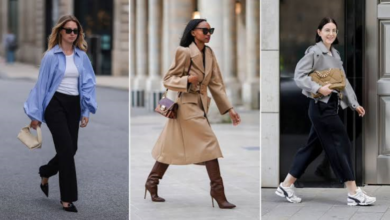

When shopping for wedding guest dresses, respect the couple’s plans first; then consider what you’re paying for if the outfit suits one celebration but has no convincing place in your wardrobe for the rest of the year. Consider your own calendar alongside the occasion’s requirements before you buy. Work out how you’d change the same garment to suit another event you expect to attend, such as a graduation dinner already scheduled for the following month.
Read the invitation before choosing wedding guest dresses
Translate the stated level of formality
When comparing wedding guest dresses, consider coverage and footwear along with the fabric and hemline. A longer hem doesn’t turn cotton shirting into formalwear on its own.
| Dress code | Practical outfit direction | Repeat-wear test | Common mismatch |
| Black tie | Floor-length or highly polished formal clothing | A named gala or formal dinner | Casual daytime fabric |
| Formal or black-tie optional | Long dress or refined midi; dressy tailoring | Less formal styling for another event | Everyday office wear |
| Cocktail | Polished knee-length or midi; tailored separates | A dinner or celebration | Overly casual footwear |
| Casual | Relaxed but deliberate occasion dressing | Vacation or daytime event | Denim or leisurewear unless expressly requested |
Treat the venue and invitation wording as evidence
With the invitation and wedding website in hand, assess the wedding guest dress code, then check where the ceremony and reception take place and when they start. Ceremony coverage requirements may differ from reception expectations. Ask the designated wedding-party contact about ambiguous wording rather than copying a social media look.
LendingTree’s 2024 survey of 2,025 U.S. consumers found that 57% preferred formal attire, while 32% favored casual dress. Zola’s 2024 Wedding Trends report, published in December 2023, found that 45.65% of couples required dress codes, while 54.35% did not. Just 5.99% of couples saw unexpected attire as a way to personalize a wedding.
Set a budget around the complete outfit
Calculate cost per planned wear
Choose a dress that meets the invitation before setting a complete outfit budget. Purchase it only when you can name at least one credible later use. Count necessary alterations and new shoes alongside the garment’s price; include specialized preparation or care rather than treating those charges as separate purchases. A hoped-for calendar of parties doesn’t count; divide the total by occasions you’ve already identified. An outfit totaling $180 costs $60 for each wear when worn three times.
An estimated 92 million tons of textile waste come from fashion annually, according to Media Stats 2024. It also reports that an estimated 87% of clothing fiber input ultimately reaches landfill or incineration, with annual lost material value exceeding $100 billion.
You don’t have to spend more because of those material-cost figures. Leave an unconfirmed future invitation out of your cost-per-wear calculation too. Write the second event’s date beside the amount you can afford.
Test comfort before committing to the outfit
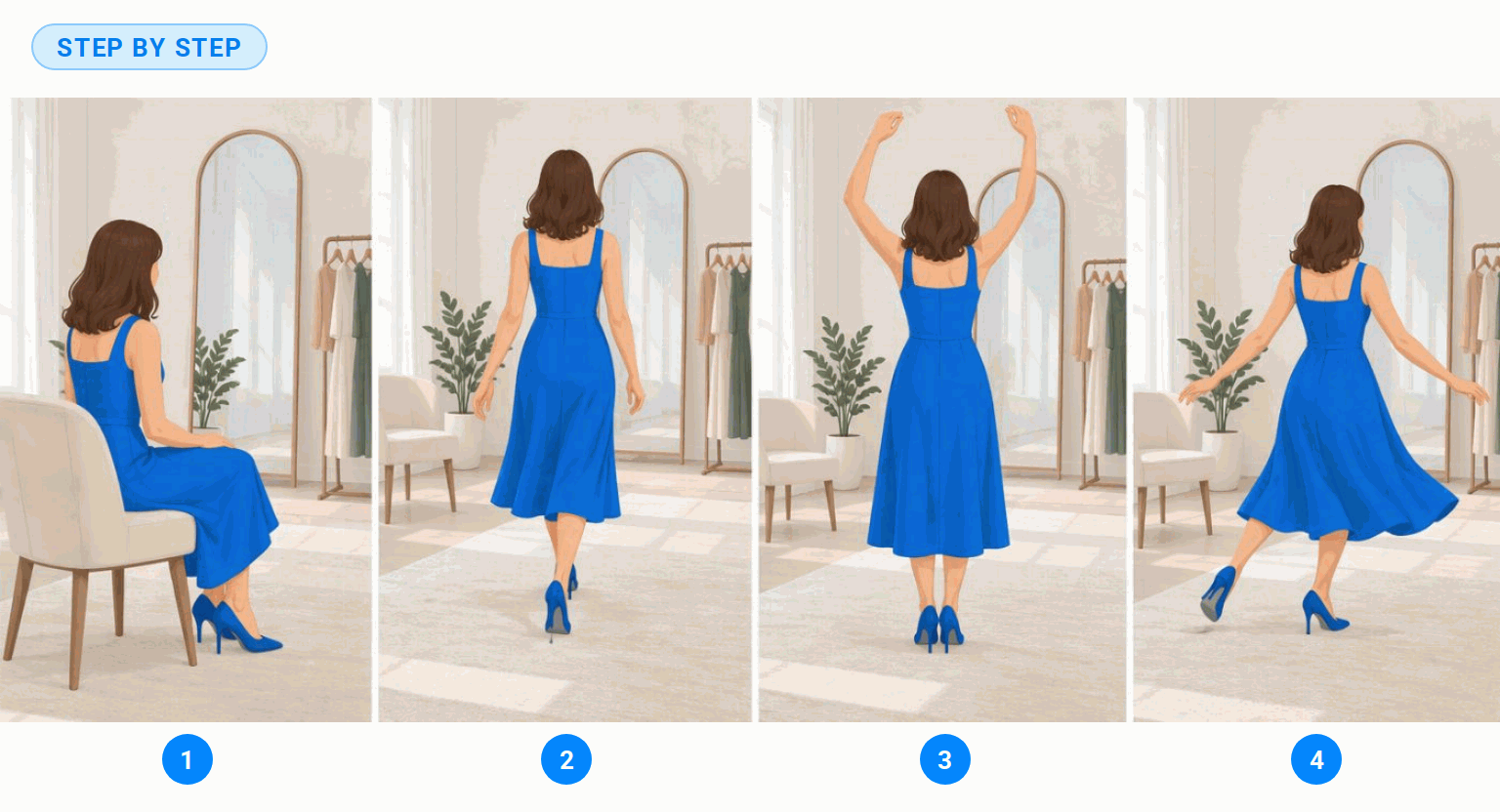
Recreate the movements of the day
A comfortable wedding outfit lets you sit, walk, lift your arms, and dance in the intended shoes without pinching, slipping, or constant adjustment. Try the outfit with your planned undergarments on. A different bra or shapewear can change the neckline’s position and the feel of the waist when you settle into a chair, so try the outfit seated for several minutes.
Check pressure points and fabric behavior
Even if they feel soft on the hanger, comfortable wedding guest dresses for all-day wear still need to pass a movement test. Check the waist seam while seated and the armholes with both arms raised. Under strong light, check for transparency and any scratchy embellishments. Check the neckline again after sitting without tugging it back into place, and inspect the skirt for deep creases.
Give footwear an exit strategy
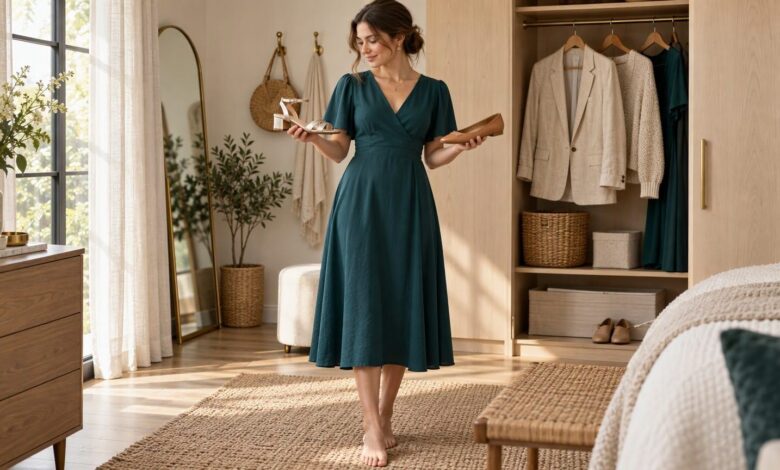
Before you wear shoes outside, give them a trial indoors on a clean surface. Where you’ll walk matters: on grass, take particular care with narrow heels, and check smooth soles before crossing polished flooring. Any backup pair must preserve the outfit’s formality and hem clearance. After a gown’s been fitted in heels, a switch to flats can leave it dragging.
Plan for the season and changing temperatures
Match fabric and layers to actual conditions
Choose the best wedding guest dresses for different seasons according to local conditions and the venue’s exposure, not the colors in a seasonal palette. In a heavily air-conditioned reception room, the thin fabric that felt pleasant during a summer ceremony can leave you cold. Even with the afternoon meal inside a heated building, an autumn wedding can call for a layer come evening.
With the dress on, test a removable layer. Try a jacket or wrap with the actual neckline, and remove it in front of a mirror to check for exposed bra straps.
Use climate information at the right time
During early planning, consult NOAA’s historical climate normals for the location’s usual conditions. Those averages can’t predict conditions on the wedding day. As the date approaches, switch to the short-range forecast and check rain exposure if guests have to wait outdoors. Check that your layer fits over the sleeves without pulling, then compare forecast temperatures for the ceremony’s start with those for your scheduled reception departure.
Build the second outfit before you buy
Change the context, not every component
Choose an outfit that satisfies the wedding dress code in a color and construction you already wear. Before buying, confirm that a different shoe or outer layer makes the outfit appropriate for a real later occasion, such as your upcoming graduation dinner.
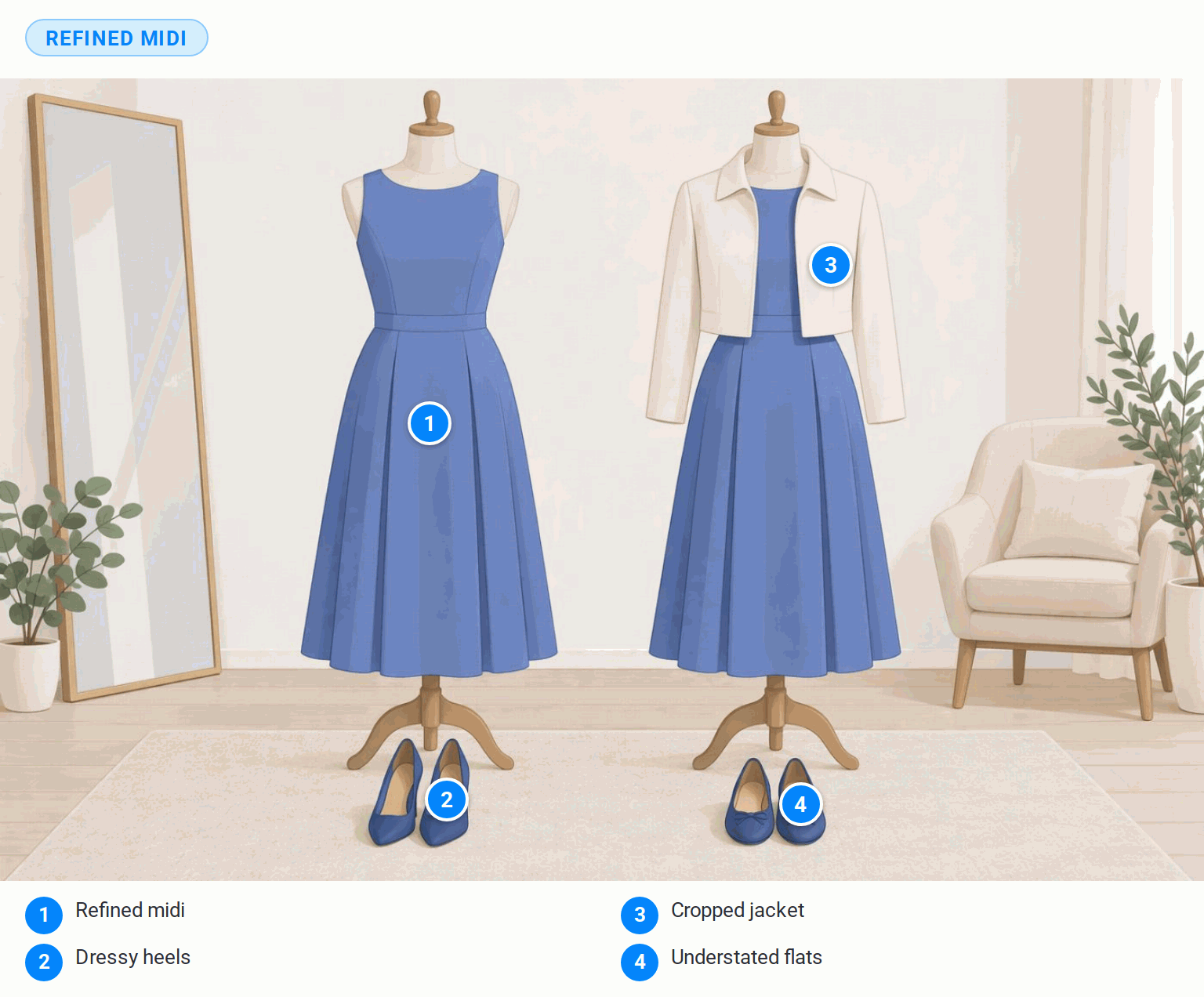
With dressy heels, a refined midi can work for a cocktail wedding. For a restaurant celebration, try a cropped jacket and understated flats with that same garment. An unsuitable garment won’t become acceptable through accessories; use them to adjust formality. If you’re considering a hat or matching pieces, Trendify Magazine’s guide to coordinated occasion dressing illustrates how to assess accessories against the complete outfit.
Photograph both combinations
ELLE’s August 2024 reporting on Pinterest data recorded a 95% year-over-year increase in wedding guest attire board creation and a 75% rise in wedding guest dress-code searches. Use mood boards to make your shortlist first, then try both combinations on your body before removing the tags.
With the shoes visible, photograph each version under comparable lighting. Use accessories you already own where possible. Check that the second combination belongs at the named restaurant or work function, since a clutch swap can leave you with two equally formal looks.
Resolve fit problems before the calendar closes
Ask for clarification early
If an invitation lacks a dress code, use the time and venue to narrow your question. Ask a designated contact early about anything still unclear, such as required ceremony coverage. During the final week, don’t keep sending the couple questions.
Separate fixable fit from structural incompatibility
A hem or minor strap adjustment may be manageable. Bodice reconstruction involves different work that can change the silhouette, along with the price and completion date. Before the return window expires, get a tailor’s assessment. Before authorizing work on the hem, bring your intended shoes and ask for a completion date.
Check care requirements before purchase
If your next planned outing falls soon after the wedding, read the garment’s care instructions before you commit to buying it. Before paying, confirm cleaning turnaround with your cleaner and ask about treatment requirements on the label that you don’t recognize. The following weekend’s event can come before you get a dry-clean-only garment back from cleaning.
A reusable outfit must pass both tests
A reusable outfit must respect the couple’s dress code and support another combination you genuinely intend to wear. A simple outfit does not necessarily meet either requirement. Use fit and movement tests to decide, with care requirements checked against the next occasion and styling tried with pieces you can actually use. Postpone the purchase when either version depends on an unresolved alteration or an accessory you still haven’t found. With the tags still on, photograph the wedding outfit beside its second configuration.