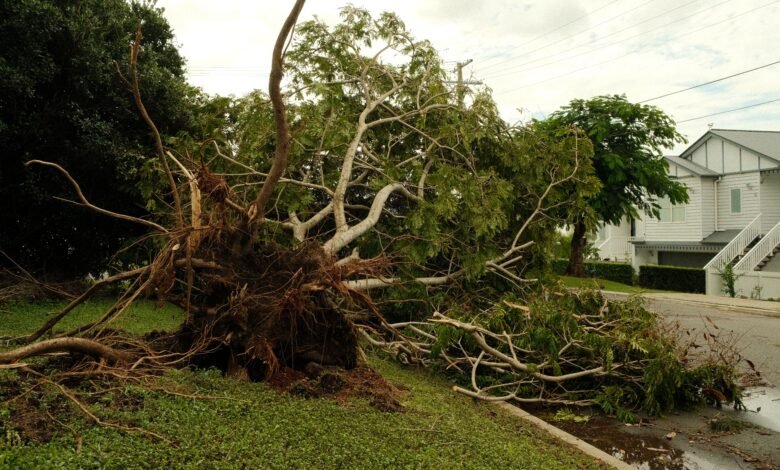

Owning a home means accepting that the weather will eventually test it. Roofs, walls, windows, and foundations are built to hold up against wind and water, but no structure holds up forever, and a single rough night can undo years of careful upkeep. What makes the situation harder is that the worst problems are rarely the ones you can see from the driveway. A homeowner standing in the yard the morning after a rough night often has no idea whether the house needs a small repair or a full recovery effort. Knowing how to look, what to record, who to call, and when to act is what separates a manageable repair bill from a long and expensive ordeal. This guide walks through that process in plain terms, from the first safe inspection to the choices that keep your home steadier the next time the sky turns dark.
Understanding What Severe Weather Leaves Behind
After a storm passes, the quiet that follows can be misleading, because a house often looks perfectly steady from the street even when something inside it has already gone wrong. The harm that a storm does to a roof, a wall, or a window frequently works its way inward for days, soaking insulation, loosening fixings, and feeding mold in places no one thinks to check. Repair and restoration work carried out by a trained crew is what brings a house back to the condition it was in before the weather turned. Homeowners who make that call early almost always find that storm damage is far easier to contain than it is to reverse.
How to Record What the Weather Has Cost You
Documentation is the part most homeowners rush, and it is the part that matters most later. Take photographs of every affected area before you move or clean anything, and take more than you think you need. Wide shots establish where a problem sits in the house, and close shots prove how bad it is. Video walkthroughs are useful because they capture the sequence and scale of the problem in a way that still images sometimes miss. Write down the date and time, note the weather conditions, and keep receipts for anything you buy in the immediate aftermath, including tarps, fans, dehumidifiers, and temporary lodging.
Problems That Surface Days or Weeks Later
Some consequences of a rough weather event announce themselves right away, and others take their time. Moisture trapped inside a wall cavity can go unnoticed for a week or more before the smell arrives or a stain spreads across the plaster. Wood that stays wet begins to warp and lose strength. Metal fixings rust. Electrical systems that took on water can behave normally for a while and then fail without warning. Roof shingles that shifted slightly may hold through light rain and then leak badly during the next heavy downpour. Because of this delay, it is worth doing a second inspection about two weeks after the first one and paying particular attention to attics, crawl spaces, basements, and any room that felt damp early on.
Working With Your Insurance Company
Contact your insurer as soon as your household is safe and you have taken your initial photographs. Ask what your policy covers, what your deductible is, and whether there are deadlines for filing. Be specific and factual when you describe the situation, and avoid guessing at causes or costs. An adjuster will usually visit to inspect the property, and you are entitled to be present during that visit. Walk through the house with them, point out everything you found, and hand over your documentation rather than describing it from memory. If the first settlement offer does not match what the repairs will actually cost, you are allowed to question it and to provide independent estimates.
Choosing the Right Repair Team
Serious repair work is not a place to gamble on the cheapest quote or the first company that knocks on your door. Ask for proof of licensing and insurance before anyone starts. Ask how long the company has operated in your area, and ask for references from recent jobs of a similar size. A trustworthy contractor will give you a written scope of work that spells out what will be done, what materials will be used, and roughly how long it will take. Be careful with anyone who demands a large payment up front, pressures you to sign immediately, or offers to handle your insurance claim in exchange for signing the paperwork over to them. A steady, experienced crew that communicates clearly is worth more than a fast promise.
Preparing Your Home for the Next Round of Bad Weather
Once the repairs are finished, spend a little time making the house harder to hurt. Clear gutters and drains so water leaves the roof and the foundation instead of pooling. Trim branches that hang over the roof or near power lines. Check that windows and doors seal properly, and consider reinforced glazing or shutters if your area sees heavy wind. Have the roof inspected on a regular schedule rather than waiting for a leak to prompt the visit. Keep an emergency kit stocked with water, food, flashlights, batteries, a first aid kit, and copies of your insurance documents in a waterproof container. Photograph your home and its contents while everything is in good condition, because a clear before picture makes any future claim considerably simpler.
Moving Forward With Confidence
The days after a difficult weather event feel chaotic, and that is exactly when clear thinking pays off most. Check the property safely, record everything carefully, contact your insurer promptly, and bring in qualified help before small problems grow into structural ones. None of these steps is complicated on its own, and together they give you control over a situation that can otherwise feel entirely out of your hands. A house can recover from a great deal. What determines how well it recovers is how quickly and how methodically its owner responds.