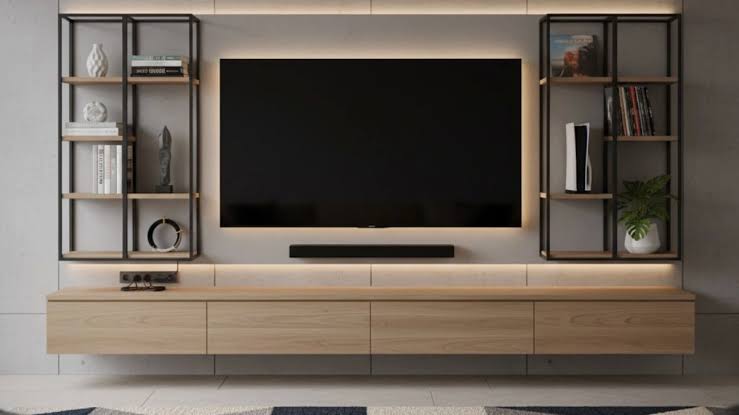
Custom Entertainment Cabinets vs. Big-Box TV Stands: A True Cost Breakdown for US Homeowners

When homeowners replace or upgrade their living room storage, the decision between a ready-made TV stand and a built-to-order cabinet unit is often treated as a simple budget question. In practice, it involves a more layered calculation that touches on longevity, spatial fit, maintenance, and the total value a piece of furniture delivers over its usable life. A stand purchased at a big-box retailer may cost less on the day of purchase, but the conditions under which that price holds up—and the conditions under which it does not—are worth examining carefully before making a commitment either way.
This breakdown is written for homeowners who have already done some initial research and are now trying to make a grounded, confident decision. It does not favor one option out of hand. Instead, it traces the real costs, both visible and deferred, that come with each path.
What Custom Entertainment Cabinets Actually Cost—and Why the Number Varies
Custom entertainment cabinets are built to the specific dimensions, materials, and configuration a homeowner specifies. Unlike retail furniture, they are not produced in batches and sold from inventory. This means pricing is not fixed at the point of inquiry—it is determined by the scope of the project, including the wood species, hardware quality, internal layout, finish selection, and any built-in features like cable management channels or adjustable shelving. That variability is not a flaw in the purchasing process; it is a direct reflection of what makes the product different from a standardized unit.
Homeowners who explore custom entertainment cabinets through a qualified woodworking or millwork company will typically receive a project estimate based on site measurements and a design consultation. This process adds time to the front end of the purchase—often several weeks—but it eliminates the guesswork around fit, material durability, and functional layout that frequently drives dissatisfaction with off-the-shelf alternatives.
The Role of Material Selection in Long-Term Value
One of the clearest cost differentials between custom and retail furniture lies in the materials used. Retail TV stands at moderate price points are predominantly built with medium-density fiberboard, particleboard, or veneered composite panels. These materials perform adequately in stable indoor environments, but they are sensitive to humidity fluctuations, direct sunlight, and the cumulative weight of electronics over time. Swelling at joints, sagging shelves, and surface delamination are common outcomes within three to seven years of regular use.
Custom cabinetry built from solid hardwoods or high-grade plywood behaves differently under the same conditions. Solid wood responds to environmental changes more predictably and can be refinished rather than replaced when surface wear occurs. That repairability has a direct bearing on lifetime cost—a custom piece that can be sanded, refinished, or have a component replaced extends its useful life significantly, while a composite unit typically requires full replacement once structural integrity fails.
Installation and Site Preparation Costs
Custom cabinet projects often include professional installation, which adds a line item to the upfront cost but also ensures that the unit is properly anchored, level, and integrated with the room’s electrical and cable infrastructure. Retail furniture is generally self-assembled, which removes installation labor costs but also transfers the risk of improper assembly, wall anchoring failures, and poor cable routing to the homeowner.
In homes with older walls, non-standard alcove dimensions, or built-in architectural features, self-assembly units frequently require additional modification work—trimming, shimming, or wall repair—that adds cost and time to the project without improving the result. These hidden site-preparation expenses are rarely factored into the initial price comparison but can meaningfully close the gap between a budget retail unit and a custom build.
The True Cost of Big-Box TV Stands Over Time
Retail furniture retailers compete primarily on price visibility. A $300 TV stand has a clear, legible cost at the moment of purchase. What that price does not communicate is the replacement cycle the product is likely to require. Most composite furniture in the entertainment category is designed with a functional lifespan of five to ten years under normal residential use. When the unit requires replacement, the homeowner absorbs a new purchase cost, new delivery or transport costs, and the labor of disassembly and disposal—none of which appeared in the original sticker price.
Replacement Frequency and Cumulative Spend
A homeowner who purchases a retail TV stand every seven years over a thirty-year period will make approximately four purchases during that window. If each purchase averages between $250 and $600, depending on the product tier and inflation, the cumulative spend over thirty years falls somewhere between $1,000 and $2,400—before factoring in delivery fees, disposal costs, or the time cost of repeated shopping, assembly, and setup.
A custom entertainment cabinet built from quality materials, properly installed, and refinished once during the same thirty-year period may carry a higher single-purchase price, but it functions as a one-time capital expenditure rather than a recurring operational cost. The economic argument for custom work strengthens considerably when viewed on a decade-by-decade basis rather than at the point of initial purchase.
Functional Fit and the Cost of Workarounds
Standard retail TV stands are built around industry-average television sizes and generic storage configurations. As television technology evolves—screen sizes increase, mounting standards change, soundbar placement becomes more common—furniture designed around older dimensions becomes functionally mismatched with the equipment it is meant to support. Homeowners often compensate with supplementary storage units, separate component racks, or surface-level cable management products that add incremental costs and visual clutter without solving the underlying fit problem.
Custom cabinetry is designed around the homeowner’s actual equipment inventory, room dimensions, and usage patterns. A unit built to house a specific combination of components, with appropriately sized ventilation gaps and cable access points, eliminates the need for workarounds that accumulate cost over time. According to the U.S. Census Bureau’s residential construction data, the average American home has not changed significantly in room proportion over the past two decades, yet consumer electronics have grown considerably larger and more complex—a mismatch that generic furniture solutions have not kept pace with.
Spatial Considerations That Affect Real Cost
The physical dimensions of a living room or media room directly affect how much value a piece of furniture delivers. A retail unit purchased without precise measurements may fit adequately in a standard rectangular room but create problems in rooms with recessed alcoves, sloped ceilings, built-in shelving, or off-center fireplace placement. These spatial constraints are not uncommon in older American homes, and they frequently require compromises that reduce both the utility and the visual coherence of a space.
Built-In vs. Freestanding: Structural Implications
Some custom entertainment cabinetry is designed to function as semi-permanent built-ins—anchored to wall framing and finished to match surrounding trim or millwork. This approach adds construction complexity but also increases the perceived value of the room itself, which has implications for resale. Freestanding retail units, regardless of quality, are categorized as personal property and do not contribute to assessed home value the way built-in millwork typically does.
Homeowners planning to sell within a five-to-ten-year window should weigh this distinction carefully. A well-executed custom built-in in a primary living space can meaningfully support asking price conversations during a sale, while a collection of retail furniture units typically depreciates to near zero value by the time a property changes hands.
Making the Comparison Honestly
The cost comparison between custom entertainment cabinets and retail TV stands is not straightforward at the point of purchase. It requires projecting costs over time, accounting for replacement cycles, factoring in spatial fit, and considering the functional demands the furniture will need to meet as equipment and usage patterns change. Neither option is universally superior—both serve real purposes depending on a homeowner’s financial situation, timeline, and long-term intentions for the space.
What the comparison does not support is the assumption that the lower initial price of a retail unit represents lower total cost. In many residential contexts—particularly for homeowners with non-standard room configurations, long ownership horizons, or specific equipment requirements—the economics favor the custom option once all variables are included in the calculation.
Conclusion
Furniture decisions in lived-in spaces carry more financial weight than they initially appear to. The purchase price of a retail TV stand is legible and immediate, but it is not the complete picture. Material degradation, replacement cycles, spatial workarounds, and lost opportunity for structural value all contribute to a total cost that frequently exceeds what a well-built custom piece would have required over the same period.
Homeowners who approach this decision as a one-time capital investment rather than a single transaction are better positioned to spend appropriately, avoid repeated purchasing cycles, and end up with furniture that functions consistently for the life of the space it serves. The key is entering the process with a realistic accounting of what each path actually costs—not just today, but across the years of use that follow.