
Raw steel containers provide a tough, weather-resistant shell ready for functional interior and exterior conversions. However, transforming a bare box into a comfortable, usable space requires careful planning and systematic execution. Skipping crucial steps can lead to severe structural failures or uncomfortable internal working conditions.
A step-by-step conversion process ensures structural and operational safety for your modified container. This blog will walk you through the process of modifying commercial containers.
1. Defining Project Needs And Container Selection
Every successful conversion project begins with detailed planning and selecting the right base container unit. You must determine the container’s intended purpose, layout requirements, and long-term placement location on site. Choosing quality, grade-A commercial shipping conatiners ensures a rust-free structural base for your modification work.
Inspecting floor timbers, wall panels, and door seals prevents unexpected repair delays during building phases. Starting with a sound, structurally intact box ensures your finished container space lasts for years. You avoid wasting money modifying a unit with existing structural weaknesses or severe corrosion.
2. Cutting Openings And Structural Framing
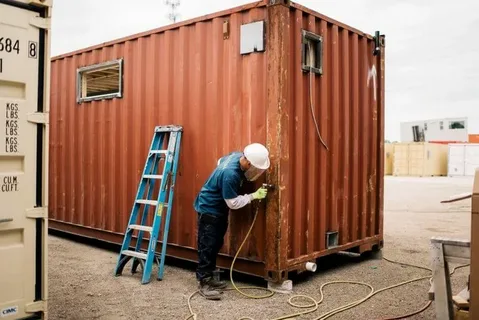
Workers will carefully cut openings for windows, doors, and vents once your design plans have been finalised. Removing steel wall panels weakens the container’s load-bearing integrity, requiring immediate structural reinforcement.
During the construction process, structural framing is used to secure modified steel walls in the following manner:
- Steel Box Framing: Welding heavy steel box tubing around all wall openings restores necessary structural rigidity
- Precision Panel Cutting: Plasma cutters ensure clean edge cuts for precise window and door frame installations
- Corner Post Preservation: Preserving heavy corner posts maintains the container’s original stacking and lifting capabilities
3. Installing Insulation and Internal Lining
Uninsulated steel containers absorb external temperatures quickly, creating hot interior environments and severe winter condensation. Installing proper insulation materials regulates interior temperatures and prevents destructive internal moisture buildup. Workers fit timber or steel stud frames inside the walls to support thermal insulation panels.
Before sealing walls with marine-grade lining, spray foam or HDI batts are added. Quality insulation creates a comfortable, energy-efficient workspace suitable for year-round employee use. It also helps dampen external worksite noise, creating a quieter interior environment for office work.
4. Applying External Protective Coatings And Finishes
The final stage of container modification focuses on surface protection, external painting, and fitting doors. Steel surfaces undergo sandblasting and rust-inhibiting primer application to protect against harsh weather elements.
Here is how exterior finishing protects your customised investment for the long term:
- Industrial Grade Painting: Applying marine-grade polyurethane paint shields external steel walls from rust and UV fading
- Custom Brand Colouring: Painting containers in corporate colours reinforces your professional brand image across worksites
- Weatherproof Fixture Sealing: High-grade silicone sealants around windows and door frames prevent leaks during downpours
5. Adding Electrical and Plumbing Systems
Professionals are hired to install the power outlets, internet cabling, LED lighting, and electrical wiring that runs along the inside walls. If your layout includes kitchenette facilities, you will need to install rough-in plumbing pipes securely behind wall linings. These utilities turn the structure into a fully self-contained operational facility.
Installing air conditioning units provides essential climate control for employee comfort during warm summer months. You create a safe, compliant environment that functions exactly like a traditional brick-and-mortar building.
Build Your Customised Space Today
Modifying commercial shipping containers delivers versatile, highly durable spaces tailored precisely to your operational requirements. Following a structured conversion process ensures your modified unit provides safety, comfort, and structural reliability. You gain functional, mobile site infrastructure that moves effortlessly alongside your expanding business operations. This mobility gives your company a distinct advantage when establishing new temporary worksites.
Stop settling for generic, inconvenient temporary structures that fail to meet your specific workplace needs. Invest in custom-engineered container conversions designed for long-term performance in tough conditions.