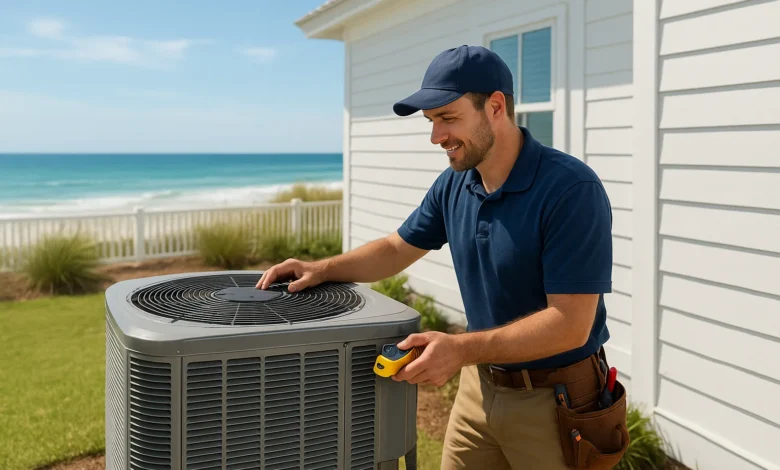
Repair or Replace Your AC in Oceanside? A Coastal Homeowner’s Decision Framework

When a cooling system falters on a warm, humid coastal afternoon, the choice between repair and replacement becomes urgent fast. Oceanside’s salt air, sun, and seasonal heat waves create a harsher operating environment for outdoor condensers and indoor coils than many inland climates. This article offers a clear, practical way to decide: assess how coastal conditions have affected key components, confirm what you own and how it was installed, and weigh real comfort and efficiency gains against the cost and disruption of a full swap. Use the guidelines below to make a confident decision for your home and budget, without guesswork.
How Oceanside’s Salt Air and Heat Stress Your Condenser and Coil
Salt carried by ocean breezes accelerates corrosion on aluminum fins and copper tubes in the outdoor condenser coil. As those thin fins crumble or the coil tubing pits, refrigerant leaks become more likely and heat transfer drops, forcing the compressor to run longer. Long runtimes during late-summer heat waves compound wear on fan motors, contactors, and capacitors. Even if the system cools, a corroded coil and weathered compressor often signal that a short-term repair could be followed by another failure when the next hot spell arrives.
Coastal exposure also changes maintenance math. A condenser that was simply rinsed once a year inland may need more frequent fresh water rinsing to clear salt deposits, and protective coil coatings can matter for homes within a short walk of the beach. If repeated leaks, rising amp draw, or noisy compressor starts have you considering AC Replacement in Oceanside, CA, step back and document how much of the decline is salt-related wear versus fixable issues like a clogged condenser coil or a failing capacitor.
Check These System Milestones: Age, Refrigerant Type, and Major Failures
Start with the unit nameplate and service labels. The manufacture date, refrigerant type, and model numbers tell you a lot. Systems charged with R-22 use a phased-out refrigerant that is scarce and expensive; topping off a leaking R-22 circuit is often a short-lived fix. R-410A equipment remains common, but replacing only the outdoor unit and leaving an incompatible evaporator coil can reduce capacity and cause high head pressure. Major failures such as a grounded compressor, a repeatedly leaking evaporator coil, or a pitted reversing valve on a heat pump usually indicate the system is nearing the end of its practical life.
Consider a realistic scenario: a townhouse a few blocks from the Strand has a 3-ton R-22 system that lost charge twice in two summers because of a corroded condenser coil and a leaking Schrader core. Adding more refrigerant and brazing pinhole leaks will not reverse salt damage already inside the coil or line set. In that case, replacement with a properly matched condenser and indoor coil is the more durable path. By contrast, if your R-410A system tripped a breaker because of a failed capacitor and the condenser fins are still intact, a targeted repair makes sense.
Efficiency, Noise, and Comfort: What a Replacement Changes Day to Day
Newer systems typically have higher SEER2 ratings, variable-speed compressors, and ECM blower motors. Those upgrades can deliver steadier supply air temperatures, fewer hot spots in rooms far from the air handler, and quieter operation at part load. In a coastal setting where doors and windows open often, a unit that can run longer at lower capacity helps manage humidity without short cycling. If your current system frequently freezes the evaporator coil, leaves rooms muggy, or rattles the fence line with a loud condenser fan, t modern, properly sized system can close. those comfort gaps
There is a trade-off: higher efficiency and multiple stages add upfront cost and more electronics. If your home’s ductwork leaks or the return grille is undersized, a premium condenser cannot deliver its promise. In mild Oceanside winters, a heat pump can provide comfortable heat without firing a gas furnace, but explain defrost cycles and backup heat settings during commissioning. Decide what matters most in daily use: lower kWh on your utility bill, a quieter backyard, tighter temperature control, or the flexibility of heat pump heating in shoulder seasons.
The Parts You Don’t See: Duct Leakage, Electrical Capacity, and Placement
Hidden conditions often decide whether a repair will last. High static pressure from undersized returns or a restrictive high MERV filter can overwork the blower and starve the evaporator of airflow, causing icing and poor cooling. Leaky ducts in a vented attic waste cooled air and pull hot, dusty air into the system, extending runtimes and masking a good condenser’s performance. On the electrical side, verify the dedicated 240-volt circuit, breaker size, and outdoor disconnect meet the new condenser’s minimum circuit ampacity. The line set may need flushing or replacement to avoid cross-contamination, and the AHRI-rated match between the indoor coil and outdoor unit matters for capacity, warranty eligibility, and proper superheat and subcooling. Placement counts near the ocean: keep the condenser off soil on a level pad, away from direct irrigation spray, and with clearances that allow sea breeze airflow without funneling salt mist directly into the coil.
-
Two Oceanside Examples That Clarify the Decision
Example one: A single-story home in Fire Mountain has a condenser with fins curled from coastal corrosion and a compressor that now hard-starts. The indoor coil has a visible oil stain near the header. Here, stacking a hard-start kit and another refrigerant top-off is a bandage. A fully matched heat pump or AC with a new evaporator coil, a flushed or replaced line set, and a larger return grille will address the underlying failures and airflow limits in one project.
Example two: A condo east of I 5 shows poor cooling in one bedroom and a frozen evaporator, but the condenser’s coil is clean, and the compressor amperage is normal. A technician measures high static pressure and finds a kinked flex duct and a clogged condensate trap. Correcting the duct and restoring drainage could return the system to stable operation without replacement. The fix targets the bottleneck instead of the box outside.
If You Choose Replacement: Timing, Home Prep, and First Week Use
Schedule work when installers can access the attic, garage air handler, and electrical panel safely, not during a heat wave when same-day swaps strain schedules. Clear a path to the air handler, move vehicles if the line set runs through the garage, and secure pets. After startup, let the system complete longer, lower-speed cycles for stable temperatures, and replace the filter once early installation dust loads it. Ask for a thermostat tutorial, the model-specific filter size, and a simple maintenance plan that includes fresh water rinsing of the condenser coil during salty months and checking static pressure with any future filter changes. A careful start helps your new system deliver what you paid for, season after season.