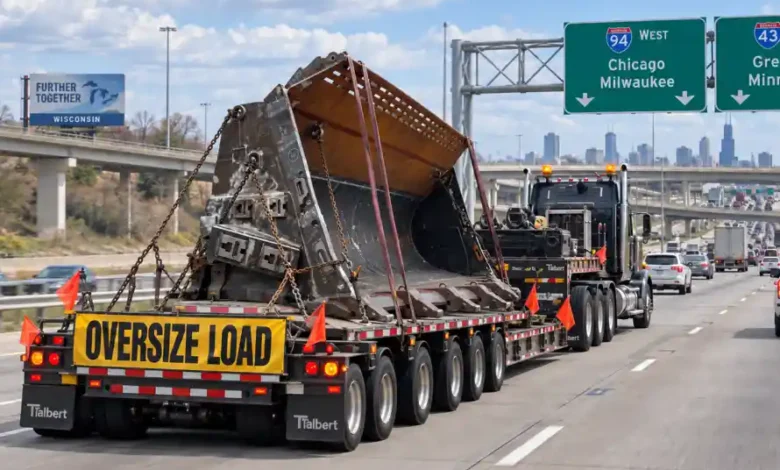

Heavy-haul jobs often begin with a cargo weight and a pickup date. A customer has a large excavator, generator or piece of industrial equipment ready to move, and dispatch starts looking for the right tractor and trailer. The permit question should come into that conversation early, not after the truck reaches the loading site.
Some heavy freight can travel within normal weight limits when the right equipment is used. Other loads will exceed legal limits regardless of reasonable adjustments. Knowing which situation a carrier is dealing with before dispatch can prevent a loaded truck from spending hours or even longer waiting for paperwork.
Start With the Loaded Truck, Not Just the Freight
A machine weighing 55,000 pounds does not mean the vehicle will weigh 55,000 pounds on the road. The tractor and trailer have their own weight, and specialized heavy-haul equipment can add a substantial amount to the final total.
That makes cargo weight a starting point rather than the answer. Dispatch needs to consider the expected gross vehicle weight after everything is assembled. Axle weights and spacing matter too.
For example, two trailers capable of physically carrying the same machine may produce different axle distributions. One configuration might keep individual axle groups within applicable limits while another does not. Moving the cargo forward or backward on the deck can change those figures again.
This is why waiting until the driver is at pickup to think about weight can be expensive. If the planned configuration needs authorization, the truck may be ready long before the paperwork is.
When the Permit Should Be Arranged Before Dispatch
If planning shows that the loaded vehicle will exceed the weight limits that apply to the trip, permitting should be handled as part of pre-dispatch preparation. This is especially important when the freight is a non-divisible item that cannot simply be split between two trucks.
Construction machinery is a common example. A large dozer cannot be made lighter by unloading a few pallets. The carrier instead has to select suitable equipment, determine the expected weights and plan the movement around the resulting configuration.
Before sending a truck, dispatch should have dependable figures for:
- gross loaded weight;
- axle and axle-group weights;
- axle spacing and count;
- tractor and trailer configuration;
- loaded width, height and length.
The last point can easily create additional work. Heavy freight is often large freight as well. A combination being planned primarily as an overweight move may also exceed normal width, height or length limits.
When the numbers show that authorization will be necessary, arranging heavy haul permits before dispatch gives the carrier time to deal with routing and permit conditions without a driver already sitting under the load.
Weight Can Determine Which Roads the Truck Uses
Getting a permit does not mean the carrier can choose any convenient road between pickup and delivery. For heavier combinations, the route can become part of the permitting problem.
Bridges are one reason. The gross weight of the truck matters, but so do axle loads and spacing. A route that works for one heavy-haul configuration may not be appropriate for another carrying a similar piece of cargo.
This becomes particularly noticeable when a customer says, “We had the same machine delivered this way before.” That information can be useful, but it does not prove that today’s truck can use the same route. The previous carrier may have used different equipment or distributed the weight across a different axle configuration.
Ordinary navigation habits can cause problems here as well. A traffic jam may make a parallel road look attractive, yet the permitted route may have been selected specifically to avoid a restricted structure. Drivers should follow the routing and conditions attached to the authorization rather than improvising around delays.
Multi-State Heavy Haul Needs More Lead Time
Crossing state lines adds paperwork because overweight authorization is handled by the jurisdictions involved in the trip. A permit issued for the origin state should not be treated as a nationwide pass for the load.
Requirements can change as the truck moves from one state to another. Processing time can vary too, particularly when a heavier or unusual configuration needs additional review. That makes a tight dispatch schedule risky when permits have not yet been addressed.
Last-minute equipment substitutions deserve the same caution. If a mechanical issue forces the carrier to replace the planned trailer, the new setup may have different axle spacing, axle weights or dimensions. Existing permits should be checked against the truck that will actually travel.
Carriers coordinating movements through several jurisdictions can use this website for permit assistance rather than waiting until each state line becomes the next problem to solve.
A heavy load does not automatically need an overweight permit simply because the cargo sounds impressive on paper. The decision comes from the actual loaded vehicle and the limits that apply to its route. That is exactly why the calculation belongs before dispatch.
Once the truck is loaded and the driver is waiting, every unresolved permit issue costs time. Working out the configuration, weights and route earlier gives dispatch a much better chance of sending the truck out with paperwork that already matches the load.