10 Industries That Rely on Professional Powder Coating Services (And Why You Should Too)

Surface finishing is rarely the first thing a procurement manager or operations director thinks about when evaluating a supply chain. But it is often among the last things fixed when something goes wrong. Corrosion on a structural component, flaking paint on industrial equipment, or an inconsistent finish on a consumer product — these failures trace back, more often than not, to inadequate surface treatment decisions made earlier in the process.
Powder coating has become a reliable solution across a wide range of industries precisely because it addresses several of these problems at once: durability, consistency, environmental compliance, and long-term cost performance. It is not a new technology, but its adoption across sectors continues to grow as more organizations recognize that the quality of a finish is directly tied to the lifecycle of the product it protects.
Understanding which industries depend on professional powder coating — and why — offers useful context for any business evaluating its own finishing needs.
What Professional Powder Coating Actually Involves
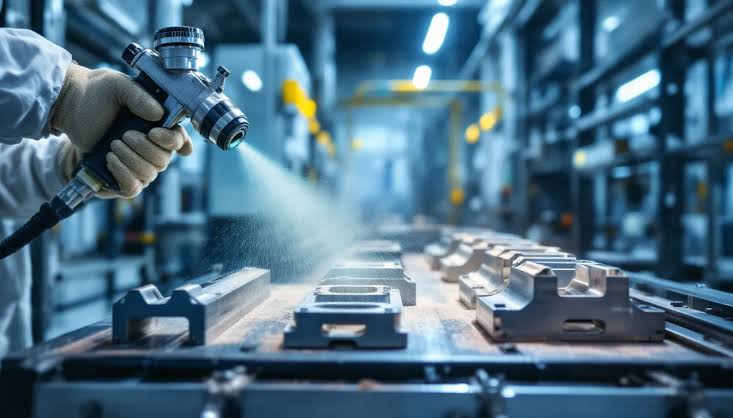
Powder coating is a dry finishing process in which electrostatically charged powder is applied to a prepared surface and then cured under heat to form a hard, continuous coating. Unlike liquid paint, the powder contains no solvents and releases minimal volatile organic compounds during application. The result is a finish that bonds directly to the substrate and resists chipping, fading, and corrosion under conditions that would compromise conventional paint.
For organizations evaluating their options, a Powder Coating Services overview can clarify the range of substrates, finish types, and preparation standards that professional operations accommodate — from mild steel and aluminum to more specialized materials requiring custom pre-treatment.
The process depends on precision at each stage: surface preparation, powder selection, application consistency, and cure time management. When any of these steps is compromised, the finish underperforms — regardless of the material quality underneath it. This is why professional application matters as much as the coating chemistry itself.
The Role of Surface Preparation in Finish Quality
One of the most common misunderstandings in surface finishing is that the coating does the work on its own. In practice, the quality of a powder coat finish is largely determined before the powder is ever applied. Contamination, rust, oil residue, or poorly cleaned welds will cause adhesion failure no matter how carefully the powder is sprayed and cured.
Professional powder coating operations use controlled pre-treatment processes — typically involving chemical cleaning, phosphate or zirconium conversion coatings, and rinse stages — that establish a consistent surface condition before coating begins. This level of preparation is difficult to replicate in-house without dedicated equipment and trained personnel, which is one of the primary reasons businesses across industries choose professional service providers over internal finishing attempts.
Automotive and Transportation Manufacturing
The automotive sector has used powder coating for decades on components ranging from wheel rims and suspension parts to chassis elements and underbody brackets. The appeal is straightforward: vehicles operate in extreme conditions — road salt, heat cycling, UV exposure, mechanical impact — and the finish on metal components must hold up across the entire service life of the vehicle.
Powder coating provides consistent film thickness across complex geometries, including recessed areas and tube interiors that liquid spray often fails to reach uniformly. For manufacturers producing large volumes of identical parts, the repeatability of the process is as important as the finish quality itself. A batch that comes out inconsistently can delay assembly lines and create warranty exposure.
Aftermarket and Fleet Maintenance Applications
Beyond original equipment manufacturing, the aftermarket and fleet maintenance segments rely heavily on powder coating for refurbished parts, custom components, and equipment restoration. A fleet operator recoating trailer frames or equipment brackets expects the same durability from a re-finished part as from a new one. The consistency that professional powder coating delivers makes it the standard choice in these operational contexts.
Architectural and Construction Sectors
Aluminum extrusions, steel window frames, curtain wall systems, railings, and structural brackets all appear in modern construction projects with powder-coated finishes. The construction industry depends on this finish type because building components are installed for decades, often in environments where maintenance access is limited or impractical.
According to standards maintained by organizations such as the ASTM International, architectural coatings are evaluated against rigorous performance benchmarks including adhesion, impact resistance, and humidity resistance — standards that powder coating consistently meets when professionally applied.
Color Consistency Across Large Projects
In architectural applications, color matching across large batches of components is a practical necessity. A curtain wall system or railing installation that arrives with visible color variation between panels is a significant problem — one that cannot be corrected without costly rework. Professional powder coating operations use controlled batch processes and calibrated curing equipment to maintain color uniformity across production runs, which is why architects and project managers specify professional application for visible building components.
Agricultural Equipment Manufacturing
Farm machinery operates in one of the most demanding environments in any industry. Exposure to fertilizers, pesticides, soil acidity, moisture, and mechanical abrasion creates conditions that degrade standard paint finishes quickly. Equipment that loses its protective coating is exposed to accelerating corrosion — a practical and financial problem for farmers whose machinery must perform reliably through harvest seasons without unexpected downtime.
Powder coating applied at appropriate thickness levels and properly cured provides protection that significantly outlasts conventional paint in field conditions. Equipment manufacturers and dealers who offer refurbishment and recoating services use powder coating as the standard approach for this reason.
Electrical and Industrial Equipment
Electrical enclosures, control panels, switchgear housings, and industrial machinery frames are routinely powder coated to protect against corrosion, chemical exposure, and physical wear. In industrial settings, this protection is not cosmetic — it is a functional requirement. A corroded enclosure may fail to maintain the environmental sealing rating it was designed to meet, creating safety and compliance risks.
Powder coating also provides a degree of electrical insulation on coated surfaces, which is a secondary benefit in some equipment applications. More importantly, the consistency of the finish across complex enclosure geometries ensures that every surface area receives adequate protection, including corners, edges, and internal flanges that would be difficult to coat consistently with liquid paint.
Outdoor Furniture and Consumer Products
Commercial outdoor furniture — seating in public spaces, parks, stadiums, and hospitality environments — faces continuous UV exposure, moisture, and physical use. Operators who manage these assets cannot afford frequent recoating cycles. Powder-coated steel and aluminum furniture holds its appearance and structural protection longer than painted alternatives, which directly reduces maintenance costs over the asset’s service life.
Consumer product manufacturers in categories such as appliances, fitness equipment, and tools also rely on powder coating services to deliver finish quality that supports their brand positioning while meeting the durability expectations their customers hold.
Medical Device and Laboratory Equipment
In medical and laboratory environments, surface finishes must meet hygiene requirements and resist repeated chemical cleaning without degrading. Powder coating on equipment frames, carts, storage units, and non-critical structural components provides a non-porous surface that is easier to clean and less likely to harbor contamination than surfaces with chips, cracks, or porous paint layers.
While not all medical-grade finishing applications use standard powder coating — some require specialty formulations — the general principle applies across a wide range of supporting equipment where cleanliness and durability are practical requirements rather than regulatory mandates.
Retail Fixtures and Display Systems
Retail environments change frequently. Fixtures are reconfigured, moved between locations, and subjected to daily physical contact. A display system that chips or scratches easily reflects poorly on the retail brand and generates replacement costs that add up over time. Powder coating provides a finish that maintains its appearance under regular handling, reducing the visible wear that makes fixtures look dated or neglected before their structural life has ended.
Oil, Gas, and Energy Infrastructure
Components used in energy production — valves, pipe supports, brackets, junction boxes, and structural steelwork — operate in environments where corrosion is a continuous threat. Offshore and coastal installations are particularly demanding. The cost of corrosion failure in these environments is not limited to the component itself; it extends to shutdown costs, safety risks, and regulatory consequences.
Powder coating, particularly when combined with appropriate primers and pre-treatment, extends the service interval of structural and mechanical components in these environments. Operators and maintenance contractors who specify professional powder coating services as part of a broader corrosion management strategy reduce their exposure to unplanned maintenance events.
Recreational and Sports Equipment
Bicycles, fitness equipment, playground structures, and sporting goods rely on powder coating for both protection and finish appearance. In outdoor recreational applications, the finish must withstand weather, UV exposure, and physical impact across years of use. In commercial settings such as gyms and parks, equipment is expected to maintain its appearance through heavy daily use without frequent refinishing.
The range of available colors and textures in powder coating also gives manufacturers and designers more options than traditional paint, without compromising the durability of the finish.
Closing Thoughts
The industries described here share a common set of priorities: they need finishes that hold up over time, perform consistently across production batches, and reduce the maintenance burden on the finished product. Powder coating addresses all of these requirements when it is applied professionally — with proper surface preparation, controlled application conditions, and appropriate curing processes.
What connects procurement managers, product engineers, and operations directors across these sectors is not a preference for any particular aesthetic. It is a recognition that surface finishing decisions have real downstream consequences. A finish that fails early creates warranty claims, replacement costs, and operational disruption. A finish that performs as specified reduces those risks and extends the useful life of the asset it protects.
If your organization is evaluating finishing options for metal components, equipment, or structures, the industries outlined here offer a useful reference point. The reasons they standardized on professional powder coating services are practical, not promotional — and they apply equally across small production runs and large-scale manufacturing environments. The underlying logic is consistent: done properly, powder coating is one of the more reliable investments in long-term product performance available in industrial finishing today.