
How much time can a small business lose when invoices, expenses and payments are managed manually? Accurate financial records are essential, but handling them can quickly become difficult as a business grows. Studying Financial Accounting (FFA) can help professionals understand important accounting principles and financial records. Having a clear system for managing financial information can also help small businesses stay organised and make more confident decisions.
Using Accounting Software for Small Business can make everyday financial tasks simpler and more organised. In this blog, let us explore what accounting software is and why small businesses need it for better financial management.
Table of Contents
- Understanding Accounting Software
- Why Small Businesses Need Accounting Software
- Conclusion
Understanding Accounting Software
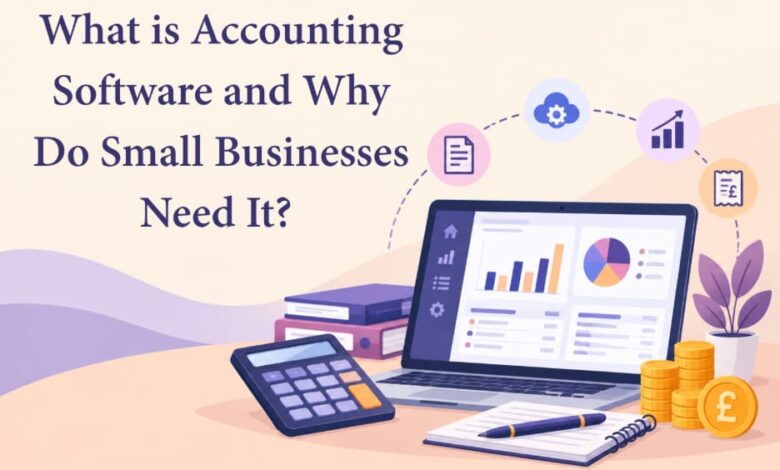
A computer application called accounting software helps companies keep track of and manage their financial operations. By combining crucial accounting functions into a single system, it facilitates access to and understanding of financial data. It can be used by businesses to manage client payments, create invoices, keep track of spending and check account balances. It can help with cash flow management, financial reporting and bookkeeping.
Because smaller businesses might not have huge accounting teams, Accounting Software for Small Businesses is very helpful. It makes it easier for business owners to keep accurate records without primarily depending on paper documents or spreadsheets.
Software, however, cannot take the place of accounting expertise. Professionals can learn how to record and comprehend financial transactions by studying Financial Accounting (FFA). This understanding facilitates the proper use of accounting tools and the comprehension of the data they offer.
Why Small Businesses Need Accounting Software
Below are the key reasons small businesses need accounting software to manage their finances accurately and support everyday business decisions:
Saves Valuable Business Time
Owners of small businesses frequently do multiple tasks concurrently. Hours spent recording transactions or verifying figures can divert focus from clients and business expansion.
Routine tasks like arranging financial data and recording transactions can be made easier with accounting software. Owners are able to devote more time to tasks that directly benefit their company as a result.
Reduces Accounting Errors
Errors can occur in manual financial recordkeeping. Reports and balances may be impacted by a missed transaction or an inaccurate amount.
Accounting Software for Small Businesses can regularly organise transaction data and automate computations. This helps companies keep more trustworthy financial records by reducing frequent manual errors.
Gives a Clearer View of Cash Flow
Small businesses must be aware of the amount of money coming into and going out of the company. Everyday financial planning might be challenging due to poor visibility.
Professionals can learn how transactions impact firm finances by studying Financial Accounting (FFA). Accounting software facilitates this comprehension by simplifying the review of cash flow data.
Keeps Business Expenses Organised
Suppliers, travel, equipment, and regular operational expenditures can all contribute to business expenses. Small expenses are readily missed if they are not properly tracked.
Accounting Software for Small Businesses can keep transaction data accessible and organise spending. Owners can better regulate business expenses and understand spending trends with the aid of efficient expense tracking.
Provides Useful Financial Reports
Useful information is necessary for making wise decisions. Small firms must be aware of their revenue, costs and general financial situation.
Accounting software can use recorded business data to generate financial reports. Professionals can comprehend these reports and use the data to make smarter financial decisions by studying Financial Accounting (FFA).
Keeps Tax Information Better Organised
Incomplete or dispersed financial records can make tax preparation challenging. Finding pertinent information is made simpler by well-organised records.
Information about revenue and expenses can be kept together throughout the year using accounting software. When financial data is required for tax purposes, this helps organisations maintain clearer records.
Supports Business Growth
A company may manage more clients, invoices, costs, and payments as it expands. It may become challenging to manually manage this increasing activity.
An organised framework that can accommodate expanding financial activity is provided to small enterprises by dependable accounting software. Owners can plan future expenditures and expansion with the use of better records.
Conclusion
Accounting software gives small businesses a simpler way to manage invoices, expenses, cash flow and financial records. It saves time, improves accuracy and provides clearer financial information for everyday decisions. However, technology becomes more useful when supported by strong accounting knowledge.
MPES Learning offers Financial Accounting (FFA) Course to help professionals understand essential financial principles and build practical skills for managing accounting information with greater confidence.