Power Washing: A Complete Guide to Cleaning and Maintaining Exterior Surfaces

Exterior surfaces are constantly exposed to dirt, dust, weather conditions, moisture, vehicle emissions, organic growth, and everyday environmental buildup. Over time, these contaminants can make driveways, patios, walls, walkways, decks, and other surfaces appear dull and neglected even when the underlying material remains in good condition. Regular cleaning can help restore the appearance of these areas while also making it easier to identify stains, cracks, surface deterioration, and other problems. Power washing provides an efficient way to remove stubborn buildup by using pressurized water and suitable cleaning methods. When performed correctly, it can refresh outdoor surfaces, improve their appearance, and contribute to better long-term property maintenance.
What Is Power Washing?
Power washing involves using pressurized water to remove dirt, grime, stains, algae, mildew, loose debris, and other contaminants from hard surfaces. The equipment typically includes a motor or engine, a pump, a water supply, a hose, and different spray nozzles designed for particular cleaning tasks. Pressure levels can vary depending on the machine and application, so choosing the correct setting is essential. Excessive pressure can damage certain surfaces, while insufficient pressure may not remove deeply embedded contamination. Effective power washing is therefore not simply a matter of using the strongest possible spray. It requires an understanding of the surface being cleaned, the type of contamination present, and the appropriate combination of pressure, water flow, distance, and cleaning solution.
Why Exterior Cleaning Matters
Outdoor surfaces gradually collect contaminants that can affect both appearance and condition. Dirt can settle into porous materials, while moisture can encourage the growth of algae, mildew, and other organic substances. Leaves, soil, pollen, and other debris may also accumulate in areas that are not cleaned regularly. Beyond appearance, buildup can sometimes make surfaces slippery or conceal damage that would otherwise be easier to notice. Routine cleaning provides an opportunity to inspect surfaces and identify problems before they become more serious. Power washing can be particularly useful as part of a broader maintenance routine because it can remove layers of accumulated grime and reveal the actual condition of the material underneath.
Cleaning Concrete Surfaces
Concrete is one of the most common surfaces cleaned with pressurized water because it can accumulate significant amounts of dirt and staining. Driveways, sidewalks, patios, steps, and other concrete areas may develop dark discoloration, tire marks, mud deposits, algae, or organic stains over time. A suitable pressure level can help lift this buildup without unnecessarily damaging the surface. However, concrete is not completely immune to pressure-related damage, particularly when it is old, cracked, or already deteriorating. The operator should inspect the surface before cleaning and adjust the equipment accordingly. Power washing concrete carefully can restore a cleaner appearance while also making stains, cracks, and areas of deterioration easier to identify.
Maintaining Patios and Outdoor Living Areas
Patios often experience heavy exposure to weather and regular foot traffic, making them prone to dirt and organic buildup. Furniture, plants, food, moisture, and fallen leaves can contribute to staining and discoloration. Cleaning these areas can make outdoor living spaces look more inviting and can help remove substances that may become slippery when wet. Before cleaning, loose furniture, decorations, and other movable objects should be removed from the area. Particular care should be taken around joints, edges, decorative finishes, and delicate materials. Power washing can provide an efficient way to refresh a patio, but the cleaning method should always be adjusted to suit the specific material rather than treating every surface in the same way.
Cleaning Decks and Wood Surfaces
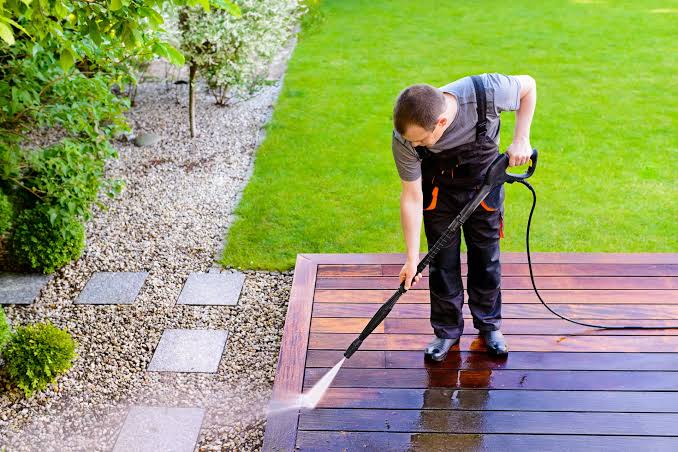
Wood requires more careful treatment than many hard masonry surfaces because excessive pressure can damage the fibers. A powerful spray held too close to the surface may create grooves, splintering, or uneven areas that become noticeable after the wood dries. The appropriate pressure, nozzle, spray distance, and technique should therefore be selected carefully. Cleaning should generally follow the direction of the wood grain, and a small test area can help determine whether the chosen method is appropriate. After cleaning, the wood may need sufficient drying time before staining, sealing, or painting. When performed correctly, power washing can help remove accumulated dirt and organic growth from wood while preparing the surface for additional maintenance.
Removing Mold, Mildew, and Organic Growth
Moist outdoor environments can encourage the development of mold, mildew, algae, moss, and other organic growth. These substances can create dark or greenish discoloration and may make certain surfaces slippery. Simply increasing water pressure is not always the best approach because excessive force can damage the surface while failing to address the conditions that allowed the growth to develop. Suitable cleaning solutions may sometimes be used alongside controlled pressure to improve removal. Protective measures and appropriate handling are important whenever cleaning products are involved. After the visible growth has been removed, improving drainage, reducing excessive moisture, and maintaining the surface regularly can help reduce the likelihood of rapid recurrence.
Preparing Before Cleaning
Good preparation can make an exterior cleaning project safer and more effective. Movable furniture, planters, toys, decorations, and other objects should be removed from the work area whenever possible. Windows and doors should be closed securely, and vulnerable fixtures or electrical components should be protected from direct spray. The surface should also be inspected for loose sections, cracks, damaged joints, peeling coatings, and other conditions that could worsen during cleaning. It is useful to identify particularly stained areas in advance so they can receive appropriate attention. Proper preparation helps ensure that power washing focuses on the intended surface while reducing the risk of accidental damage to surrounding property.
Choosing the Correct Pressure
The pressure used during cleaning should be determined by the surface rather than by the maximum capability of the machine. Hard, durable surfaces may tolerate higher pressure, while painted materials, wood, older masonry, and delicate finishes may require a gentler approach. The nozzle type also affects the intensity and spread of the water stream. A narrow spray can concentrate significant force into a small area, while a wider spray distributes the pressure over a larger surface. Maintaining an appropriate distance from the material can further reduce the risk of damage. Power washing should always begin conservatively, with the pressure increased only when necessary and when the surface can safely tolerate it.
Using Cleaning Solutions Effectively
Water alone can remove many types of dirt, but some stains and organic contaminants may require a suitable cleaning solution. Detergents can help loosen grease, grime, algae, mildew, and other substances before they are rinsed away. The selected product should be compatible with the surface and used according to its instructions. Care should also be taken to protect plants, landscaping, nearby materials, and drainage areas from unintended exposure. Cleaning solutions should not be mixed unless the manufacturer specifically indicates that they are compatible. A controlled combination of appropriate detergent and water pressure can often achieve better results than simply increasing the pressure to extreme levels.
Common Mistakes to Avoid
One of the most common mistakes is assuming that higher pressure automatically produces better cleaning. Excessive pressure can damage concrete edges, wood fibers, paint, coatings, mortar joints, and other surfaces. Another mistake is holding the nozzle too close to the material, which concentrates the force in a small area. Moving the spray too quickly can also produce uneven cleaning, while moving too slowly may create visible lines or surface damage. Failing to protect nearby objects, plants, windows, and fixtures can lead to unnecessary problems. Effective power washing depends on controlled movement, suitable equipment settings, appropriate preparation, and an understanding of how the surface responds to pressure.
Professional Service or DIY Cleaning
Some exterior cleaning projects can be completed by homeowners who have suitable equipment and understand how to operate it safely. Smaller patios, walkways, and durable surfaces may be manageable when the appropriate pressure and technique are used. However, larger projects can involve significant preparation and may require specialized equipment or cleaning solutions. High areas, delicate surfaces, extensive staining, and difficult-to-remove organic growth can also increase the complexity of the work. Professional cleaners often have experience selecting pressure levels, spray patterns, detergents, and techniques for different materials. For homeowners who are uncertain about equipment operation or concerned about damaging an expensive surface, professional assistance can provide an additional level of protection.
Safety During Exterior Cleaning
Pressurized water can cause injuries when handled incorrectly, so safety should always be considered before operating cleaning equipment. Protective eyewear can help protect the eyes from dirt and debris, while suitable footwear can improve stability on wet surfaces. The spray should never be directed toward people, animals, electrical equipment, or fragile objects. Operators should also be aware that wet surfaces can become slippery during cleaning. Extension cords and electrical connections require particular caution around water, and equipment should be operated according to the manufacturer’s safety instructions. Taking simple precautions can make power washing considerably safer and reduce the likelihood of accidents during an exterior cleaning project.
Maintaining Clean Surfaces Afterward
Cleaning should ideally be part of an ongoing maintenance plan rather than a one-time solution. Regularly removing leaves, soil, standing water, and other debris can reduce the amount of buildup that accumulates between deeper cleaning sessions. Addressing leaks, drainage problems, and areas of persistent moisture can also help prevent recurring stains and organic growth. High-traffic areas may require more frequent attention than surfaces that receive little use. Sealing or protecting certain materials after cleaning may also help reduce future staining, depending on the surface and the appropriate maintenance product. Consistent care can extend the time between major cleaning projects and help exterior surfaces retain a fresh appearance.
Final Thoughts
Exterior surfaces naturally become dirty as they are exposed to weather, foot traffic, moisture, organic material, and everyday environmental conditions. Effective cleaning can restore their appearance while making it easier to inspect the surface for damage or deterioration. The best results come from choosing the correct pressure, nozzle, cleaning solution, spray distance, and technique for each specific material. Preparation and safety are equally important because careless use of pressurized water can damage surfaces or create unnecessary hazards. Whether handled as a careful DIY project or entrusted to an experienced professional, power washing can be a valuable part of regular exterior maintenance. With appropriate methods and consistent care, clean outdoor surfaces can remain attractive, functional, and easier to maintain over the long term.