A Northshore Business Owner’s Guide to Roof Maintenance Before Hurricane Season

For businesses on Louisiana’s Northshore, hurricane season is part of the annual planning cycle. Owners think about inventory, staff safety and insurance, but the building’s roof is often only checked after something goes wrong. Yet a well-maintained roof is one of the best ways to reduce storm damage and keep your doors open after severe weather.
This guide explains how commercial property owners and managers in Covington and the surrounding area can prepare their roofs before storm season arrives.
Why Pre-Season Maintenance Matters
A roof that looks fine from the parking lot may still have weak points. Loose flashing, clogged drains, worn sealants and small punctures can all turn into serious leaks when strong winds and heavy rain arrive.
Preparing ahead of time helps you:
- Reduce the risk of water damage to inventory and equipment.
- Avoid emergency repairs when contractors are in high demand.
- Document the roof’s condition for insurance purposes.
- Extend the life of your roofing system.
Step 1: Schedule a Professional Inspection
Start with a professional inspection well before the busy season. An experienced roofer can identify issues that are hard to spot from the ground. Owners looking for guidance on commercial roofing in Covington should look for contractors who work with the types of systems common on local commercial buildings, such as metal, TPO and modified bitumen.
What a good inspection covers
- Roof surface condition and signs of wear.
- Flashing around walls, vents and equipment.
- Seams and fasteners on metal or membrane roofs.
- Drains, scuppers and gutters.
- Signs of ponding water.
- Interior signs of leaks, such as ceiling stains.
Step 2: Clear and Test Drainage
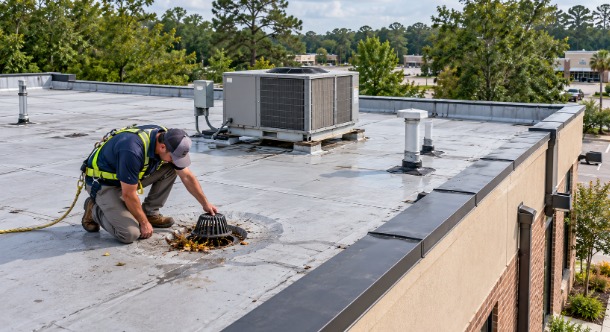
Drainage is critical for flat and low-slope roofs. Debris from trees and storms can block drains, causing water to pool. Standing water adds weight and increases leak risk.
Before storm season:
- Remove leaves, branches and debris.
- Test drains and downspouts to make sure water flows freely.
- Check that gutters are securely attached.
Step 3: Secure Rooftop Equipment
HVAC units, vents, satellite dishes and signage can become hazards in high winds. Make sure everything is properly anchored and that flashing around penetrations is in good condition.
Step 4: Address Repairs Promptly
Small problems become big ones during storms. Repair minor leaks, replace damaged flashing and reseal seams before the season starts.
| Issue | Risk during storms | Recommended action |
|---|---|---|
| Loose flashing | Wind lifts edges, water enters | Re-secure or replace |
| Clogged drains | Ponding water and leaks | Clear and test |
| Worn sealant | Leaks at seams and penetrations | Reseal |
| Damaged membrane | Water intrusion | Patch or repair |
| Unsecured equipment | Wind damage | Anchor properly |
Step 5: Trim Nearby Trees
The Northshore’s mature trees are part of its charm, but overhanging branches can damage roofs during storms. Trim limbs that hang over the building.
Step 6: Document Everything
Take dated photos of your roof, drains and equipment after maintenance. Keep inspection reports and repair invoices. This record helps if you need to file an insurance claim later.
Building a Year-Round Plan
Pre-season maintenance works best as part of a broader plan. Learning the commercial roof maintenance basics for Louisiana businesses can help you set a schedule for inspections, cleaning and repairs that fits your building.
Suggested schedule
- Spring: Full inspection and repairs before storm season.
- Early summer: Drain and gutter check.
- After major storms: Inspection for damage.
- Autumn: Cleaning and minor repairs.
Preparing Your Team
Create a simple storm plan: who checks the building after a storm, who contacts the roofer and where key documents are kept. Share contact details for your roofing contractor with staff.
Frequently Asked Questions
How early should I schedule an inspection?
Ideally several weeks before storm season, when contractors are less busy and repairs can be completed in time.
Can I inspect the roof myself?
You can look for obvious issues from safe vantage points, but rooftop inspections should be handled by trained professionals.
Is it worth replacing an old roof before storm season?
If your roof is near the end of its life or has repeated leaks, replacement may be more cost-effective than ongoing repairs. A professional assessment can help you decide.
Hurricane season is a fact of life on the Northshore. A proactive roof maintenance plan, including inspection, drainage checks, equipment securing and timely repairs, helps Covington businesses protect their buildings and keep operating when storms pass through.