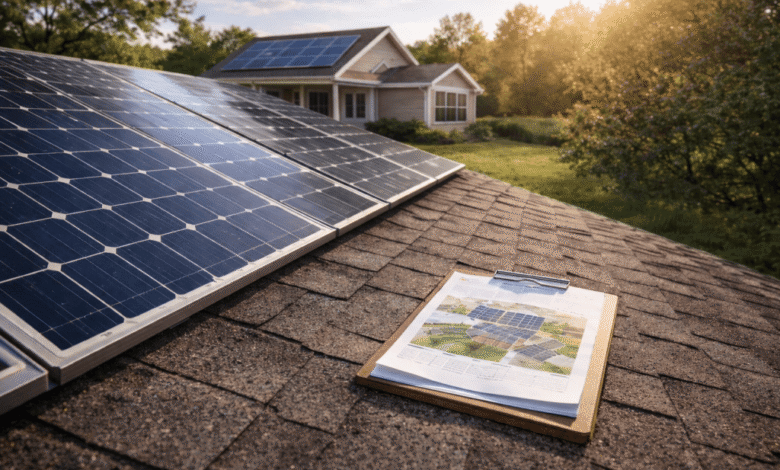
Top 10 Questions to Ask Solar Companies in the Bay Area Before You Get a Quote

Getting a solar installation quote is not the same as making a purchase decision. For most homeowners and property managers in the Bay Area, a solar system represents a long-term commitment — one that affects utility costs, roof integrity, property value, and daily energy reliability for the next two to three decades. Yet many people enter the quoting process underprepared, focused primarily on the monthly payment figure rather than the variables that actually determine whether an installation performs as expected over time.
The Bay Area solar market is active and competitive. There are dozens of installers operating across San Jose, San Francisco, Oakland, and the surrounding counties, ranging from large national contractors to small regional specialists. That variety is useful, but it also makes evaluation more complex. A low quote is not always a good quote, and a persuasive sales presentation is not a substitute for technical transparency.
The questions below are designed to give you a structured basis for comparison before you commit to any installer. They are not meant to challenge or test a company — they are meant to help you understand what you are actually agreeing to.
Why the Questions You Ask Before a Quote Matter More Than the Quote Itself
A solar quote is a document built on a series of assumptions — about your roof’s condition, your utility rate structure, your household’s energy consumption patterns, and the system’s projected output over time. If those assumptions are poorly made or not disclosed to you, the quote becomes difficult to evaluate accurately. When comparing quotes across multiple solar companies bay area homeowners often find that two quotes for “similar” systems can look very different in both price and projected savings, even when covering the same home. Understanding why those differences exist requires asking the right questions before the numbers are presented.
Reputable installers expect these questions. If a company is reluctant to provide detailed answers, that reluctance itself is useful information. You can explore vetted options across the region through this directory of solar companies bay area residents and property managers have used as a starting point for comparison.
Understanding What a Quote Actually Contains
Before accepting any proposal, ask the installer to walk you through every line item and explain what is and is not included. Some quotes cover permits and interconnection fees; others do not. Some include monitoring systems; others treat them as add-ons. A quote that appears lower may simply be excluding items that will be added later in the process. Knowing what is in the document before you sign prevents cost surprises at the installation phase, which is a common source of friction between installers and clients.
Question One: Who Will Actually Install the System?
Some solar companies sell installations but subcontract the physical work to third-party crews. This is not inherently problematic, but it does affect accountability. When an issue arises — a roof leak, a wiring problem, or an underperforming panel — knowing who is responsible for the work makes a difference in how quickly it gets resolved. Ask directly whether the company uses its own licensed electricians and roofers, or whether the installation is handed off after signing. If subcontractors are used, ask how the company manages quality control and whether the warranty is backed by the installer or the subcontractor.
Licensing and Insurance Are Non-Negotiable Starting Points
California requires solar contractors to hold a valid C-10 electrical license or a C-46 solar contractor license issued by the California Contractors State License Board. Ask for the license number and verify it independently. Also confirm that the company carries both general liability insurance and workers’ compensation coverage. These are not administrative formalities — they determine whether you are financially protected if something goes wrong on your property during or after installation.
Question Two: How Was My System Size Determined?
System sizing should be based on your actual utility bills, not on a general estimate or a square footage assumption. A properly sized system accounts for your household’s annual energy consumption, seasonal usage patterns, roof orientation, shading from trees or neighboring structures, and the rate structure your utility uses. The California Public Utilities Commission outlines how net energy metering works, and the details of that structure affect how much a given system size will actually offset your costs over time. Ask the installer to show you the production model they used and explain what inputs drove the sizing recommendation.
What Happens If the System Underproduces?
Some installers offer production guarantees; others do not. If a company projects that your system will produce a specific amount of energy annually, ask what recourse you have if it falls short. Underproduction can result from shading issues that were not properly assessed, equipment that degrades faster than projected, or system design errors. Knowing in advance whether the installer stands behind their projections — and how — gives you a clearer picture of your actual financial risk.
Question Three: What Equipment Is Being Proposed and Why?
Solar panels, inverters, and mounting systems vary significantly in quality, longevity, and warranty terms. The brand a company recommends is often influenced by their supplier relationships and margin structure, not solely by what performs best for your specific situation. Ask the installer why they are recommending a particular panel manufacturer and inverter type. Ask whether microinverters, string inverters, or power optimizers are being used, and how that choice affects system monitoring and maintenance over time.
Warranty Terms Require Close Reading
There are typically two separate warranties on solar equipment: a product warranty that covers defects in the hardware, and a performance warranty that covers energy output degradation over time. These are issued by the manufacturer, not the installer. In addition, the installer should offer a workmanship warranty covering their installation labor. Ask for the duration and terms of each warranty in writing, and confirm that the manufacturer whose equipment is being installed is financially stable enough to honor those warranties ten or fifteen years from now.
Question Four: How Will the Permitting and Utility Interconnection Process Be Handled?
Solar installations in the Bay Area require permits from the local jurisdiction and approval from the utility — typically PG&E — before the system can be activated. This process takes time and involves documentation, inspections, and coordination between the installer, the city or county, and the utility. Some installers manage this process efficiently; others have poor track records with permit timelines. Ask the company how long their average permitting and interconnection timeline is, and what happens if there are delays. A system that is installed but not yet approved cannot be turned on, which means you are still paying your full utility bill while your panels sit idle on the roof.
Question Five: What Financing Options Are Available and What Are Their Real Terms?
Solar financing comes in several forms — cash purchase, loan, lease, and power purchase agreement — and each carries a different set of financial implications. Loans can be secured or unsecured, and some are attached to your property in ways that affect home sales. Leases and PPAs transfer ownership of the system to a third party, which has tax credit implications and can complicate property transactions. When speaking with solar companies in the Bay Area, ask for a detailed explanation of each option’s total cost over the contract term, what happens if you sell your home, and whether the federal investment tax credit applies to your financing structure.
Question Six: What Does Ongoing Monitoring and Maintenance Look Like?
A solar system is not a fully passive installation. Panels can underperform due to soiling, shading changes, or equipment issues that are not immediately visible. Most modern systems include remote monitoring tools that track production data, but someone needs to review that data and respond when something is off. Ask whether monitoring is included in your contract, who reviews it, and how you are notified if production drops. Also ask what routine maintenance the system requires and whether the company offers service agreements for ongoing upkeep.
Question Seven: Can You Provide References from Installations in Similar Conditions?
A company’s portfolio matters, but general references are less useful than references from customers whose homes or properties closely resemble yours. If you have a tile roof, a multi-story structure, or significant shading, ask for references from customers who had similar conditions. If you are installing a system that includes battery storage, ask for references from customers who have operated battery systems for at least a year. Talking to real customers about their experience — not just during installation, but afterward — provides context that no sales presentation can replicate.
Question Eight: How Does Battery Storage Affect This Proposal?
Battery storage is increasingly common in Bay Area solar installations, partly because of utility rate structures and partly because of grid reliability concerns during wildfire season. However, adding battery storage changes the economics, the installation complexity, and the permitting requirements of a project significantly. If storage is included in a quote, ask whether it is necessary for your usage profile, what its rated capacity and usable capacity are, and how it interacts with PG&E’s rate plans. If storage is not included but you are considering it, ask whether the system is designed to support future battery integration without requiring significant additional work.
Question Nine: What Is the Company’s Track Record in the Local Market?
Years in business and volume of installations are relevant, but local market experience matters more than national scale. A company that has installed hundreds of systems in Marin County will have a more accurate understanding of local permitting offices, utility interconnection timelines, and regional weather patterns than a national provider entering the market for the first time. Ask how long the company has operated specifically in the Bay Area, how many installations they have completed in your city or county, and whether they have a local office and service team rather than routing service calls through a remote operations center.
Question Ten: What Does the Process Look Like After I Sign?
The period between signing a contract and having a working system can take anywhere from several weeks to several months, depending on permitting timelines and utility backlog. Ask the installer to walk you through every step that follows the contract signature — site survey, permit application, equipment ordering, installation scheduling, inspection, and utility interconnection. Ask who your point of contact will be during each phase, how they communicate progress, and what your role is at each stage. A company that can answer this question in clear, sequential terms has almost certainly done it many times before and managed the process well.
Making a More Informed Decision Before You Commit
The process of selecting a solar installer is not fundamentally different from selecting any other long-term service contractor. The quality of the information you gather before signing determines how closely the outcome matches your expectations. In a market as active as the Bay Area, where solar companies range widely in experience, business practices, and technical capability, asking structured questions before accepting any quote is the most reliable way to make a comparison that reflects real value rather than surface price.
None of the questions above are adversarial. They are the same questions any experienced contractor or facilities manager would ask before authorizing a project of this scope. The answers you receive — and just as importantly, the way they are delivered — will tell you a great deal about how a company operates before you are dependent on them for your home’s energy infrastructure.
Take notes during every consultation. Compare not just the numbers, but the quality and specificity of the explanations. A clear, confident, and detailed answer to a direct question is one of the most reliable indicators of professional competence available before work begins.