
A flat tire is a small problem until it happens several miles from home. Before buying, check the tire size and how easy it is to remove a wheel—especially the rear wheel. Those details affect the cost and effort of an ordinary repair, so they’re worth comparing when shopping for electric bikes.
Once a tire loses air, resist the urge to keep riding. An ebike’s extra weight can make a soft tire harder to control, and riding on it can damage the rim or tire. First move the bike somewhere safe, switch it off, and work out what failed before replacing anything.
Start with the shape of the damage
If the tire is completely flat, inspect it before pulling out the tube. Look for a nail, wire, glass, or thorn still lodged in the tread. Remove the object carefully, but remember where it entered: the same puncture may have gone through the tire and into the tube.
The hole in the tube can offer a useful clue. One small puncture usually points to something sharp that entered from outside. Two close holes—often called a pinch flat—can mean the tube was squeezed between the tire and rim after hitting a curb or pothole while underinflated. A hole on the inside of the tube, facing the rim, calls for a closer look at the rim tape and the inside edge of the rim. A spoke end or damaged tape can puncture a replacement tube in the same place.
Before fitting a new tube, run your fingers carefully around the inside of the tire, or use a cloth to catch anything sharp. Don’t sweep a bare hand quickly through the casing; a fine piece of glass can be difficult to see and easy to miss.
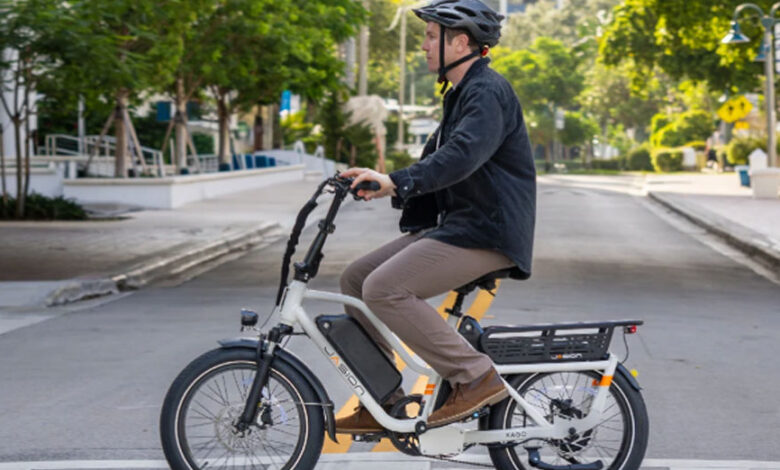
A Jasion Kago rider on an everyday city ride.
Check what kind of tire you have
Most ebikes use a tube inside the tire, but some setups are tubeless. The repair depends on which one you have. A small puncture in a tubeless tire may seal with the tire’s sealant; a larger cut may need a plug or a replacement tire. A tube-style tire needs a patch or a new tube. Adding a tube to a tubeless setup can sometimes be a way to get home, but it is not a substitute for checking the tire and rim afterward.
Tire size matters when buying a replacement. Match the size printed on the tire, and check the valve type and length as well. For wider tires, confirm both the wheel diameter and tire width before ordering. The label fat tire ebikes may describe a category, but it does not tell you which tube will fit a particular wheel.
A patch can be a reasonable roadside fix if the hole is small and the tube is otherwise in good condition. If the tube is torn near the valve, has several holes, or keeps losing air after patching, replacing it is usually the better call. In either case, remove the cause of the puncture first; a new tube won’t last long against a shard still embedded in the tire.
The rear wheel may take more care
Removing a front wheel is usually straightforward. The rear wheel can be a different job, particularly if the bike has a hub motor. It may involve a motor cable, specific washers, or a particular order for reinstalling the hardware. Disconnecting or refitting those parts incorrectly can turn a tube change into a larger repair.
If you’re unsure, check the instructions for your exact model before loosening the axle. The Jasionbike site can help identify the model and its setup; use the model-specific instructions for any wheel-removal steps. If those aren’t available or the motor cable connection is unclear, a bike shop is a sensible choice.
For any wheel removal, switch the bike off first and remove the battery if the design allows it. Keep the brake rotor clean, and don’t squeeze a hydraulic brake lever while the wheel is out unless a spacer is in place. If the rear wheel has a motor cable, avoid pulling on the wire itself.
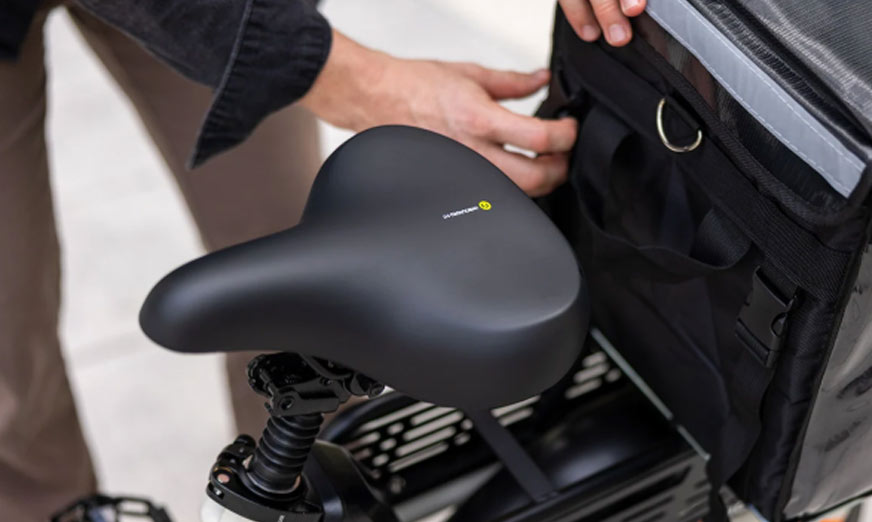
A closer look at the Kago’s everyday carry setup.
Don’t skip the check after the repair
Inflate the tire to a pressure within the range printed on its sidewall. Before riding, look along both sides of the rim to make sure the tire bead sits evenly all the way around. A section that bulges or sits lower than the rest needs attention before the bike goes anywhere.
If you removed the wheel, confirm that it is fully seated and secured, and reconnect any motor cable according to the bike’s instructions. Spin the wheel and check that it turns freely without rubbing the brake. Then test the brakes while walking the bike, followed by a short, slow ride in a safe area. Stop if the tire loses pressure, the wheel feels loose, the brake rubs, or the motor behaves unusually.
A simple repair kit can spare a long walk: the right tube or patch kit, tire levers, a pump that fits the valve, and the tools required for your bike. Carrying a tube that only looks close to the right size can waste time at the roadside. Check the numbers on the tire before leaving, and replace a worn or damaged tire rather than treating every flat as a tube problem.
The useful question after a puncture isn’t just “How do I get air back in?” It’s “What caused the leak, and have I fixed that too?” Answering both makes the next ride a lot less likely to end in the same place.