
Glasses fog up. Contacts dry out. Your eyes get tired by lunchtime, and you are done pretending that is normal.
Laser eye surgery corrects blurry vision by sculpting the cornea – that very clear bit right at the front of your eye. A laser carefully ablates tiny amounts of tissue – finer than even a single strand of hair – so that light finally hits your retina exactly where it’s meant to. It all becomes rather less intimidating when you really understand what goes on in there. This guide walks through every stage of a laser eye surgery procedure in Melbourne, from the first numbing drop to the drive home, so nothing catches you off guard on the day.
How Long Does The Procedure Actually Take?
Surgery itself typically lasts around 10 minutes per eye – that’s all. Most of your appointment time really goes into preparation work rather than the actual laser treatment – and quite frankly, that’s the bit hardly anyone tells you about beforehand.
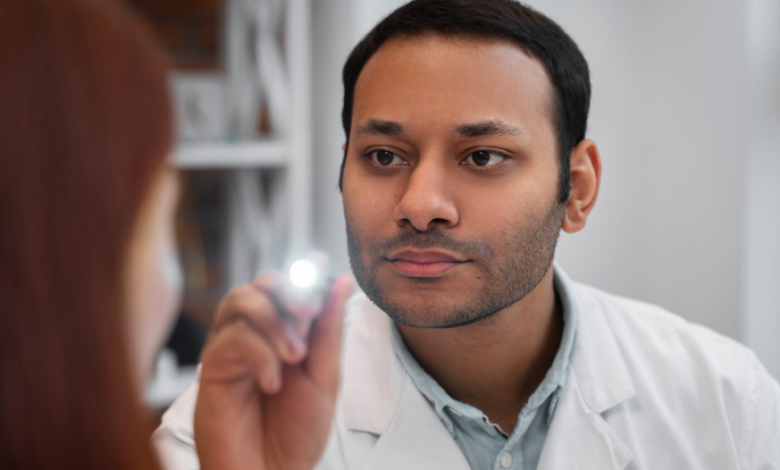
You’ll sit in a reclined chair under a very bright light source. First come some numbing drops so you won’t experience any pain – merely slight pressure. A small gadget will keep your eyelids wide open. You cannot blink, but you also cannot feel much of anything, which surprises most first time patients.
Patients often say the hardest part is staying still and staring at a blinking light for a few seconds. That is the laser locking onto your eye’s exact shape before it starts reshaping the cornea.
What Happens Inside The Procedure Room, Step By Step?
Every laser eye surgery procedure in Melbourne follows roughly the same five steps, whether you are getting LASIK or PRK. Here is what actually happens, step by step.
- Numbing drops go into each eye first
- A flap or surface layer gets created using a precision laser
- The excimer laser reshapes the cornea in seconds
- The flap gets placed back down like a tiny natural bandage
- A clear shield goes over your eye for protection
Each step takes seconds, not minutes. The laser only runs for a short burst, often under thirty seconds per eye, guided by a computer that tracks your eye movement thousands of times a second. I find that part more impressive than the surgery itself.
LASIK Versus PRK, What Is The Real Difference?
LASIK and PRK both reshape the cornea, but they differ in one big way. LASIK creates a flap. PRK removes the surface layer completely instead.
| Feature | LASIK | PRK |
|---|---|---|
| Flap created | Yes | No |
| Recovery time | 1 to 2 days | 5 to 7 days |
| Discomfort | Mild and short | Moderate and longer |
| Best for | Thicker corneas | Thinner corneas |
| Vision stabilizes | 24 to 48 hours | 1 to 2 weeks |
Surgeons pick PRK for patients with thinner corneas, because there is no flap to worry about. It just takes longer to heal, and I would rather a slower healing path than a flap on a cornea that is too thin for it.
What Happens Right After The Laser Stops?
You will notice blurry vision for the first few hours. That is normal, so do not panic. Your eyes water a lot too, almost like chopping onions, and that is just your eyes doing their job.
A driver has to take you home. Your vision is not safe for driving on the same day, no matter how fine you feel. Most clinics book you back for a check up the very next morning to confirm the cornea is healing the way it should, and skipping that visit is one habit I would never recommend. Clear plastic shields stay on overnight too, mainly to stop you rubbing your eyes while you sleep without thinking about it.