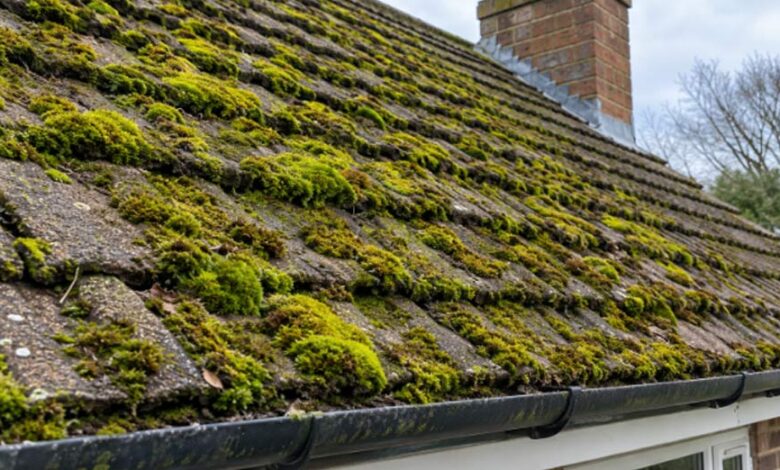

Moss on a roof is one of the most common problems homeowners face, especially in damp, shaded or cooler climates. At first, it may look harmless, even charming, like a soft green layer that adds character to an older home. But left alone, it quietly holds moisture against the roof, loosens tiles and shingles, and can slowly lead to leaks, blocked gutters and expensive repairs. The good news is that you can remove moss safely and keep it away with a little knowledge and regular care.
This guide explains why moss grows on roofs, why you shouldn’t ignore it, and the safest ways to remove it. It also covers common mistakes to avoid, such as pressure washing, and simple steps to keep moss from returning, so homeowners can protect their roof and extend its life.
Why Moss Grows on Roofs?
Moss thrives where there is moisture, shade and little direct sunlight. Roofs most at risk usually share a few features:
- Shade from trees or nearby buildings, which keeps the surface damp for longer.
- North-facing slopes, which receive less sun and dry out slowly.
- Debris build-up, such as leaves, twigs and dirt, which holds water against the roof and gives moss something to grow in.
- Older or rougher roofing materials, which trap moisture more easily than smooth, newer ones.
- Poor ventilation or clogged gutters, which let water linger.
Moss spreads through tiny spores carried by wind and rain, so once conditions are right, it can establish itself quickly and spread across the roof.
How Moss Damages Your Roof Over Time?
Moss acts like a sponge. It holds water against the roof surface, and in colder months that trapped moisture can freeze and expand, lifting and cracking tiles or shingles. Over time, roots can work their way under roofing materials, loosen them, and let water seep into the structure below.
Heavy moss growth can also block gutters and downpipes as clumps wash loose, causing overflow and damp problems on walls and ceilings. In short, moss is not just a cosmetic issue. Dealing with it early protects the roof and extends its life.
Safety Precautions Before Removing Moss
Before you start, make safety your top priority. Roofs are slippery, especially when covered in moss, and falls from height cause serious injuries every year.
- Choose a dry, calm day and avoid working on wet or icy surfaces.
- Use a sturdy ladder on firm, level ground, and have someone hold it steady.
- Wear non-slip footwear and consider a safety harness for steeper roofs.
- If the roof is steep, very high, or in poor condition, hire a professional roofing company for safety.
Equipment and Supplies for Moss Removal
Having the right equipment ready makes moss removal faster, safer and less likely to damage the roof. Most of the items are inexpensive and easy to find at a hardware store.
Tools
- Sturdy extension ladder with a stabiliser or ladder standoff
- Soft-bristled brush or a long-handled push broom
- Plastic scraper or a wide putty knife with a rounded edge
- Garden sprayer for applying moss treatment
- Garden hose with an adjustable nozzle
- Bucket for mixing solutions and collecting debris
- Tarp or sheet to protect plants and surfaces below
Materials
- Roof moss killer suitable for the roofing material
- Diluted white vinegar or an oxygen-based cleaner (for light growth only)
- Zinc or copper strips for prevention
- Roofing nails or adhesive recommended for the strips
A Quick Note on Choosing Products
Not all moss treatments are the same. Some are made for tiles, others for asphalt shingles, and some can stain or corrode metal parts. Checking the product label and the roofing manufacturer’s guidance first helps avoid costly damage.
How to Remove Moss from a Roof | Step by Step
1. Clear Loose Debris
First, remove leaves, twigs, and other loose material by hand or with a soft brush. Clearing debris exposes the moss and keeps it from being pushed deeper into gaps during cleaning.
2. Remove Moss Gently by Hand or Brush
Use a soft-bristled brush or plastic scraper to lift moss away. Always work from the top of the roof downward, in the direction the tiles or shingles lie. Brushing against the tiles can lift or damage them. Avoid stiff wire brushes because they can strip protective granules from shingles and scratch tiles.
3. Apply a Moss Killer
After removing most of the moss, apply a purpose-made roof moss killer to treat what remains and slow regrowth. Products are available as sprays or concentrates and are usually applied with a garden sprayer. A few points are worth remembering:
- Always follow the manufacturer’s instructions on dilution and drying time.
- Apply on a dry day when no rain is forecast for at least 24 hours.
- Protect nearby plants, as some treatments can harm them.
- Treated moss typically turns brown and dies within a few weeks, after which you can gently brush it away.
Many homeowners also use mild, home-made solutions, such as diluted white vinegar or a diluted oxygen-based cleaner. These can work on light growth, but results vary, and you should check the roofing manufacturer’s guidance first to avoid damage.
4. Rinse Carefully
After treatment, rinse the roof with a garden hose on a low setting. Water should flow downward from the ridge. If you used chemical treatments, keep runoff away from lawns and flower beds.
Common Mistakes to Avoid When Removing Roof Moss
Some common methods cause more harm than good:
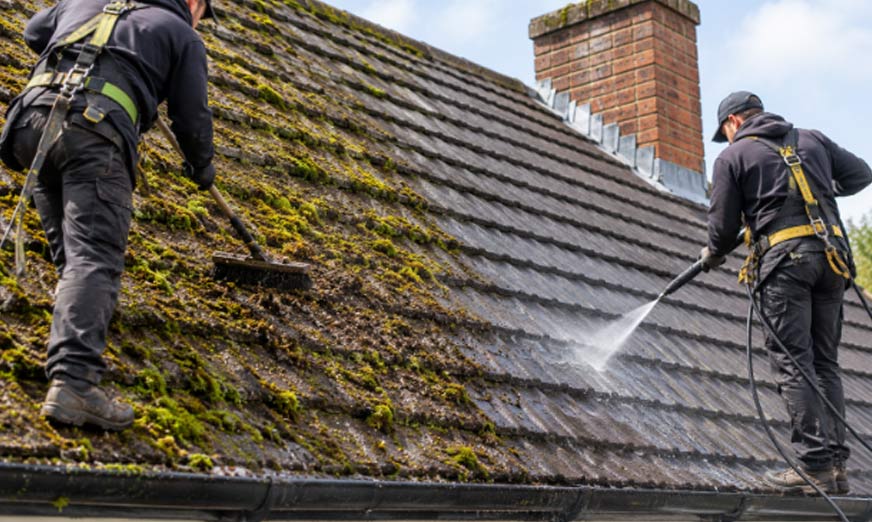
- Pressure washing. High-pressure water can strip granules from shingles, crack tiles and force water underneath, shortening the roof’s lifespan and sometimes voiding warranties.
- Harsh scraping. Metal tools can gouge roofing materials.
- Using strong bleach without care. Bleach can corrode metal flashings, damage gutters and harm plants and soil below.
- Walking on fragile roofs. Some materials, such as slate and older tiles, break easily underfoot.
How to Stop Moss from Coming Back
Removal is only half the job. Without prevention, moss often returns within a year or two. These steps help keep it away:
Install Zinc or Copper Strips
Zinc or copper strips placed along the roof ridge release trace metal ions when it rains. These wash down the roof and create conditions that discourage moss and algae. This is a popular, low-maintenance and long-lasting solution.
Trim Overhanging Branches
Cutting back trees that shade the roof lets in more sunlight and wind, which helps the surface dry faster. It also reduces leaf litter falling onto the roof.
Keep Gutters Clean
Blocked gutters hold water that can back up onto the roof edge. Clean them at least twice a year, and more often near trees, to keep water moving away properly.
Clean the Roof Regularly
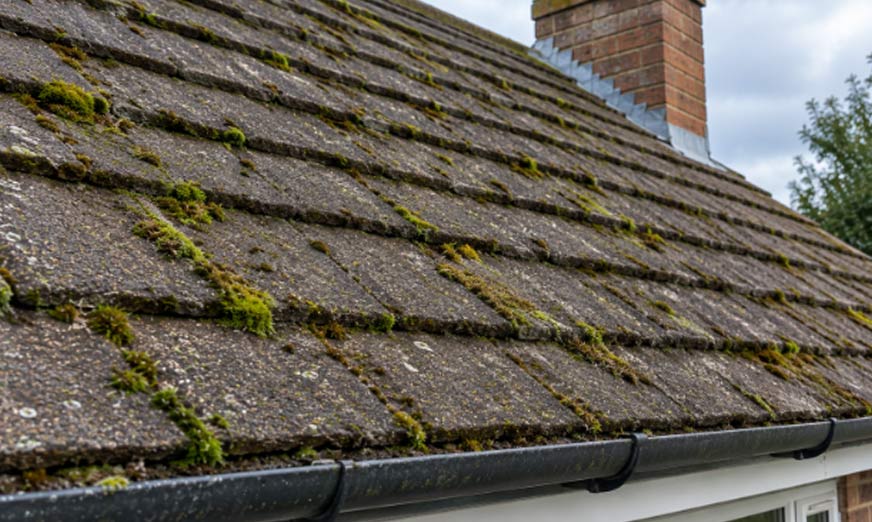
A light annual check and brush-down prevents small patches from becoming serious infestations. Catching moss early makes removal quicker and gentler.
Consider Moss-Resistant Materials
When a roof is due for replacement, some shingles and coatings are made with algae and moss-resistant properties. These can reduce future maintenance in damp or shaded locations.
When to Call a Professional
DIY removal suits small, accessible roofs with light moss growth. A professional roofer or roof-cleaning specialist is the better option when:
- The roof is steep, high or difficult to reach.
- Moss growth is thick and widespread.
- Tiles or shingles already look cracked, loose or lifted.
- There are signs of leaks, such as damp patches on ceilings.
- The roofing material is delicate, such as old slate or clay tile.
Professional roofing contractors have the right equipment, safety gear and experience to clean a roof without causing damage, and they can spot repair needs that are easy to miss from the ground.
Local Roofing Recommendation for Chelmsford Homeowners
For homeowners in Chelmsford, Braintree, Ipswich, and surrounding areas, a roofing specialist in Chelmsford is often best for moss removal because they understand how the region’s damp weather affects roofs. BestWay Roofing – Chelmsford Roofing is offering roof repairs, new roof installations, flat roofing, uPVC fascia and guttering, damp proofing, and chimney repairs. Its team can inspect the roof, identify moss-related damage, and recommend the right repair or treatment before small problems turn into leaks. The company also offers free, no-obligation quotes, making it easy for homeowners to compare options before deciding on any work.
Website: https://bestwayroofingltd.co.uk/
Email: contact@bestwayroofingltd.co.uk
Phone: 08000 487912
Address: 281 Dorset House, 25 Duke Street, Chelmsford, England, CM1 1TB
Conclusion
Moss on a roof may start as a small green patch, but it can quietly shorten the life of roofing materials and cause costly water damage. The safest approach is to remove it gently, treat what remains with a suitable moss killer, and avoid aggressive methods such as pressure washing. Prevention through zinc or copper strips, tree trimming, clean gutters and regular inspections keeps the problem from returning. With consistent care, a roof can stay clean, dry and sound for many years.