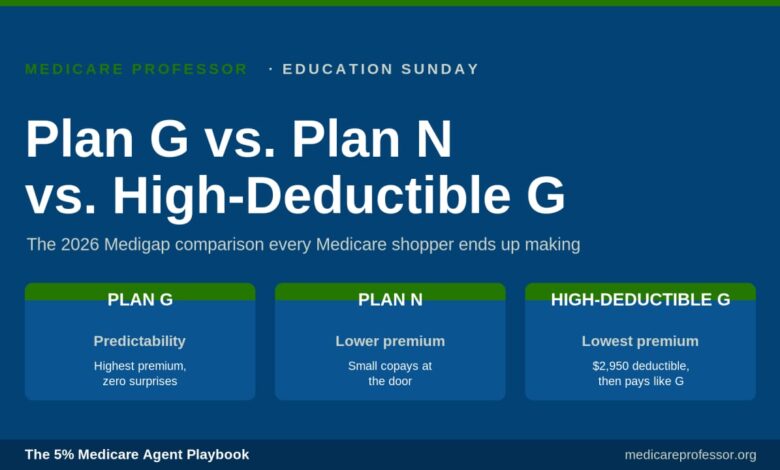
Medicare Plan G Enrollment and Costs: Your Questions Answered
Medicare Plan G Enrollment and Costs: Your Questions Answered

Choosing a Medicare Supplement plan involves more than comparing coverage charts. Timing, underwriting rules, and how premiums get priced all shape what you’ll actually pay and when you can apply. Medicare Plan G continues to draw interest from beneficiaries who want predictable coverage, but the enrollment process raises plenty of practical questions.
This FAQ-style guide walks through the details that matter most: when to enroll, how medical underwriting works outside your initial window, why premiums vary between carriers, and how this plan compares structurally to Medicare Advantage. Whether you’re approaching Medicare eligibility for the first time or reconsidering your current coverage, these answers aim to clarify the decision-making process without the jargon.
When is the best time to enroll in a Medicare Supplement plan?
The ideal enrollment window opens during your Medigap Open Enrollment Period, which begins the month you turn 65 and are enrolled in Medicare Part B. This window lasts six months and offers guaranteed issue rights, meaning insurers cannot deny coverage or charge more based on health history during this period.
Enrolling outside this window doesn’t close the door entirely, but it changes the process significantly. Applicants who wait often face medical underwriting, which can affect both approval and pricing. For this reason, financial advisors and insurance brokers typically recommend applying as soon as eligibility begins, even if you’re still working or covered by an employer plan, since the open enrollment clock starts based on age and Part B enrollment rather than retirement status.
What happens if I apply after my initial enrollment window closes?
Applying later generally means going through medical underwriting. Insurers will review your health history, current conditions, and sometimes request medical records before issuing a decision. This doesn’t automatically mean rejection, but it does introduce uncertainty that guaranteed issue periods eliminate.
Some states have adopted additional consumer protections, such as annual open enrollment windows or guaranteed issue rights tied to specific life events. Policies vary considerably by state, so checking local regulations before assuming you’ve missed your opportunity is a worthwhile step. Life events like losing employer coverage, moving out of a plan’s service area, or a carrier leaving the market can also trigger special enrollment periods with guaranteed issue protections.
How does medical underwriting affect approval and pricing?
Underwriting is the process insurers use to assess risk before issuing a policy. When you apply during a guaranteed issue period, underwriting is bypassed entirely. Outside that window, insurers typically ask health-related questions and may deny coverage for applicants with certain pre-existing conditions, or they may approve the application with a higher premium reflecting increased risk.
It’s worth noting that underwriting standards differ between insurance companies. One carrier might decline an application that another approves, depending on their specific risk tolerance and underwriting guidelines. This variability is why comparing multiple carriers, rather than assuming uniform standards across the industry, often leads to better outcomes for applicants with health concerns.
Why do premiums vary so much between insurance companies?
Premium pricing depends on the rating method a carrier uses, and three primary approaches exist across the industry. Community-rated pricing charges the same premium to everyone in a given area regardless of age, meaning your rate doesn’t increase simply because you get older. Issue-age-rated pricing bases your premium on your age at the time you first purchased the policy, so rates stay lower for those who enroll earlier but don’t rise due to aging alone. Attained-age-rated pricing adjusts premiums as you age, typically resulting in lower initial costs that climb over time.
Understanding which rating method a carrier uses matters significantly for long-term budgeting. An attained-age-rated policy might look attractive initially but could become considerably more expensive over the years compared to a community-rated or issue-age-rated alternative. Choose a community-rated or issue-age-rated policy if long-term cost predictability matters more than the lowest possible starting premium. Choose attained-age-rated coverage only if minimizing near-term costs takes priority and you’re comfortable with potential increases later.
Does my location affect how much I pay for coverage?
Geography plays a substantial role in premium calculation. Insurers factor in regional healthcare costs, state regulations, and local competition when setting rates. Two people with identical health profiles and the same plan letter could pay noticeably different premiums simply because they live in different zip codes.
This geographic variation is another reason that comparing quotes from multiple carriers in your specific area, rather than relying on national averages, produces more accurate expectations. Insurance brokers who specialize in Medicare products often have access to comparative data across several companies, which can simplify this research process considerably.
How does Medicare Plan G differ structurally from Medicare Advantage?
These two paths represent fundamentally different approaches to Medicare coverage. Medicare Advantage plans, offered through private insurers, often consolidate Parts A, B, and sometimes D into a single plan, frequently with networks of preferred providers and additional benefits like dental or vision coverage.
A Medicare Supplement plan, by contrast, works alongside Original Medicare rather than replacing it. It helps cover costs that Original Medicare doesn’t pay, such as coinsurance and copayments, and generally allows beneficiaries to see any provider who accepts Medicare nationwide, without needing referrals or staying within a specific network.
The tradeoff typically comes down to flexibility versus structure. Supplement plans tend to offer broader provider access and more predictable out-of-pocket costs, though usually at a higher monthly premium. Medicare Advantage plans often have lower premiums but include network restrictions and variable cost-sharing depending on the services used. Choose a Medigap-style plan if provider flexibility and predictable costs matter most to you. Choose Medicare Advantage if a lower premium and bundled extra benefits outweigh network restrictions for your situation.
What’s a common misconception when comparing this plan to other Medigap options?
One frequent misunderstanding is assuming that all Medicare Supplement plans with similar letter designations offer identical value regardless of which insurer sells them. While the federal government standardizes the benefits each plan letter must include, it does not standardize premiums, customer service quality, or claims processing efficiency. Two policies with the same letter can differ substantially once you look past the benefit chart.
Another misconception involves assuming that switching plans later is always simple. Once you’re past your initial guaranteed issue window, switching to a different Medigap plan, even one with fewer benefits, may require passing medical underwriting again in most states. This makes the initial plan selection more consequential than many people realize, since changing your mind later isn’t always straightforward.
A third misconception involves confusing supplement plans with Medicare Advantage entirely, assuming they serve the same function or can be easily substituted for one another. As outlined earlier, these are structurally distinct products with different networks, cost structures, and enrollment rules, and understanding that distinction upfront prevents confusion down the line.
Can I switch from Medicare Advantage to a Medicare Supplement plan later?
Switching is possible, but the guaranteed issue protections that applied during your initial enrollment generally don’t carry over automatically. If you leave Medicare Advantage after your first year to move to Original Medicare with a supplement, you may qualify for a trial right that offers guaranteed issue protections for a limited time, depending on your specific circumstances and how long you’ve been enrolled.
Outside of these specific trial right scenarios, switching later typically means going through medical underwriting again. This is why many beneficiaries take time upfront to carefully weigh the structural differences between these coverage types before committing, rather than assuming a future switch will be straightforward.
What should I look for when comparing quotes from different carriers?
Beyond the premium amount itself, it’s worth examining the rating method, the carrier’s financial strength ratings, customer service reputation, and how claims are typically processed. A slightly higher premium from a financially stable, well-reviewed carrier may offer better long-term value than a lower premium from a company with a history of claims disputes or customer complaints.
It’s also worth asking about rate increase history. While no insurer can guarantee future premiums won’t rise, carriers with a track record of moderate, consistent increases may be preferable to those with a history of steep, unpredictable hikes. Working with a knowledgeable insurance broker who can pull comparative quotes across multiple companies often simplifies this evaluation considerably, saving you the time of researching each carrier independently.
Making sense of the enrollment process
Enrollment timing, underwriting exposure, and premium rating methods all interact to shape the actual cost and accessibility of Medicare Supplement coverage. The guaranteed issue window represents the clearest path to securing coverage without health-based pricing adjustments, which is why advisors consistently emphasize acting during that initial six-month period.
For those navigating this decision, taking time to understand rating methods, comparing multiple carriers rather than settling on the first quote received, and clarifying how supplement plans differ from Medicare Advantage structurally can prevent costly misunderstandings. Insurance decisions made during this window often have lasting financial implications, making informed comparison well worth the upfront effort.