
A faint brown patch on the ceiling doesn’t look like much. The rest of the building seems fine, so it’s easy to shrug it off. Then the next heavy rain arrives, and that patch turns into a steady drip over your stock, your equipment, or somebody’s desk. Most commercial flat roof problems start small like this, and they’re easy to miss when everyone is busy running the business.
A quick look now and then goes a long way. Good commercial flat roofing maintenance isn’t only about patching leaks. Spot the odd changes early. Work out what might be causing them. And don’t wait around once it’s clear. A professional should take a look.
What Are the Signs of Flat Roof Damage?
Not every roof problem looks dramatic. Sometimes it’s a musty whiff in a back office. Sometimes it’s a damp smell in the office that never quite goes away. Or a drain that clogs every other week. Or a puddle still sitting there two days after the sun came out. And plenty of moisture hides below the surface, out of sight from above. One symptom on its own doesn’t prove there’s a serious fault. Repeated changes, though, are worth taking seriously.
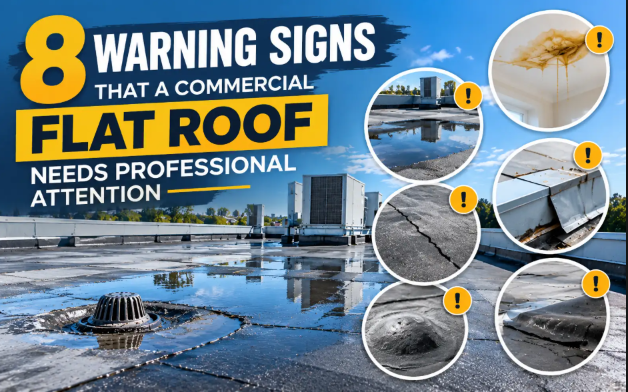
Here are eight signs that tell you it’s time to get a closer look.
Water Stains on Ceilings or Walls
Old stains, that’s what most people assume. Yellow-brown, dry to the touch, nothing to worry about. Except water doesn’t always drop straight down. It runs along beams and decking first, then shows up inside, sometimes well away from the real entry point. So don’t reach for the paint yet.
Peeling paint, soft ceiling tiles, bubbling finishes, a stain that grows after rain. Wet insulation and stored goods don’t always come with a puddle. If the patch returns or keeps spreading, get a commercial roof leak inspection booked. Find the actual source. Fixing only the visible bit means doing it all again.
Water That Remains After Rainfall
Water left on a flat roof after a shower is fine for a while. What’s not fine is one corner staying wet every time, or a patch still damp days later. Blocked outlets, poor slope, settled insulation, small structural shifts. That’s the usual list.
From a safe spot, make a note of where the water gathers, and whether it’s the same area after different storms. Don’t climb up there to check. Repeat ponding wears the roof down over time. Drainage comes first. After that, a professional can tell you if you’re looking at a clean-out, a repair or deeper investigation.
Blisters, Bubbles, or Raised Roof Membranes
New bubbles or raised patches on a roof surface don’t appear for no reason. Usually it’s trapped air, moisture, or layers that have lost their grip on each other. How much it matters depends on the material and the condition of the area around it.
A small blister doesn’t automatically mean water is getting in. A growing one, though, or a split or damaged patch, shouldn’t be left alone. Leave the blister uncut. Skip the sealant too, even if there’s a tin sitting nearby. Both can harm the membrane and leave the real repair more complicated down the line. A roofer can assess the spot, then recommend a fix while the problem is still small.
Cracks, Splits, or Separated Roof Seams
Temperature keeps swinging through the year, and roof membranes feel every bit of it. Give them enough years and parts of them shrink, crack, split or lift away at the seams. A thin gap is all it takes. Once the weather turns wet, water finds its way into the layers below.
Check visible gaps, edges that are lifting, and old repairs that look like they’re coming undone again. The right fix depends on the membrane type, how far the damage runs, and whether moisture has reached what’s underneath. Sealant smeared over a crack can hide the symptom while the cause keeps working. Get commercial flat roof membrane seam repair done early, and a small defect won’t grow into a bigger headache.
Lose or Damaged Flashing Around Roof Edges
The main surface might look fine, but the junctions can still fail. That’s where flashing comes in, sealing the spots where a roof meets walls, pipes, vents, skylights and rooftop equipment. Loose metal, cracked sealant, lifted edges and visible gaps can all give water a way in.
Odd marks around these areas after a bad storm should go to your maintenance team. Climbing up to check yourself isn’t the answer, and neither is tugging at loose pieces. Let a professional inspect the joints and the nearby membrane. They’ll see if the trouble stops at the flashing or goes further. Getting the connection fixed properly protects the places where different building materials meet.
Unexplained Increases in Heating and Cooling Costs
Bill went up? That alone doesn’t mean the roof is damaged. Weather, equipment performance, operating hours and insulation all shift energy use. A sudden spike is different when other roof symptoms are showing up around the same time.
Insulation that’s wet or worn can’t hold heat back the way it should, so the building gets harder to keep comfortable. Put recent bills next to earlier periods. Check for damp patches or repeat leaks while you’re at it. If moisture under the surface looks possible, a professional can assess the roof and insulation. Don’t blame the heating or cooling system straight away. The whole building tells you more.
Musty Odours or Signs of Persistent Moisture
Musty odours don’t need a visible leak to hang around. In an upper room, a storage area or an office, one can settle in and stay put. Damp ceiling tiles, discoloured finishes and mould-like marks that keep returning usually come along with it. Behind all of that there might be a roof leak, a plumbing fault, condensation, or some other moisture source.
Cover the smell or repaint the surface, and the moisture behind it is still trapped. Dampness that continues damages finishes and stored materials. Mould may need careful assessment and proper remediation too. Investigate the source, especially if the same spot gets damp after rain. Work out the cause, and you’ve taken the first step toward keeping the problem from coming back.
Sagging Areas or Soft Spots on the Roof
Dips you can see, sagging that looks off, spots that don’t feel as firm as they should. Don’t sit on any of these. Trapped moisture, worn roofing layers or a structural fault could be the reason, and a look from the outside won’t settle which one. That’s why you need a proper assessment.
A soft spot on the roof is a safety matter first. Walk over it, press on it, try to repair it, and you could make things worse. Block off access where possible, then get a professional to inspect it. A moving roof or sagging ceiling, either one means people should leave the area immediately and call an expert for urgent help. It can’t wait for the next routine visit.
When Should You Arrange a Professional Roof Assessment?
Repeated leaks, open seams, damaged flashing and ponding that won’t go away are all solid reasons to book an inspection. So is a repair that failed, or moisture that keeps turning up in one part of the building. If the underlying cause stays unresolved, these commercial flat roof problems need more than another patch.
An assessment from a professional tends to cover a fair bit: the membrane, drainage outlets, roof edges, earlier repairs, and anywhere moisture might be trapped. How often you need one comes down to the roof’s age, its condition, its exposure and its maintenance history. Severe weather with suspected damage is another good reason to schedule a check. Take dated photos from safe locations and jot down when leaks appear. The contractor can then see what’s changed.
Protect Your Building With Timely Roof Maintenance
Early warning signs make repairs simpler to plan. A basic maintenance record helps here, since it tracks recurring leaks, drainage issues, earlier repairs and changes after bad weather in one place. It also hands the roofer a useful background before they even arrive.
When you’re comparing flat roofing Toronto services, look past the price of a quick patch. Ask what caused the damage, whether moisture has reached the layers underneath, and how the repair will deal with it. A thorough look at your commercial flat roofing helps you decide whether a local repair will do or a wider section needs work.
Don’t wait for a ceiling leak to interrupt business before you take the roof seriously. If you notice several warning signs, or one that’s getting worse, book an assessment with a qualified contractor. For property owners researching flat roofing Toronto, timely professional attention protects the building and leads to better long-term decisions.