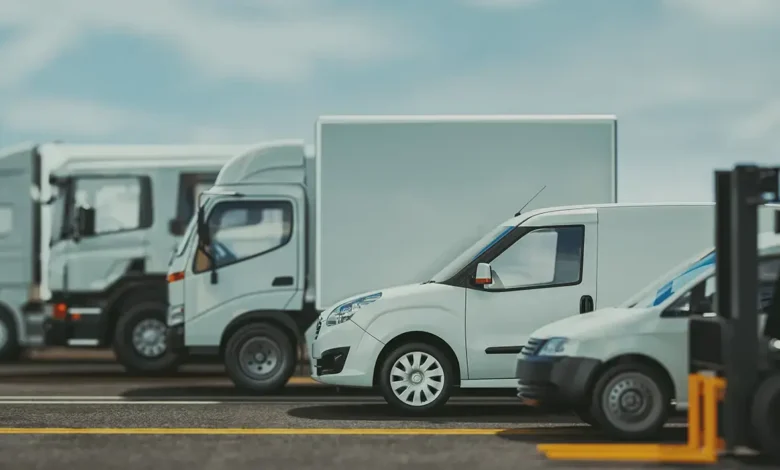

A truck that works perfectly for a landscaping company might be completely unsuitable for a towing business. Both companies need dependable transportation, but the equipment, carrying capacity, and operating conditions involved are very different.
Choosing a commercial vehicle is not simply a matter of finding the right price or selecting the largest model available. The vehicle must match the work it will perform, the loads it will carry, and the conditions it will encounter throughout its working life.
For business owners and fleet managers, making the wrong choice can lead to unnecessary fuel expenses, limited productivity, frequent repairs, or equipment that cannot safely handle everyday assignments.
A better approach starts with understanding the job before comparing vehicles.
Start With the Work the Vehicle Needs to Perform
The most important factor when choosing a commercial vehicle is its intended application.
A delivery company, construction contractor, towing operator, and mobile service provider may all need trucks, but their requirements differ considerably.
Before shopping, businesses should answer several practical questions:
- What materials, equipment, or vehicles will be transported?
- How much weight will the vehicle regularly carry or tow?
- Will it operate primarily on highways, city streets, or unpaved job sites?
- How many miles will it travel during a typical working day?
- Will it require specialized equipment or modifications?
- How many employees need to travel in the vehicle?
- Are there access restrictions at customer locations or work sites?
These details help establish the vehicle’s required capabilities.
For example, an electrical contractor may prioritize secure tool storage, accessible compartments, and enough room for technicians. A building materials supplier may need a flatbed or box truck capable of transporting heavier or bulkier loads.
Buying a vehicle without defining these requirements can result in equipment that is either unnecessarily expensive or inadequate for the job.
Match the Vehicle Type to the Business Application
Different commercial vehicle configurations are designed to solve different transportation and operational problems.
Understanding their typical applications makes it easier to narrow the available options.
| Vehicle type | Common business applications | Important considerations |
| Cargo van | Local deliveries, mobile repairs, service technicians | Cargo volume, payload, access, maneuverability |
| Pickup truck | Landscaping, contracting, equipment transport | Payload, towing capacity, bed configuration |
| Box truck | Furniture delivery, moving, retail distribution | Cargo dimensions, loading height, weight capacity |
| Flatbed truck | Construction materials, machinery, oversized cargo | Load securement, deck dimensions, payload |
| Dump truck | Construction, landscaping materials, site preparation | Payload, tipping mechanism, terrain |
| Tow truck | Vehicle recovery, roadside assistance, transport | Recovery equipment, rated capacity, intended vehicle types |
| Refrigerated truck | Temperature-controlled deliveries | Refrigeration capacity, insulation, temperature requirements |
These are general applications rather than fixed rules. The suitability of any vehicle depends on its actual specifications and the work being performed.
Delivery and Distribution Businesses
Delivery operations often benefit from vehicles that provide efficient cargo access, adequate storage space, and practical maneuverability.
A business delivering small parcels across crowded urban areas may find a cargo van more convenient than a larger box truck.
However, companies transporting furniture, appliances, or palletized goods may need additional cargo space and appropriate loading equipment.
The number of daily stops also matters.
Frequent loading and unloading can make door placement, cargo floor height, and access features just as important as engine performance.
Construction and Landscaping Companies
Construction-related businesses frequently transport tools, materials, machinery, and equipment between job sites.
A pickup truck may work well for lighter duties, while larger loads could require a flatbed, dump truck, or appropriately rated truck-and-trailer combination.
Job-site conditions should also influence the decision.
Vehicles regularly traveling over uneven ground may need suitable tires, traction, ground clearance, and suspension characteristics.
Businesses should consider the heaviest loads they reasonably expect to transport, not just their average daily requirements.
Mobile Service Providers
Plumbers, electricians, HVAC technicians, and other mobile service professionals often depend on organized storage and reliable access to equipment.
For these businesses, a cargo van or service-body truck may provide greater practical value than a vehicle designed primarily for heavy hauling.
Interior shelving, secure compartments, tool access, and available workspace can affect how efficiently employees complete assignments.
A well-organized vehicle may reduce time spent searching for tools or returning to the workshop for forgotten supplies.
Understand Payload, Towing Capacity, and Vehicle Weight Ratings
Commercial vehicle specifications can be confusing, particularly when several weight ratings appear in manufacturer documentation.
Choosing the right vehicle requires understanding what those ratings actually mean.
Gross vehicle weight rating (GVWR) is the maximum allowable loaded weight of a vehicle as specified by its manufacturer.
Gross combination weight rating (GCWR) refers to the manufacturer’s specified maximum allowable combined weight of the towing vehicle and its trailer or trailers, including their loads.
Payload capacity represents the weight the vehicle can carry within its applicable ratings, including occupants, cargo, and installed equipment.
Towing capacity describes the maximum trailer weight a vehicle may be rated to tow under specified conditions.
These measurements are related, but they are not interchangeable.
For example, a truck may have sufficient engine power to move a heavy load while lacking the appropriate axle ratings, braking capacity, or other specifications to carry or tow it safely.
Businesses should verify the manufacturer’s documentation and the ratings of any installed equipment before purchasing.
For U.S. operators, the Federal Motor Carrier Safety Administration also provides guidance on commercial motor vehicle regulations, including federal requirements that may apply depending on vehicle classification and business operations.
Applicable licensing, registration, and operating rules should be checked separately because not every commercial vehicle is subject to identical requirements.
Specialized Jobs Require More Than a Standard Truck
Some commercial activities require equipment designed for a specific purpose.
A standard pickup truck cannot automatically replace a dedicated recovery vehicle, just as an ordinary box truck may not be suitable for transporting temperature-sensitive products without the necessary refrigeration equipment.
Specialized vehicles often combine a truck chassis with additional systems that perform the actual work.
Choosing Equipment for Towing and Recovery
Towing businesses need to consider the types of vehicles they expect to transport or recover.
A company primarily handling passenger vehicles may have different requirements from an operator providing heavy-duty commercial recovery services.
Common towing configurations include:
- Flatbed or rollback trucks: Designed to load and transport vehicles on a platform, making them useful for many vehicle transport and recovery situations.
- Wheel-lift trucks: Use specialized lifting equipment to raise and secure one end of a vehicle for towing.
- Integrated wreckers: Combine recovery and towing equipment in configurations often used for particular recovery applications.
- Heavy-duty recovery trucks: Built for demanding recovery operations involving larger vehicles, subject to their specific ratings and equipment capabilities.
No single configuration is ideal for every assignment.
Buyers should evaluate rated lifting and towing capacities, recovery equipment, chassis specifications, and the types of vehicles they expect to handle.
Local availability can also influence purchasing decisions. For example, operators comparing tow truck options in Montgomery, AL can begin with geographically relevant listings while assessing whether the available configurations match their intended recovery services.
The goal is to choose equipment based on actual operating requirements rather than assuming that any truck marketed for towing will perform the same work.
Vehicles With Hydraulic or Lifting Equipment
Dump trucks, bucket trucks, lift-equipped service vehicles, and other specialized equipment require additional evaluation.
Their hydraulic systems, stabilizers, lifting mechanisms, and structural components must be appropriate for the intended tasks.
Buyers should also consider whether qualified technicians and replacement parts are readily available.
A vehicle may have a dependable engine and chassis while its specialized equipment creates expensive maintenance challenges.
For these purchases, inspecting the work equipment is just as important as evaluating the truck itself.
Consider Where the Vehicle Will Operate Every Day
A commercial vehicle’s operating environment affects performance, efficiency, and long-term maintenance needs.
A truck used primarily for highway deliveries faces different demands from one making frequent stops in congested neighborhoods.
Urban Routes and Tight Spaces
Businesses operating in cities should pay attention to vehicle length, turning radius, visibility, and parking requirements.
A larger truck may offer greater cargo capacity but create difficulties when accessing narrow streets, loading areas, or customer properties.
Frequent stopping and starting can also influence fuel consumption and wear on certain components.
For businesses making numerous deliveries each day, ease of access and maneuverability may be more valuable than additional cargo space that rarely gets used.
Rural Routes and Construction Sites
Vehicles operating on rural roads or undeveloped job sites may encounter uneven surfaces, mud, steep grades, and limited access to repair services.
Suitable tires, ground clearance, drivetrain configuration, and traction become important considerations.
However, four-wheel drive or other specialized features should be selected based on actual operating conditions rather than treated as universally necessary.
Additional capabilities can increase purchase and maintenance costs without providing meaningful benefits for every business.
Long-Distance Commercial Operations
Businesses covering substantial highway mileage may prioritize fuel efficiency, driver comfort, service intervals, and long-term drivetrain reliability.
Cab configuration, seating, visibility, and available driver-assistance features can also influence the experience of employees who spend extended periods behind the wheel.
For longer routes, access to qualified repair facilities and replacement parts becomes especially important.
An unexpected breakdown far from the company’s operating base can create transportation, scheduling, and recovery expenses beyond the repair itself.
Compare Fuel Types Based on Actual Usage
Gasoline, diesel, electric, and other commercial vehicle powertrains offer different advantages and limitations.
The best option depends on vehicle availability, workload, daily mileage, fueling or charging access, and total operating costs.
Diesel engines are common in many heavier commercial applications, but that does not automatically make diesel the best choice for every business.
Gasoline-powered vehicles may be suitable for certain lighter-duty operations, depending on the model and expected workload.
Electric commercial vehicles can be practical for some predictable routes, particularly when charging infrastructure and daily range requirements are compatible.
However, buyers should evaluate charging time, usable range under load, operating conditions, and the cost of installing appropriate charging equipment.
Instead of choosing a fuel type based on general assumptions, businesses should estimate actual energy or fuel expenses using their expected routes and workloads.
Maintenance requirements, vehicle availability, and resale considerations should also be included.
Don’t Overlook Maintenance and Service Availability
A commercial vehicle needs to remain available for work to justify its investment.
Before choosing a model, businesses should investigate the availability of qualified repair facilities, replacement parts, and routine servicing.
A truck with an attractive purchase price may become expensive if repairs require long waits for specialized components.
For vehicles equipped with hydraulic systems, refrigeration units, lifting equipment, or other specialized components, service support should cover more than the engine and transmission.
Buyers should also review manufacturer-recommended maintenance schedules and consider how servicing will fit into business operations.
For example, a company with only two service trucks may find it difficult to remove one from operation for extended maintenance.
Choosing equipment that can be serviced conveniently may help reduce operational disruptions.
Businesses purchasing used vehicles should place particular importance on maintenance history and independent inspections.
Evaluate the Total Cost of Ownership, Not Just the Purchase Price
The lowest-priced commercial vehicle is not always the least expensive to operate.
A more useful comparison considers the total cost of ownership over the expected service period.
This includes:
- Initial purchase price and financing expenses.
- Fuel or electricity costs.
- Insurance and registration.
- Routine maintenance and replacement parts.
- Expected repairs and equipment servicing.
- Downtime and temporary replacement expenses.
- Estimated resale or trade-in value.
Consider two hypothetical vehicles purchased for similar delivery work.
Vehicle A costs $35,000 and is expected to require $7,000 annually in fuel and maintenance.
Vehicle B costs $40,000 but is expected to require $5,500 annually for those same expenses.
Over five years, excluding financing, insurance, resale value, and other costs:
Vehicle A: 35,000+(7,000 × 5) = $70,000
Vehicle B: 40,000+(5,500 × 5) = $67,500
Despite its higher purchase price, Vehicle B has a lower estimated five-year cost under these assumptions.
These are illustrative figures, not predictions of actual vehicle expenses.
The example shows why businesses should compare expected operating costs rather than focusing exclusively on the initial investment.
Plan for Business Growth Without Overspending
A vehicle should meet current requirements while offering reasonable flexibility for foreseeable changes.
However, purchasing substantially more capacity than the business needs can tie up capital and increase operating expenses.
A small delivery company expecting modest growth may benefit from choosing a vehicle with some additional cargo capacity.
That does not necessarily justify purchasing a much larger truck that will operate mostly empty.
Businesses should consider realistic workload projections, customer demand, and potential changes in service offerings.
For specialized operations, it may be more economical to rent or subcontract occasional jobs requiring equipment that falls outside the company’s normal capabilities.
For example, a towing company that primarily handles light-duty vehicles may not need to purchase heavy-duty recovery equipment solely to accommodate rare assignments.
The decision should depend on the frequency of those jobs, potential revenue, operating expenses, and availability of outside support.
A Practical Checklist Before Making the Purchase
Once the vehicle type has been identified, buyers can compare individual models using a consistent evaluation process.
Before committing, confirm the following:
- Job suitability: The vehicle can perform the intended tasks without exceeding its rated capabilities.
- Equipment configuration: Cargo space, body type, and specialized systems meet operational requirements.
- Operating environment: The vehicle is appropriate for expected routes, terrain, and access conditions.
- Regulatory requirements: Applicable licensing, registration, weight, and operating rules have been reviewed.
- Maintenance support: Qualified service providers and replacement parts are reasonably accessible.
- Financial value: Acquisition and expected operating costs fit the business’s budget.
- Vehicle condition: Used equipment has been inspected and relevant maintenance records reviewed.
- Future flexibility: The vehicle can accommodate reasonable changes in workload without unnecessary overspending.
This process helps prevent decisions driven by appearance, advertised specifications, or a seemingly attractive price.
Frequently Asked Questions About Choosing Commercial Vehicles
What is the most versatile commercial vehicle for a small business?
There is no single vehicle that suits every small business. Cargo vans are useful for many delivery and mobile service operations, while pickups and service-body trucks may be better for businesses transporting tools or equipment. The most versatile choice is the one that handles the company’s regular tasks without unnecessary operating costs.
Should a business buy a new or used commercial vehicle?
Both options can make financial sense. New vehicles may offer warranty coverage and newer features, while used vehicles generally require less initial capital. Businesses should compare purchase prices, condition, maintenance history, financing terms, and expected operating costs before deciding.
How do I know whether my business needs a heavy-duty truck?
Start by calculating the maximum expected loads, towing requirements, and operating conditions. Compare those needs with manufacturer ratings and the capabilities of the equipment being considered. A heavy-duty truck may be necessary for demanding work, but buying one without a clear operational need can increase expenses.
Is it better to own or lease commercial vehicles?
Ownership may be attractive for businesses expecting long-term use and wanting control over modifications and resale. Leasing can offer different cash-flow arrangements and may suit businesses that replace vehicles regularly. The better option depends on contract terms, mileage restrictions, maintenance responsibilities, financing costs, and expected vehicle usage.
Choose the Vehicle That Makes the Job Easier
A commercial vehicle is more than a transportation expense. It is equipment that directly affects how efficiently a business operates, how reliably employees complete assignments, and how much the company spends to deliver its services.
Choosing the right one requires balancing capacity, configuration, operating conditions, maintenance needs, and long-term costs.
The smartest purchase is not necessarily the largest truck, the newest model, or the one with the lowest price.
It is the vehicle that can safely perform the required work, remain dependable under expected operating conditions, and deliver reasonable value throughout its service life.
Before comparing prices, define the job. That single step can prevent many of the most expensive mistakes in commercial vehicle purchasing.