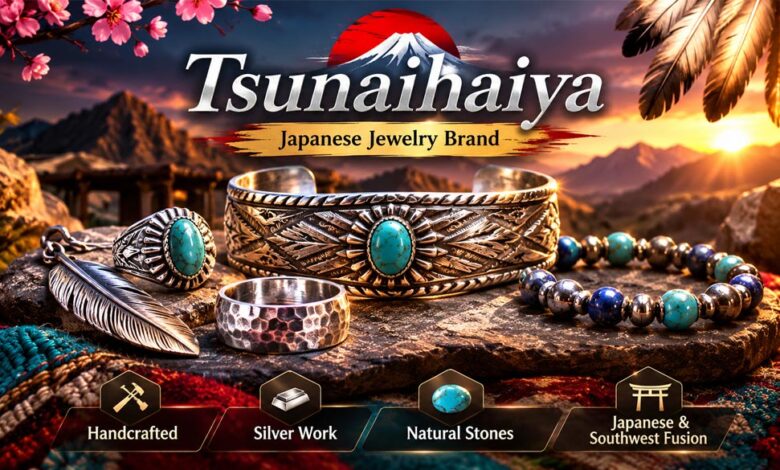

Tsunaihaiya is a Japanese jewelry brand known for silver work, natural stones, textured metal, and handmade details. The brand was started in 2012 by Japanese artist Yusuke Kuwano and San Carlos Apache sculptor Craig Dan Goseyun.
Its jewelry brings together Japanese craft ideas and metalwork influences from the American Southwest. This guide explains the story behind Tsunaihaiya, its founders, name, design influences, materials, and special metalworking methods.
What Is Tsunaihaiya?
Tsunaihaiya is a jewelry brand that combines Japanese design with metalwork influences from the American Southwest. Many of its pieces use silver, natural stones, handmade textures, and dark metal finishes.
The brand makes rings, bangles, bracelets, necklaces, earrings, and bead jewelry. Some designs are simple and narrow, while others use larger cuffs, feather shapes, stones, or strongly textured surfaces.
An important part of Tsunaihaiya jewelry is its surface. Hammer marks, dark areas, rough textures, and small differences may be intentional. These details can show how a piece was shaped and finished.
Tsunaihaiya should also not be confused with unrelated meanings found on some websites. In the context covered here, Tsunaihaiya refers to the Japanese jewelry brand founded in 2012.
The Story Behind Tsunaihaiya
Tsunaihaiya began in 2012 through the work of Yusuke Kuwano and Craig Dan Goseyun. Their different backgrounds helped shape the brand.
Before starting the label, Kuwano had spent time studying metalwork in Santa Fe, New Mexico. Santa Fe and the wider Southwest have a strong history of Native American jewelry, silverwork, and stone jewelry.
Goseyun came from a San Carlos Apache artistic background. Their work together connected Kuwano’s Japanese background with artistic influences from the American Southwest.
This connection became an important part of Tsunaihaiya. Instead of focusing only on fashion trends, the brand built its style around metalwork, materials, texture, and craft.
Yusuke Kuwano and His Metalwork Background
Yusuke Kuwano is the Japanese artist and metalsmith closely connected with Tsunaihaiya’s jewelry design.
According to profiles of his work, Kuwano moved to Santa Fe, New Mexico, in 2009. He studied metalsmithing at the Institute of American Indian Arts.
Sources about his career also report that he received two gold awards for jewelry in 2011 and graduated with high honors in 2012. Another account says he trained under Navajo jeweler Michael Roanhorse.
His years in Santa Fe gave him direct experience with metalwork and jewelry traditions of the American Southwest. He later combined these influences with ideas from Japanese craft.
Some details about his early awards and training are mainly repeated in brand and retailer profiles, so they are best treated as reported parts of his professional background.
Craig Dan Goseyun and His Role in Tsunaihaiya
Craig Dan Goseyun is described as a sculptor from the San Carlos Apache community. He helped form Tsunaihaiya with Yusuke Kuwano in 2012.
The two artists came from different backgrounds. Kuwano brought his Japanese roots and metalsmithing experience, while Goseyun brought his background in San Carlos Apache art.
Their connection is important because the mix of these influences became part of Tsunaihaiya’s identity. It can be seen in the brand’s use of silver, stones, textured metal, strong forms, and careful finishing.
What Does Tsunaihaiya Mean?
Descriptions of the brand connect the name “Tsunaihaiya” with an Apache expression related to Japan and the rising sun.
Some sources give the meaning as “the land of the rising sun,” referring to Japan. Other descriptions simply connect the expression with the “rising sun.”
Because the exact English translation differs between sources, it is safer not to treat one wording as the only confirmed translation.
The reported meaning still explains an important part of the name. It connects Japan with the Apache influence behind the brand and reflects the backgrounds involved in its creation.
Japanese and Southwest Influences
Tsunaihaiya is known for bringing two different craft influences into the same jewelry.
The American Southwest influence can be seen in details such as silver cuffs, turquoise, feather shapes, stamped metal, stone settings, and strong surface textures.
Japanese influence can be seen in the controlled shapes, balance, careful finishing, and attention given to small details. Some descriptions also connect the jewelry with the Japanese idea of wabi-sabi, where natural changes and imperfections can be appreciated rather than hidden.
This idea fits some Tsunaihaiya pieces because visible hammer marks, uneven textures, dark areas, and changes caused by wear may become part of their appearance.
However, the wabi-sabi connection should be understood as a description of the design approach rather than a confirmed rule for every Tsunaihaiya piece.
Materials Used in Tsunaihaiya Jewelry
Tsunaihaiya uses different metals, stones, and other materials. The material can change from one design to another, so buyers should check the details of each piece.
Sterling Silver
Sterling silver is one of the main materials associated with Tsunaihaiya. It is used for many rings, bangles, bracelets, and other designs.
The silver may be polished, hammered, stamped, textured, or given a darker finish. This allows a simple piece of metal to have more depth and detail.
Silver can also change in appearance with use and age. In some Tsunaihaiya designs, these surface changes can work with the intended look of the piece.
Natural Stones
Natural stones add color to many designs. Turquoise is one of the stones mentioned in Tsunaihaiya product listings. Lapis and mixed natural-stone beads have also appeared in its jewelry.
Natural stones do not always look exactly the same. Their shade, markings, and surface can vary from one stone to another. This means two pieces from the same design may have small visual differences.
Other Materials
Not every Tsunaihaiya piece is made entirely from sterling silver. Reported materials also include gold solder, leather, brass, plating, beads, and stainless-steel wire.
For example, one retail listing for a Loose Ring describes a brass base with ruthenium plating. This is why a dark or silver-looking surface should not be used to guess what a piece is made from.
The exact product description is the best place to check the metal, stone, plating, and other materials used.
Tsunaihaiya’s Tsuime Hammer Technique
Tsuime is a hammering technique associated with some Tsunaihaiya silver jewelry.
The process uses many small hammer strikes across the metal. Each strike changes a small part of the surface. Together, these marks create a detailed texture.
The small surfaces catch light at different angles. This can make the silver look different as the jewelry moves or as the light changes.
The hammer marks are therefore part of the design. They are not simply damage or imperfections. They help give a plain metal surface more depth and character.
Dark Patina and Surface Finishes
Tsunaihaiya is also associated with dark surface treatments. One reported method uses an artificial patina to give silver a deeper color.
Descriptions of this finish mention a dark blue-black appearance. The darker areas can sit beside brighter silver and make hammered or carved details easier to see.
Other reported surfaces include stamped, hammered, rough, and reticulated finishes. These methods can leave visible changes across the metal instead of making every area perfectly smooth.
This is useful to understand when looking at Tsunaihaiya jewelry. A dark area, tool mark, or uneven texture may be an intentional part of the design rather than a defect.
Tsunaihaiya Colorfield Beads
Colorfield beads show a different side of Tsunaihaiya. Instead of focusing mainly on silver surfaces, these pieces use natural stone beads in different colors.
The beads can include blue, green, white, and darker shades. The colors are arranged in varied patterns rather than following one simple repeating order.
Reported product descriptions say stainless-steel wire is used to hold the beads. This gives the jewelry a strong base while keeping the natural stones as the main visual feature.
Colorfield designs include bracelets and anklets. They are lighter in appearance than many of the brand’s silver cuffs and rings.
Popular Tsunaihaiya Jewelry
Tsunaihaiya makes different types of jewelry. Its collections and retailer listings include rings, bangles, bracelets, necklaces, earrings, anklets, and other small pieces.
The exact selection can differ between collections and stores.
Rings
Tsunaihaiya rings often focus on metal texture and shape. Some have stamped or hammered surfaces, while others use darker finishes or natural stones.
There are narrow rings that can be worn with other jewelry and wider designs that work well on their own.
Fit is important when choosing a ring. A wide ring may feel tighter than a thin ring in the same listed size.
Bangles and Bracelets
Bangles and bracelets are an important part of the Tsunaihaiya range. Retail listings include feather bangles, thick cuffs, narrow bracelets, textured silver pieces, and natural-stone bead bracelets.
Some cuffs have an open design. This may allow a small amount of adjustment, but the metal should not be bent back and forth often because this can weaken or damage it.
Bead bracelets provide a different look. Their natural stones add color while keeping the design simple.
Necklaces, Earrings, and Anklets
Tsunaihaiya also makes necklaces and earrings. These may use metal, stones, beads, or small decorative forms.
Anklets are also found in the Colorfield range. Availability can vary, so not every retailer will carry every type of Tsunaihaiya jewelry.
Why Tsunaihaiya Jewelry Looks Different
Texture is one of the clearest parts of Tsunaihaiya’s design style. Instead of making every surface perfectly smooth, some pieces keep visible hammer marks, darker areas, and small changes in the metal.
These details are easier to notice when the jewelry is viewed closely. A simple silver ring may show many small marks created during the finishing process.
Natural materials can also make individual pieces look slightly different. Stones may have different colors, markings, or patterns.
Tsunaihaiya also uses familiar jewelry forms such as cuffs, bands, beads, and simple charms. Much of the visual interest comes from the material and surface rather than large logos or heavy decoration.
Is Tsunaihaiya Jewelry Unisex?
Many retailers present Tsunaihaiya jewelry as unisex. Rings, cuffs, bangles, and bead bracelets can work without a strict men’s or women’s style.
However, the label is less important than the actual fit. Ring size, wrist size, width, weight, and shape should all be checked before buying.
A thick silver cuff may feel very different from a narrow bracelet. The same applies to wide and thin rings.
Personal preference also matters. Buyers can choose a piece based on its size and design rather than only the gender category used by a store.
How to Choose Tsunaihaiya Jewelry
Start by checking the material. Do not assume that every piece is solid sterling silver. Some Tsunaihaiya designs use brass, plating, natural stones, beads, leather, or other materials.
Next, check the measurements. Ring size is especially important for wider designs. For bracelets and cuffs, compare the listed measurements with your wrist.
Look closely at the finish as well. Dark areas, hammer marks, rough textures, and uneven surfaces can be intentional parts of the design. Buyers who prefer a smooth, bright finish should check product photos carefully.
For jewelry with natural stones, expect some variation. The exact color and pattern may differ slightly from product photos because natural stones are not always identical.
A useful product listing should clearly explain the material, measurements, finish, stones, and care instructions.
How to Style Tsunaihaiya Jewelry
Tsunaihaiya jewelry can work with simple clothing because many pieces already have noticeable texture.
A wide cuff or feather bangle can be worn as the main jewelry piece. Keeping other accessories simple can make its shape and surface easier to see.
Narrow rings can work beside a plain watch or other simple jewelry. Natural-stone bracelets can add color to black, white, gray, navy, and other neutral clothing.
Aged or textured silver also works naturally with denim, workwear, plain shirts, jackets, and knitwear.
There is no fixed way to wear Tsunaihaiya jewelry. These are simply styling ideas. The best combination depends on the piece and personal taste.
How to Care for Tsunaihaiya Jewelry
Care depends on the material and finish of the individual piece. Always follow any instructions provided with the jewelry.
For light cleaning, a soft cloth may be enough. Avoid strong cleaners unless they are known to be safe for the specific metal, stone, plating, or other material.
It is also sensible to remove jewelry before swimming or using strong cleaning products. Chlorine, salt, perfume, and other chemicals may affect silver, stones, leather, cords, or plated surfaces.
Be careful when polishing pieces with dark finishes. Some dark areas may be an intentional patina. Strong polishing can reduce or remove this contrast.
Store jewelry separately when possible. This can help reduce scratches caused by pieces rubbing against each other.
If a stone becomes loose, a cuff is badly bent, or a cord breaks, professional jewelry repair is safer than trying to make a major repair at home.
Things to Know Before Buying
Tsunaihaiya pieces can differ in material, size, finish, and construction. Reading the full product description is important before ordering.
Not every piece is sterling silver. Some designs use brass or plating, while others combine metal with stones, leather, beads, or wire.
Natural stones can also vary. Small differences in color and pattern are normal for many natural materials.
Surface changes may happen with wear. Silver can tarnish, and plated surfaces may gradually change depending on use and care. Intentional patina can also develop differently over time.
Check sizing carefully. This is especially important for wide rings and solid cuffs. Open cuffs may allow limited adjustment, but repeated or forceful bending can damage the metal.
A good retailer should provide clear information about materials, dimensions, finishes, and care.
Bottom Line
Tsunaihaiya is a Japanese jewelry brand founded in 2012 by Yusuke Kuwano and Craig Dan Goseyun. Its identity is closely connected with Japanese craft and metalwork influences from the American Southwest.
The brand is known for silver jewelry, natural stones, textured metal, dark finishes, and handmade details. Tsuime hammering and artificial patina are among the techniques associated with its metalwork. Colorfield bead pieces add another style through natural stones and varied color arrangements.
Materials are not the same across every product. Buyers should check the exact metal, stone, finish, measurements, and care instructions for the piece they want.
Tsunaihaiya stands out mainly through its use of texture, materials, and careful surface work. Understanding these details makes it easier to choose, wear, and care for its jewelry.
Frequently Asked Questions
What is Tsunaihaiya?
Tsunaihaiya is a Japanese jewelry brand known for silver jewelry, natural stones, and handmade designs.
Who founded Tsunaihaiya?
Yusuke Kuwano and San Carlos Apache sculptor Craig Dan Goseyun founded Tsunaihaiya in 2012.
What does Tsunaihaiya mean?
The name is linked to an Apache expression about Japan and the “rising sun.” Some sources say it means “the land of the rising sun.”
Where is Tsunaihaiya from?
Tsunaihaiya is a Japanese brand. Its story also has a strong connection with Santa Fe, New Mexico.
What is the Tsunaihaiya Tsuime technique?
Tsuime is a technique that uses small hammer strikes to create texture and detail on metal.
What materials does Tsunaihaiya use?
The brand uses silver, natural stones, leather, brass, beads, plating, and other materials.
Is all Tsunaihaiya jewelry sterling silver?
No. Many pieces use sterling silver, but some are made with brass, plating, stones, beads, or other materials.
Is Tsunaihaiya jewelry unisex?
Yes, many Tsunaihaiya pieces are sold as unisex. Always check the size and fit before buying.
Icon Fonts Guide: Features, Uses, Benefits, and Best Options