
Open your owner’s manual, and you will find a tidy mileage or time interval for oil changes. Real driving rarely fits that tidy box. Short trips, long idles, turbochargers, heat, winter cold, dusty roads, and tow seasons all change how fast oil ages. Modern engines and oils are better than ever, but the same chemistry that protects under hard use can be overwhelmed by fuel dilution or repeated cold starts. This guide shows how engine design, driving patterns, service reminders, and your oil-and-filter choices work together so you can pick an interval that matches your reality rather than a one-size-fits-all number.
-
How engine design and oil chemistry shape interval limits
Engine architecture sets the baseline. Turbocharged and direct-injected engines push more heat into the oil and can shear viscosity faster under boost. Many late-model vehicles specify low-viscosity grades such as 0W-20 to speed cold flow and improve efficiency, which also means the oil has less margin if it gets thinned by fuel. Modern API SP and ILSAC GF-6 oils fight deposits and timing-chain wear, but no additive package is infinite. High-load operation accelerates oxidation, and repeated short trips can leave water and gasoline in the crankcase that detergents must keep suspended.
Full-synthetic oils tolerate heat and oxidation better than conventional blends, which is why some manufacturers allow longer intervals when synthetics and the correct viscosity are used. The filter must keep up, too. Extended intervals demand media that will not clog early and a strong anti-drainback valve to prevent dry starts. For a sense of how shops bundle these choices into practical options, you can compare typical packages through car oil change services by EZ Lube Oil Change before deciding what suits your vehicle and habits.
-
Your driving pattern is the real severity test
Most cars live in conditions automakers label severe service even though the term sounds extreme. A parent doing two-mile school drop-offs five days a week creates many cold starts and never brings oil to full temperature long enough to vaporize moisture. That water mixes with combustion byproducts to form acids and sludge, shortening the safe interval. A contractor creeping through jobsite traffic in summer heat or hauling tools up grades asks the oil to disperse more soot and resist high-temperature breakdown.
Other patterns are deceiving. A ride-share driver idling in an airport queue racks up engine hours without adding many miles, aging oil faster than the odometer suggests. Weekend trailheads or rural mail routes mean dusty air; even with a good air filter, fine particles increase the debris load the oil filter must capture. If your routine looks like these examples, use the shorter schedule in your manual and consider changing earlier before a heat wave, towing trip, or winter deep freeze.
-
Making sense of oil life monitors and time limits
Oil life monitors estimate remaining protection using inputs like temperature, engine speed, trip length, and start counts. They are better than a fixed mileage sticker because they track how the engine was used, not just how far it traveled. Still, OLMs do not directly measure oil chemistry. Treat their percentage as a calibrated estimate, then layer on common sense. If the OLM still reads high but you have spent months on three-mile errands through freezing weather, a proactive change can be cheaper than sludge and timing-chain noise later.
Two mistakes are common. First, ignoring the calendar. Many automakers place a time cap, often around a year, because additives deplete with exposure to moisture and oxygen even at low miles. Second, resetting the OLM without actually changing the oil, which hides a growing risk. After any service, verify the monitor was reset; after a battery replacement, confirm it retained its data. Use the monitor alongside the severe-service guidance in your manual and your own observations of how the car is driven.
-
Oil filters and viscosity choices that influence change frequency
The filter you choose can extend or shorten a safe interval. High-efficiency media trap smaller particles but may have higher restriction, which matters during cold starts when oil is thick. Quality filters balance efficiency with flow and include a reliable anti-drainback valve to keep galleries primed overnight. For extended intervals, look for filters rated for longer service so the bypass valve is less likely to open and send unfiltered oil past the media during a cold snap or high-load climb.
Viscosity is not a tuning knob. Stick to the grade on your oil cap unless the manufacturer lists approved alternates for temperature extremes. A thicker oil can quiet a tired engine but may raise startup wear in winter and reduce fuel economy. On the other hand, dropping to a lower viscosity than specified can thin the protective film under heat. High-mileage oils often include seal conditioners to slow drips; that can help on older engines without changing the interval by itself. The key relationship is simple: correct viscosity plus a filter that matches your interval equals predictable protection.
Between-change checks that save engines
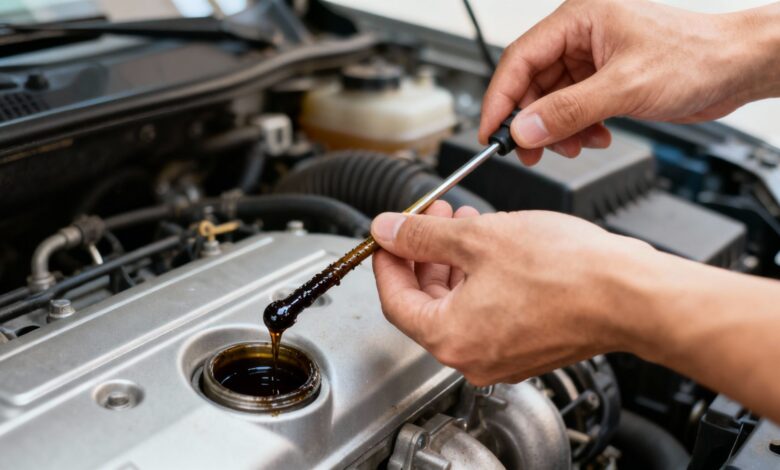
Oil condition is more than color. Get in the habit of checking the dipstick level on a flat surface with a warm, rested engine. If the level drops between services, note how much you add; rising consumption can signal valve-stem seal wear or stuck piston rings and may warrant a shorter interval. A fuel smell on the dipstick points to dilution from frequent short trips. Milky residue under the oil cap often means condensation from incomplete warm-ups. New ticking on cold start or a flickering oil pressure light is a stop-now warning, not a wait-and-see hint.
After an oil change, take a quick look the next morning. Inspect the area around the filter and drain plug for fresh drips, confirm the level on the dipstick, and make a simple record of miles, date, and the oil and filter you used. If you do your own service, dispose of used oil at a recycling center; shops handle this as part of their process. Build your next interval from evidence: recent driving pattern, how much top-off oil was needed, upcoming towing or weather, and any new noises or smells.
There is no single correct oil change number because engines, oils, and lives differ. Start with the manufacturer’s viscosity and schedule, then adjust for your engine type, how and where you drive, and what your oil life monitor and dipstick tell you. Pair a quality synthetic with a filter designed for your intended interval, keep basic notes, and tighten the schedule ahead of hard seasons like deep winter or heavy towing. That simple framework turns maintenance from guesswork into routine care that helps preserve performance, efficiency, and warranty compliance.