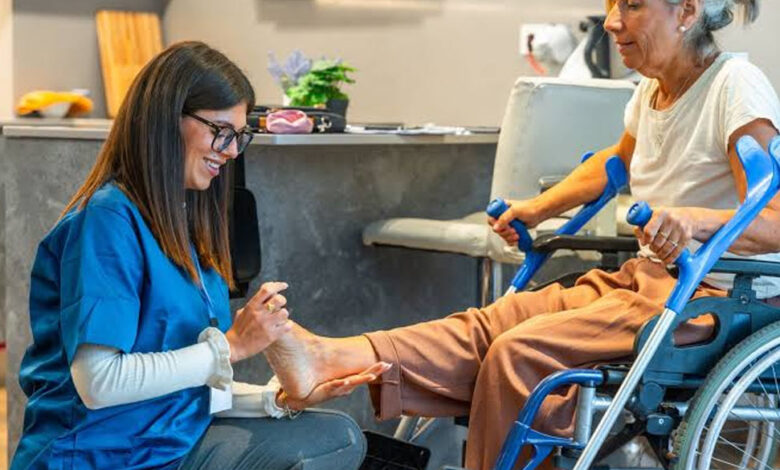

Same skeleton, different risks
Women and men have the same bones, joints and ligaments, but they don’t wear, heal or get injured in quite the same way. Differences in anatomy, hormones and bone density mean some orthopaedic problems turn up far more often in women, and often at predictable points in life.
The main orthopaedic conditions that are more common in women include ACL tears and kneecap pain in active young women, wrist and hand problems such as carpal tunnel syndrome and de Quervain’s tenosynovitis during pregnancy and early motherhood, bunions and other forefoot problems, frozen shoulder in midlife, and osteoporosis and knee osteoarthritis after menopause. Many of these respond well to early treatment, which is why it pays to know when a symptom deserves a specialist’s opinion.
This guide walks through the conditions by life stage, then sets out clear signs that it’s time to see an orthopaedic specialist.
Why bones and joints differ
Three broad factors help explain why women face some orthopaedic problems more often.
Anatomy and movement. On average, women have a wider pelvis relative to their height, which changes the angle at which the thigh bone meets the knee. Many women also land from jumps and cuts with the knee drifting further inwards, and with less hamstring activity to protect it. Together, these patterns place more strain on the ACL and the joint behind the kneecap.
Hormones. Oestrogen helps protect bone density, which is why bone loss speeds up after menopause. Hormonal changes in pregnancy loosen ligaments and cause fluid retention, which can squeeze nerves in the wrist. Hormonal shifts in midlife are also thought to play a part in conditions such as frozen shoulders.
Bone mass. Women generally build less peak bone mass than men in early adulthood and then lose it faster after menopause. In Singapore, women aged 50 or older have osteoporosis at around four times the rate of men.
None of this means problems are inevitable. It does mean that strength training, good movement habits and timely check-ups matter at every stage.
Through the life stages
Your 20s and 30s: the active years
ACL tears. Women who play pivoting sports such as netball, football, basketball and badminton are more likely than men to tear the ACL. A large review found the rate of ACL injury in female athletes was about 1.7 times that of males, across different levels of sport. Targeted warm-up and strength programmes can reduce the risk. Our post on ACL tears in futsal and football covers the main injury situations.
Kneecap pain. Pain around or behind the kneecap, worse on stairs, squatting or after sitting, is especially common in young women who run or play court sports. It usually improves with hip and thigh strengthening.
Stress fractures. Women who train hard while eating too little for their energy needs can lose bone and develop stress fractures in the foot, shin or hip. Irregular or missed periods alongside heavy training are a warning sign worth discussing with a doctor.
Pregnancy and early motherhood
Carpal tunnel syndrome. Fluid retention in pregnancy can compress the nerve at the wrist, causing tingling and numbness in the thumb and fingers, often worse at night. It frequently improves after delivery, but not always.
De Quervain’s tenosynovitis. Painful tendons at the base of the thumb are so common in new parents that the condition is sometimes nicknamed “mommy thumb”. Repeatedly lifting a baby with the thumb spreads wide strains these tendons.
Pelvic girdle and lower back pain. Ligament changes and a shifting centre of gravity load the pelvis and spine. Most cases settle, but persistent pain after delivery should be assessed. Our planned guide to post-pregnancy wrist, back and pelvic pain will cover this in more detail.
Perimenopause and menopause
Frozen shoulder. A painful, gradually stiffening shoulder is more common in women, typically between about 40 and 60, and in people with diabetes. It can take many months to resolve without treatment.
Bunions and forefoot pain. Bunions are more common in women, and years of narrow or high-heeled shoes can make them worse. Pain under the ball of the foot and Morton’s neuroma, a pinched nerve between the toes, also occur more often in women.
The start of faster bone loss. Bone density falls more quickly in the years after menopause. It’s a good time to discuss your risk with your doctor.
Age 65 and over
Osteoporosis and fragility fractures. Wrist, spine and hip fractures after minor falls become much more common. See our guide to the silent signs of osteoporosis.
Knee and hand osteoarthritis. Arthritis of the knee and of the small joints of the hand is more common in older women. Early signs and first steps are covered in our knee arthritis guide.
When to see an orthopaedic specialist
Many women put their own aches last, behind work, children and parents. Use this table to decide when a symptom shouldn’t wait.
| If you notice | It could suggest | What to do |
| A pop in the knee during sport, with swelling within hours | An ACL tear | See a specialist within a week. Stop playing pivoting sports until assessed |
| Kneecap pain lasting more than 6 weeks despite rest and exercises | Kneecap (patellofemoral) pain that needs a tailored plan | Book an assessment |
| Bone pain that worsens with each run or jump, especially with missed periods | A stress fracture | Stop impact exercise and see a doctor soon |
| Tingling or numbness in the fingers that wakes you at night, or weakness gripping | Carpal tunnel syndrome | See a doctor if it lasts more than a few weeks or hasn’t eased after pregnancy |
| Sharp pain at the base of the thumb when lifting your baby or turning a key | De Quervain’s tenosynovitis | Get it checked if splinting and rest haven’t helped within 2 to 4 weeks |
| A shoulder that’s getting stiffer and more painful over weeks | Frozen shoulder | Book an assessment, as early treatment can ease pain |
| A bunion that hurts in most shoes or is getting worse | Progressive bunion deformity | See a specialist to discuss footwear, orthotics or correction |
| A fracture after a minor fall, or noticeable height loss | Osteoporosis | Ask for a bone health assessment |
| Knee pain and stiffness that’s limiting walking or stairs | Knee osteoarthritis | See a specialist to discuss non-surgical and surgical options |
Go to A&E straight away for severe pain after a fall, an obvious deformity, or if you can’t put weight on your leg.
Seeing a specialist
Whether it’s a knee that gave way on the netball court, a thumb that aches after every feed, or a shoulder that’s slowly stiffening, an early assessment usually means simpler treatment and a quicker return to normal life.
One of the recommended clinics with very good reviews is International Orthopaedic Clinic (IOC). The clinic treats conditions of the knee, hip, shoulder, and foot and ankle, and offers osteoporosis screening and treatment. Patients are seen by Dr Alan Cheung, a Senior Consultant Orthopaedic Surgeon whose interests include sports injuries and adult joint reconstruction.
This article is for general information and does not replace a medical assessment.