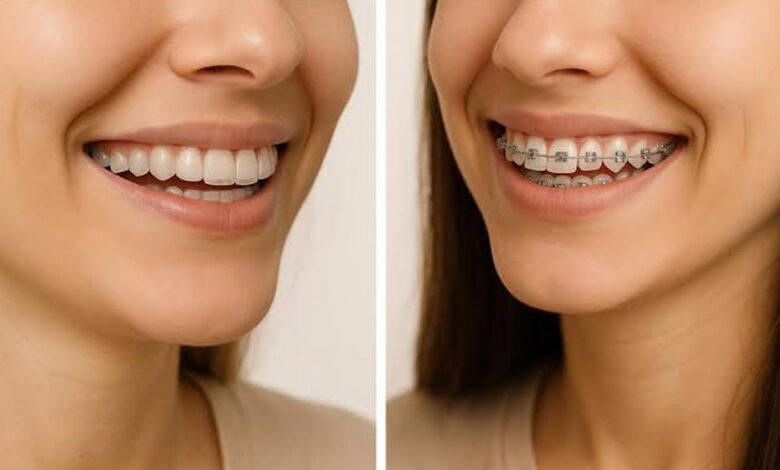

Straightening teeth is one of the most common goals adults and teenagers bring to dental appointments, yet the path to a straighter smile looks very different depending on which treatment a person chooses. Clear aligners have reshaped orthodontic care over the past two decades, but traditional braces have also evolved, and neither option is universally superior. Understanding the real differences between the two helps anyone facing that choice make a decision that fits their lifestyle, budget, and clinical needs.
How Each System Actually Works
Traditional braces rely on metal or ceramic brackets bonded directly to the surface of each tooth. A wire threads through those brackets and is periodically tightened, applying steady pressure that gradually shifts teeth into the desired position. The hardware stays in place around the clock; there is no removing it between meals or at bedtime.
Clear aligners take a different approach. A series of custom-molded plastic trays are worn over the teeth, each tray slightly more advanced than the last. Patients swap trays roughly every one to two weeks, and the cumulative effect of that progression moves teeth incrementally. The trays are removable, which is both their greatest practical advantage and, in some cases, a complication, since treatment outcomes depend heavily on the patient wearing them for the recommended 20 to 22 hours per day.
Candidacy: Who Qualifies for Each Option
Braces can treat a wider range of orthodontic problems. Severe crowding, significant bite misalignment such as large overbites or underbites, and complex tooth rotations are all situations where braces typically have an advantage. The brackets give the orthodontist precise three-dimensional control over each tooth, which is difficult to replicate with removable trays.
Clear aligners have improved dramatically since their introduction, and modern versions can handle many moderate cases that earlier generations could not. Mild to moderate crowding, spacing issues, and certain bite corrections now fall well within the scope of aligner therapy. That said, candidacy still needs to be assessed individually. A person with a complex skeletal bite problem, for example, may need surgical intervention regardless of which orthodontic appliance they prefer.
Age is worth mentioning here. For younger patients who are still growing, braces often remain the default recommendation because growth can be incorporated into treatment planning. Adults tend to be strong candidates for either option, though the removability of aligners makes them particularly popular with working professionals who prefer a more discreet appearance during treatment.
Treatment Timelines: What to Realistically Expect
Both systems require patience. Neither delivers results overnight, and the timeline varies considerably based on how much tooth movement is needed.
| Factor | Traditional Braces | Clear Aligners |
| Average treatment duration | 18 to 36 months | 6 to 24 months |
| Typical adjustment frequency | Every 4 to 8 weeks | Tray change every 1 to 2 weeks |
| Compliance required | Automatic (fixed) | High (must be worn 20 to 22 hrs/day |
| Retention phase | Retainer after removal | Retainer after final tray |
| Visible hardware | Yes (metal or ceramic) | Minimal (clear plastic) |
One point the table above highlights is that clear aligner timelines can vary more than braces timelines, largely because patient compliance is a variable. Someone who consistently wears their trays may finish at the low end of the range. Someone who frequently forgets or removes them for extended periods may find treatment stretches considerably longer, or that additional trays need to be ordered.
Comfort, Maintenance, and Daily Life
What Comfort Actually Feels Like
Both options involve some discomfort, particularly in the first few days after an adjustment or a tray change. With braces, the brackets and wires can irritate the inside of the cheeks and lips, and orthodontic wax is a common tool for managing that friction. With aligners, the edges of the trays can occasionally cause soreness in the gum tissue, though most people find they adapt quickly.
On a pressure basis, many patients report that the initial days with a new aligner tray feel like a tighter squeeze rather than the aching soreness sometimes associated with wire tightening. Neither is pain-free, but the nature of the discomfort differs.
Eating and Oral Hygiene
This is an area where aligners hold a clear practical advantage. With braces, certain foods are off-limits entirely, including hard, sticky, or crunchy items that can damage brackets or get lodged in the hardware. Popcorn, hard candy, chewing gum, and even some raw vegetables require caution or avoidance. Flossing also takes more time and skill with braces, since the wire creates an obstacle that must be threaded around.
Clear aligner wearers remove their trays before every meal and rinse or brush before putting them back in. That means no dietary restrictions and a much simpler oral hygiene routine. The tradeoff is the discipline required: every meal becomes a small ritual, and snacking throughout the day requires removing and replacing the trays each time.
Cost Comparison and Insurance Coverage
Cost is one of the first questions people ask, and there is no single universal answer because pricing varies by geography, the complexity of the case, and the provider’s experience level. That said, some general ranges are worth knowing.
- Traditional braces typically range from $3,000 to $7,000 depending on case complexity and bracket material (metal brackets tend to be less expensive than ceramic).
- Clear aligner treatment with Invisalign, the most widely used brand, commonly ranges from $3,000 to $8,000 according to the American Dental Association’s consumer cost guidance.
- Many dental insurance plans that cover orthodontics will apply benefits to either braces or aligners, though the covered amount varies by plan.
- Flexible spending accounts (FSAs) and health savings accounts (HSAs) can typically be used for orthodontic expenses, reducing the out-of-pocket burden.
- Some practices offer in-house financing or payment plans that spread the cost over the treatment period.
It is worth noting that the lowest cost option is not always the best long-term value. A case that is undermanaged or handled by an inexperienced provider may require additional correction later, which adds expense. When evaluating Invisalign dentists or orthodontists, reviewing credentials, before-and-after case examples, and patient reviews can help identify providers who consistently deliver strong outcomes.
Common Myths Worth Clearing Up
A few misconceptions tend to circulate around both options, and they can steer people toward decisions that do not actually match their needs.
- Myth: Clear aligners are only for minor cases. Reality: Modern aligner technology handles a wide range of moderate issues, and clinical protocols have expanded significantly since the early 2000s.
- Myth: Braces are only for teenagers. Reality: According to the American Association of Orthodontists, about one in four orthodontic patients in the United States is an adult.
- Myth: Once treatment ends, teeth stay in place permanently. Reality: Both braces and aligner patients must wear retainers afterward. Teeth naturally shift over time without retention, regardless of which treatment was used.
- Myth: Ceramic braces are as discreet as aligners. Reality: Ceramic brackets are less noticeable than metal, but they are still visible hardware bonded to the front of the teeth, which is quite different from clear plastic trays.
- Myth: DIY aligner kits from mail-order companies are equivalent to in-office treatment. Reality: Professional oversight, including X-rays and in-person examinations, allows providers to identify bone, root, and gum issues that cannot be detected remotely.
Making the Decision
Choosing between braces and clear aligners is not purely a matter of preference. It involves the clinical reality of your teeth and bite, your lifestyle, your budget, and your willingness to follow through with the specific demands of each system. Someone who travels frequently and values not having dietary restrictions may lean toward aligners even if braces might technically move their teeth slightly faster. Someone with a complex bite issue may find that braces are simply the more reliable tool for the job.
The most useful first step is a thorough consultation with a qualified provider who takes the time to explain the pros and cons specific to your situation. A good provider will not push one option simply because it is more profitable or more popular. They will walk through the clinical reasoning, show you realistic timelines, and give you a clear picture of what treatment will require from you day to day. That kind of honest, case-specific guidance is what makes the difference between a treatment plan you can commit to and one that becomes a source of frustration halfway through.