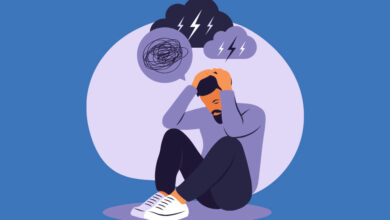

Anxiety is the most common mental health challenge affecting young people in the United States today. According to the National Institute of Mental Health, an estimated 31.9 percent of adolescents experience an anxiety disorder at some point during their teenage years. That is a significant number, yet many teens go without any support at all, often because parents are not sure what they are seeing, or because the teen themselves does not have the words to explain what is happening inside.
This article covers how anxiety shows up in teenagers, why the adolescent years make it especially complicated, what the most recognized types look like, and what structured treatment actually involves. Whether you are a parent, a school counselor, or a teen trying to make sense of your own experience, this breakdown is meant to give you a clearer picture.
Why Teenagers Are Particularly Vulnerable to Anxiety
Adolescence is a period of rapid and sometimes overwhelming change. The brain is still developing, particularly the prefrontal cortex, which governs impulse control, decision-making, and emotional regulation. At the same time, the amygdala, the part of the brain most associated with fear and threat detection, is highly active. This combination means that teens can feel danger or social threat intensely while having fewer internal resources to calm themselves down.
On top of the biology, teenagers face a unique set of social pressures. Academic performance, social hierarchies, identity formation, and in many cases the constant stimulation of social media all create an environment where anxiety can take root and grow. Sleep deprivation, which is extremely common among teens, also worsens anxiety symptoms by reducing the brain’s ability to process emotional experiences overnight.
None of this means anxiety is inevitable or untreatable. It simply helps explain why the teenage years are such a high-risk window and why early identification matters so much.
Common Types of Anxiety Disorders in Teens
Anxiety is not a single condition. The term describes a family of disorders, each with its own distinct features. Understanding the differences can help adults and teens alike recognize what they are dealing with.
| Disorder | Core Feature | Common Triggers in Teens |
| Generalized Anxiety Disorder (GAD) | Persistent, excessive worry about multiple topics | School performance, family, health, the future |
| Social Anxiety Disorder | Intense fear of social situations and judgment by others | Class presentations, parties, meeting new people |
| Panic Disorder | Recurrent unexpected panic attacks with fear of future attacks | Can be unpredictable; sometimes linked to crowded spaces |
| Separation Anxiety Disorder | Excessive distress about being away from attachment figures | School refusal, sleepovers, parental travel |
| Specific Phobias | Marked fear of a particular object or situation | Heights, medical procedures, animals, vomiting |
| Obsessive-Compulsive Disorder (OCD) | Unwanted intrusive thoughts paired with compulsive behaviors | Contamination fears, symmetry, harm-related thoughts |
It is worth noting that OCD is now classified separately from anxiety disorders in the DSM-5, but it shares enough overlap in experience and treatment approaches that it is often discussed alongside them. Many teens also experience more than one of these conditions at the same time, which clinicians refer to as comorbidity.
Recognizing Anxiety in a Teenager: What to Look For
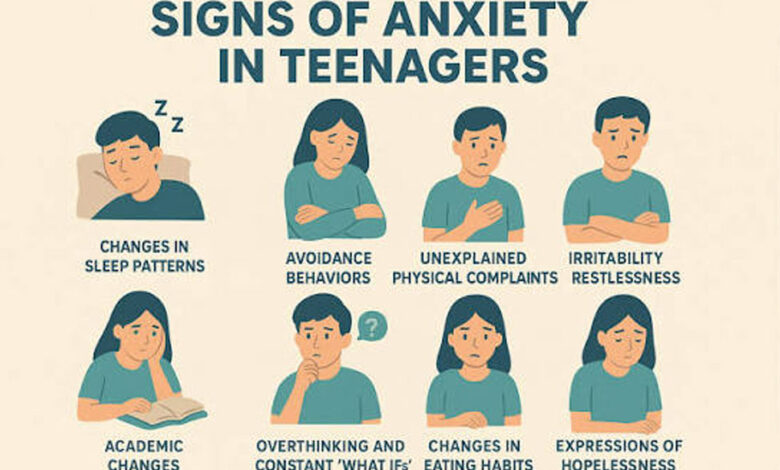
One of the reasons teen anxiety goes unnoticed for so long is that its symptoms are easy to misread. A teenager who refuses to go to school might look defiant. One who avoids social events might seem introverted. One who complains of stomachaches before tests might appear to be seeking attention. Looking underneath the behavior usually tells a different story.
Emotional and Cognitive Signs
- Constant or recurring worry that feels hard to control
- Catastrophic thinking, assuming the worst possible outcome in most situations
- Difficulty concentrating because worry takes up mental space
- Irritability or emotional outbursts that seem disproportionate to the situation
- Persistent feelings of dread or a sense that something bad is about to happen
Physical and Behavioral Signs
- Frequent headaches, stomachaches, or muscle tension without a clear medical cause
- Trouble falling or staying asleep, or waking up feeling unrested
- Avoidance of specific places, people, or activities
- Seeking excessive reassurance from parents or friends
- Declining grades or sudden withdrawal from extracurricular activities
- Physical symptoms during or before anxiety-provoking events, such as nausea or a racing heart
No single sign confirms an anxiety disorder. Patterns matter more than isolated incidents. A teen who has a stomachache before one big exam is probably just nervous. A teen who has them every Monday morning and has started missing school is showing a pattern worth taking seriously.
What Professional Treatment for Teen Anxiety Looks Like
When symptoms are persistent, interfering with daily life, or causing significant distress, professional support is the most reliable path forward. Parents often wonder what that actually involves, partly because the word “therapy” can feel vague or even intimidating to a teenager who has never tried it.
Cognitive Behavioral Therapy, known as CBT, is currently the most well-researched and widely used approach for adolescent anxiety. It works by helping teens identify the thought patterns that fuel their anxiety and gradually change how they respond to feared situations. A central component is called exposure, which involves gently and systematically facing feared situations in a controlled way, reducing avoidance over time. For parents researching options, structured anxiety therapy for teens typically incorporates CBT as the primary framework, often alongside family involvement and psychoeducation.
Acceptance and Commitment Therapy, or ACT, is another approach gaining traction with adolescents. Rather than focusing primarily on changing anxious thoughts, ACT teaches teens to accept uncomfortable feelings without letting them dictate behavior. It draws on mindfulness skills and helps young people clarify their values so anxiety does not shrink their world.
Medication is sometimes part of the picture, particularly for moderate to severe anxiety. Selective serotonin reuptake inhibitors, or SSRIs, are the most commonly prescribed class of medication for adolescent anxiety disorders. They are not habit-forming and are generally well-tolerated. The decision to use medication is always made in consultation with a physician or psychiatrist, and research consistently shows that the combination of therapy and medication tends to produce better outcomes than either alone.
How Families Can Support a Teen with Anxiety
Parents play a larger role in teen anxiety than is sometimes recognized, and not always in ways that are obvious. Research published by the Child Mind Institute and others has found that parental accommodation, meaning doing things to help a child avoid anxiety-provoking situations, often makes anxiety worse over time, even though it comes from a place of genuine care and love. When a parent calls the teacher on a teen’s behalf every time there is a conflict, or allows a teenager to skip a party to avoid social discomfort, the teen never gets the opportunity to discover that they can handle the situation.
This does not mean being cold or dismissive. Validation is essential. Telling a teenager “I can see this feels really scary for you” is different from telling them “you have nothing to worry about.” The first acknowledges their experience; the second, however well-intentioned, can leave them feeling misunderstood.
- Validate feelings without reinforcing avoidance. Acknowledge the anxiety as real while still encouraging engagement with feared situations.
- Stay calm yourself. Teens pick up on parental anxiety. A regulated adult presence helps co-regulate a dysregulated teen.
- Ask questions instead of offering solutions. ‘What would help you feel even a little more ready for this?’ works better than immediately problem-solving.
- Keep routines consistent. Predictability reduces background anxiety for most teens.
- Know when to involve a professional. If anxiety is significantly affecting school, friendships, sleep, or physical health, that is a clear signal to seek outside support.
School and Social Life: The Daily Impact of Anxiety
Anxiety does not just affect how a teenager feels; it actively shapes what they do and do not do. Avoidance is the defining behavior of anxiety disorders, and in a teenager’s life, avoidance tends to show up most visibly at school and in social settings. A teen with social anxiety may stop raising their hand in class, start eating lunch alone, or drop activities they once loved because performing in front of others feels unbearable.
School refusal is one of the more serious expressions of this. When anxiety becomes so overwhelming that a teen cannot get through the school day, the academic and social consequences compound quickly. Missing school means missing instruction, yes, but it also means missing the low-stakes social practice that builds confidence over time. The longer the avoidance continues, the harder it typically becomes to reverse.
School counselors and 504 plan accommodations can be genuinely useful tools. Extended time on tests, the ability to take breaks, or a quiet space to decompress can reduce the daily overload enough that a teen can stay engaged. These accommodations work best when they are paired with treatment rather than used as a replacement for it.
A Few Final Thoughts
Teen anxiety is real, it is common, and it responds well to the right kind of support. The gap between a teenager who is quietly struggling and one who gets meaningful help is often just awareness: a parent who recognizes the signs, a teacher who flags a change in behavior, or a teenager who finally puts words to what they have been feeling. Understanding what anxiety looks like in this age group, what drives it, and what treatment actually involves is a genuinely useful starting point. The science is clear that anxiety disorders in adolescence do not simply go away on their own, but with proper support, most teens make significant and lasting progress.