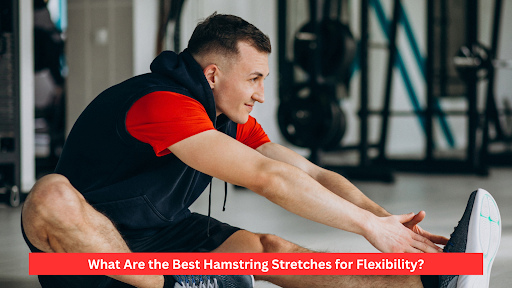

Hamstring stretches can improve flexibility, range of motion, and lower-body mobility through standing, seated, lying, wall-assisted, and dynamic exercises. Gentle static stretches can be held for 20–30 seconds, while dynamic movements work well during warm-ups. The hamstrings are three muscles at the back of the thigh that help bend the knee and extend the hip. If you have a recent injury, severe pain, swelling, bruising, or difficulty walking, avoid aggressive stretching and seek professional guidance.
What Are Hamstring Stretches?
Hamstring stretches are exercises that gently lengthen the muscles along the back of the thighs. They can be performed while standing, sitting, lying down, or using a wall, strap, or resistance band.
The goal is not to force your legs into an extreme position. Good hamstring stretches should create mild to moderate tension while allowing you to breathe normally and maintain control.
Common types include:
- Static hamstring stretches
- Dynamic hamstring stretches
- Standing hamstring stretches
- Seated hamstring stretches
- Wall-assisted stretches
- Hamstring stretches with a band
- Contract-relax stretching
For beginners, simple positions are usually easier to control than deep stretches. If your main concern is tightness, gradually increasing your range of motion is generally more practical than forcing a deep stretch.
Why Are Hamstring Stretches Important?
Limited hamstring flexibility can make some movements feel restricted. Regular mobility work may help maintain comfortable movement during exercise and everyday activities.
Research has consistently found that stretching can improve hamstring flexibility and range of motion. Repeated stretching may be particularly useful for producing longer-term flexibility improvements.
Potential benefits include:
1. Improved Flexibility
Regular stretching can increase the range through which your hips and knees can comfortably move.
2. Better Range of Motion
Improved flexibility may make movements such as bending, hip hinging, reaching toward the floor, and straightening the knee easier.
3. Easier Daily Movement
Flexible hamstrings can support activities such as walking, climbing stairs, sitting, standing, and bending.
4. Support for Exercise and Sports
Runners, cyclists, football players, gym users, and other athletes regularly use their hamstrings. Maintaining appropriate mobility can support comfortable movement during training.
5. Reduced Feeling of Tightness
Stretching may reduce the feeling of stiffness or restriction. However, tightness does not always mean a muscle is physically shortened, so stretching should not be considered the solution to every type of discomfort.
7 Effective Hamstring Stretches
Different stretches suit different people. These seven options provide a mixture of simple, supported, and movement-based exercises.
1. Standing Hamstring Stretch
Standing hamstring stretches require no equipment and can be performed almost anywhere.
How to do it:
- Stand with your feet about hip-width apart.
- Place one heel slightly forward.
- Keep the extended leg comfortably straight.
- Hinge forward from your hips.
- Move slowly until you feel gentle tension behind the thigh.
- Hold the position comfortably.
- Switch sides.
Do not bounce or force yourself toward your toes.
2. Seated Hamstring Stretch
Seated hamstring stretches are useful for people who prefer floor-based exercises.
How to do it:
- Sit with one leg extended.
- Bend the opposite leg comfortably.
- Keep the extended leg relaxed.
- Hinge forward from your hips.
- Reach toward the extended leg without forcing your hands to your foot.
- Hold the gentle stretch.
- Repeat on the other side.
This is one of the useful hamstring stretches for beginners because the floor provides stability and allows better control.
3. Lying Hamstring Stretch
A lying stretch provides additional support and can be easier to control.
How to do it:
- Lie on your back.
- Bend one knee.
- Slowly raise the opposite leg.
- Keep your pelvis stable.
- Gradually straighten the raised leg as far as comfortable.
- Hold the stretch.
- Lower the leg slowly and switch sides.
A strap can be used if reaching your foot is difficult.
4. Wall Hamstring Stretch
A wall-supported stretch provides a stable position and allows you to control the intensity.
How to do it:
- Lie on your back near a wall.
- Raise one leg and place the heel against the wall.
- Keep the knee slightly bent initially.
- Gently straighten the leg until you feel a stretch.
- Hold comfortably.
- Switch sides.
Avoid forcing the knee completely straight if doing so creates discomfort.
5. Dynamic Hamstring Stretch
Dynamic stretching uses controlled movement instead of holding one position.
A simple example is a controlled leg swing.
How to do it:
- Stand beside a stable support.
- Hold the support for balance.
- Swing one leg forward and backward slowly.
- Begin with a small range of motion.
- Gradually increase the range without forcing it.
- Repeat on the other side.
Dynamic hamstring stretches can be useful during a warm-up because they prepare the legs for movement.
6. Supine Hamstring Stretch With a Band
Hamstring stretches with band assistance can help control the amount of tension.
How to do it:
- Lie on your back.
- Place a resistance band or strap around one foot.
- Slowly raise that leg.
- Hold the band with both hands.
- Gently guide the leg toward you.
- Stop when you feel a comfortable stretch.
- Lower the leg and switch sides.
The band should assist the movement rather than pull your leg aggressively.
7. Contract-Relax Hamstring Stretch
Contract-relax stretching combines a gentle muscle contraction with relaxation and stretching. It is sometimes used in flexibility training and rehabilitation.
Because this technique is more advanced, beginners may benefit from learning it from a qualified professional.
How Long Should You Hold a Hamstring Stretch?
For general flexibility, a comfortable static stretch of around 20–30 seconds is a practical starting point.
There is no single duration that works perfectly for everyone. Research suggests that the total amount of stretching performed over time is important for improving flexibility.
You do not need to hold one stretch for several minutes. Instead, divide your stretching time between different exercises and both legs.
The main goal is consistency. A comfortable stretch performed regularly is generally more useful than occasionally forcing an extreme position.
How Often Should You Do Hamstring Stretches?
For general mobility, you can include hamstring stretches several times per week.
A simple routine could include:
- 2–4 sessions per week
- 2–3 stretches per leg
- 20–30 seconds for static stretches
- Controlled dynamic movements during warm-ups
- Gradual progression over time
If you have significant tightness, consistent practice may help improve flexibility. However, stop or reduce the intensity if stretching produces persistent pain rather than normal stretching tension.
Should You Stretch Hamstrings Before or After Exercise?
Both can be useful, but the type of stretching matters.
Before exercise: Dynamic hamstring stretches can be included in a warm-up because they involve controlled movement through an increasing range.
After exercise: Static stretches can be used after training or during a separate flexibility session.
A practical routine can therefore combine dynamic movements before demanding exercise with static flexibility work after training or at another time.
Common Hamstring Stretching Mistakes
Even good stretches can become less effective when performed incorrectly.
- Stretching Too Aggressively: A stronger stretch does not necessarily produce better results. Avoid forcing your body into a deep position.
- Bouncing During Static Stretching: Use smooth, controlled movement rather than bouncing at the end of your range.
- Rounding the Back Excessively: During seated and standing stretches, focus on hinging from the hips instead of collapsing your upper body forward.
- Holding Your Breath: Breathe normally throughout the movement and avoid unnecessary tension.
- Stretching Only One Side: Unless you have a specific rehabilitation plan, give both legs appropriate attention.
- Expecting Immediate Permanent Results: One session may temporarily improve range of motion, but lasting flexibility generally requires repeated practice.
Can Hamstring Stretches Prevent Injuries?
Stretching can improve flexibility, but it should not be considered a complete injury-prevention strategy.
Hamstring health also depends on strength, conditioning, training volume, recovery, movement control, and sport-specific preparation. For athletes, combining flexibility work with progressive strengthening can provide a more complete approach.
This is particularly important for activities involving sprinting, jumping, acceleration, and rapid changes of direction.
When Should You Avoid Hamstring Stretching?
Do not force a stretch when you experience sharp, sudden, or worsening pain.
People searching for stretches for hamstring strain, stretches for a pulled hamstring, or stretches for hamstring pain should be especially careful. A recent injury may require protection and gradual rehabilitation rather than aggressive stretching.
If you have significant bruising, swelling, severe pain, sudden weakness, difficulty walking, or symptoms that are not improving, seek professional medical assessment.
People with recurring knee or lower-back symptoms should also avoid assuming that tight hamstrings are the only cause. Hamstring stretches for knee pain or hamstring and lower back stretches may be included in some mobility programs, but persistent pain should be properly assessed.
Conclusion
Hamstring stretches can be a simple and effective part of a regular flexibility and mobility routine. Standing, seated, lying, wall-assisted, and dynamic variations provide different ways to improve comfortable range of motion.
For general tightness, combining gentle static stretches with controlled dynamic movements can be practical. Hamstring and glute stretches, hamstring and hip flexor stretches, and quad and hamstring stretches can also be included in a broader lower-body routine.
The main goal should be consistent, controlled movement rather than maximum intensity. Stretch regularly, avoid painful positions, and combine flexibility work with appropriate strength and conditioning.
If you have a recent injury, persistent pain, swelling, bruising, or difficulty walking, avoid aggressive stretching and seek professional guidance.
Frequently Asked Questions
1. What are the best hamstring stretches for beginners?
Standing, seated, lying, and wall-supported stretches are simple options for beginners.
2. Should I stretch my hamstrings before or after exercise?
Use dynamic stretches before exercise and static stretches after training.
3. How do I loosen tight hamstrings?
Practice gentle stretches regularly for 20–30 seconds without forcing the movement.
4. Should I stretch a pulled hamstring?
Avoid aggressive stretching after a recent injury, especially with pain, swelling, or bruising.