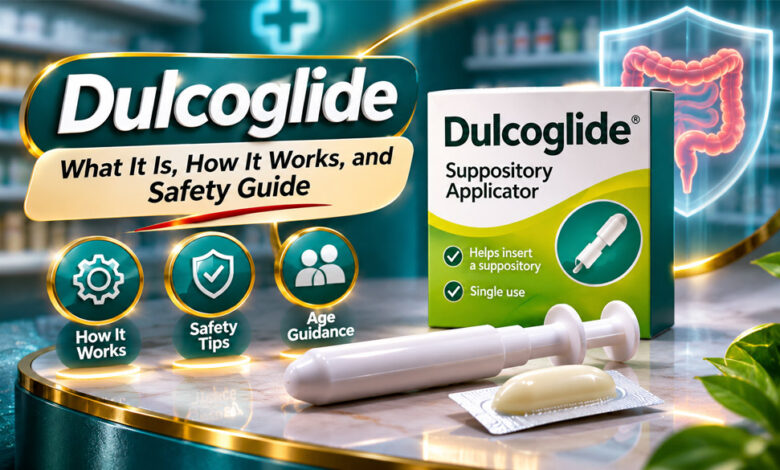

Dulcoglide is a disposable applicator used to help insert a suppository into the rectum. It is often connected with Dulcolax, so some people think Dulcoglide is also a laxative.
However, Dulcoglide is not a medicine. It is only a device that helps insert a suitable suppository. The medicine inside the suppository provides the treatment.
This guide explains what Dulcoglide is, how it works, how to use it, its safety information, age guidance, availability, and alternatives.
What Is Dulcoglide?
Dulcoglide is a small device that helps insert a suitable suppository into the rectum. It can be used instead of inserting the suppository directly with a finger.
The device has two main parts: a barrel and a plunger. The barrel holds the suppository. The plunger releases it after the applicator has been placed correctly.
Dulcoglide does not contain medicine. It does not make you have a bowel movement or treat constipation by itself. The medicine inside the suppository does that.
Dulcoglide has been described by pharmacies as a comfort-shaped, individually wrapped, single-use applicator. Some pharmacies have sold the applicators separately from the suppositories.
Dulcoglide vs Dulcolax: What Is the Difference?
Dulcoglide and Dulcolax are related names, but they are not the same product.
Dulcoglide is an applicator. Dulcolax is a brand of laxative medicines. Some Dulcolax suppositories contain bisacodyl, which is a stimulant laxative used for constipation.
Here is the simple difference:
| Product | What It Does | Contains Bisacodyl? |
|---|---|---|
| Dulcoglide applicator | Helps insert a suppository | No |
| Dulcolax suppository | Helps relieve constipation | Yes, in relevant bisacodyl products |
| Dulcolax tablet | Oral laxative treatment | Yes, in relevant bisacodyl products |
| Combination pack | May include the medicine and applicator | Only the suppository contains the medicine |
Some older product information mentions Dulcolax suppositories supplied with DulcoGlide applicators. This may be why people sometimes think Dulcoglide itself is a laxative.
Dulcolax also comes in different forms. A tablet is taken by mouth, while a suppository is inserted into the rectum. Their instructions are different.
How Does Dulcoglide Work?
Dulcoglide works in a simple mechanical way.
A suitable suppository is placed inside the open end of the applicator. The applicator is then gently positioned as directed. The plunger is pressed to release the suppository into the rectum.
The applicator is removed and thrown away after use.
Dulcoglide does not change the dose or strength of the medicine. It also does not make the medicine work faster. How quickly it works depends on the medicine inside the suppository.
How to Use a Dulcoglide Applicator
Always read the instructions that come with your applicator and medicine. Different suppositories may have different directions.
Older UK product information gives the following general steps.
Before Using It
Wash your hands before touching the applicator or suppository.
Check that the Dulcoglide wrapper is closed and undamaged. Do not use the applicator if it is cracked, broken, or damaged.
Also check that your suppository is suitable for the applicator. Read the medicine leaflet for the correct dose, age limits, and warnings.
Ask a pharmacist if you are unsure.
Loading the Suppository
Open the applicator wrapper and remove the wrapper from the suppository.
Older Dulcoglide instructions say to place the blunt end of the suppository into the applicator barrel. Do not force it farther than it should go.
Some suppositories may have different instructions when they are inserted directly with a finger. Always follow the directions for the exact product and method you are using.
Inserting and Releasing the Suppository
The documented instructions describe lying on your side. The lower leg stays straight while the upper leg is bent toward your chest.
Gently insert the applicator as directed. Press the plunger when the applicator is correctly positioned. This releases the suppository.
Do not force the applicator if you feel sharp pain or strong resistance. Too much pressure could cause irritation or injury.
After Use
Carefully remove the applicator.
Dulcoglide is made for one use only. Throw it away after use. Do not wash it to use again, and do not flush it down the toilet.
Wash your hands again.
If you have significant pain or bleeding, or the applicator is difficult to remove, stop and get medical advice.
Can Dulcoglide Be Used With Any Suppository?
No. You should not assume that every suppository will work with Dulcoglide.
Some pharmacy descriptions say the applicator can be used with “other suitable suppositories.” This means compatibility needs to be checked.
Suppositories can have different sizes, shapes, ingredients, and instructions. Never force a suppository into the applicator if it does not fit correctly.
Check the instructions or ask a pharmacist if you are unsure.
Is Dulcoglide Suitable for Children?
Published UK pharmacy information says the documented Dulcoglide applicator is suitable for adults and children over 12. It is listed as unsuitable for children under 12.
This rule is for the applicator. The medicine inside a suppository can have different age rules.
Parents and caregivers should check both the medicine and the applicator instructions. Ask a doctor or pharmacist before giving rectal medicine to a child if you are unsure.
How Quickly Does a Bisacodyl Suppository Work?
Dulcoglide itself does not have a working time because it is not medicine.
When it is used with a Dulcolax bisacodyl suppository, the bisacodyl produces the laxative effect.
NHS information cited in the collected sources says bisacodyl suppositories usually work within about 10 to 45 minutes.
U.S. Dulcolax information cited in the supplied material gives a range of around 15 to 60 minutes. These are general time ranges. The exact time can differ from person to person.
Bisacodyl tablets usually take longer. NHS-based information gives a general range of around 6 to 12 hours.
Using Dulcoglide does not appear to make the medicine work faster. Follow the dose instructions for your medicine and do not take an extra dose just because it has not worked immediately.
Dulcoglide Benefits and Limitations
Dulcoglide mainly offers a different way to insert a suppository.
Possible Benefits
Dulcoglide can help people who prefer not to insert a suppository directly with a finger.
The barrel holds the suppository, while the plunger releases it. Each applicator is individually wrapped and ready for one use.
Because it is disposable, there is no need to clean and store the used device.
These are practical benefits. Dulcoglide does not make the medicine stronger or more effective.
Limitations
Not everyone needs Dulcoglide. Many suppositories can be inserted without an applicator by following their instructions.
Dulcoglide also cannot be assumed to work with every suppository. It does not guarantee painless use and should never be forced.
Each applicator can only be used once. This creates extra waste and may add to the cost.
Most importantly, Dulcoglide does not treat constipation. It only helps deliver a suitable suppository.
Dulcoglide Safety and Precautions
Dulcoglide is used in a sensitive part of the body, so it should be handled gently.
Never force the applicator if you feel sharp pain or unusual resistance. Too much pressure could cause irritation or injury.
Do not use an applicator if its wrapper is already open or if the device is damaged.
Stop using it if you have significant pain or bleeding. Get medical advice if these problems continue or seem serious.
Remember that the applicator and medicine have different risks. Dulcoglide can cause problems if it is inserted incorrectly, while the medicine inside the suppository can cause its own side effects.
Bisacodyl Side Effects and Warnings
If Dulcoglide is used with a bisacodyl suppository, some people may have side effects from the medicine.
Common side effects of bisacodyl can include:
- Stomach cramps
- Nausea
- Diarrhoea
- Rectal discomfort
Using laxatives too much can also cause dehydration and problems with the body’s fluid and salt balance.
People with severe stomach pain, vomiting, dehydration, bowel blockage, inflammatory bowel disease, or anal fissures may need medical advice before using bisacodyl.
Pregnant people should also ask a healthcare professional before using bisacodyl. If breastfeeding, follow the current medicine instructions or advice from a doctor or pharmacist.
Seek medical help if you have serious or unexplained symptoms such as severe abdominal pain, ongoing vomiting, blood in your stool, or significant rectal bleeding.
These warnings are mainly about bisacodyl, not Dulcoglide itself.
Can Dulcoglide Be Reused?
No. Dulcoglide is designed for single use.
Throw the applicator away after using it. Washing or cleaning it does not make it safe for another use.
Do not flush it down the toilet.
The medicine has separate instructions about how often it can be used. The fact that the applicator is single use does not tell you how often you should take the medicine.
Dulcoglide vs Direct Finger Insertion
Many suppositories can be inserted directly with a finger by following the medicine leaflet.
Dulcoglide offers another option. Instead of holding and inserting the suppository directly, the device holds it in a barrel and releases it with a plunger.
Some people may prefer Dulcoglide because it avoids direct finger insertion. Other people may find direct insertion easier because no extra device is needed.
Direct insertion also creates less waste and does not require buying a separate applicator.
Neither method is best for everyone. People with limited movement, difficulty reaching the area, or sensitive tissue may want to ask a pharmacist or healthcare professional for advice.
Is Dulcoglide Still Available?
Dulcoglide has been listed by UK pharmacies, including packs of three individually wrapped applicators.
However, current availability appears limited.
One older Express Chemist listing showed a three-pack with product code 3990090 and a price of £4.10. The listing later showed the product as no longer available.
The £4.10 price is historical and should not be treated as a current price.
An unavailable pharmacy listing also does not prove that Dulcoglide has been completely discontinued. Products can become unavailable because of stock problems, supplier changes, or changes in a retailer’s product range.
There is not enough reliable information to confirm that Dulcoglide has been permanently discontinued everywhere.
If you are looking for it, ask a pharmacy about current stock or a suitable alternative.
Alternatives to Dulcoglide
There are two types of alternatives to consider. One is another way to insert a suppository. The other is a different way to treat constipation.
Alternatives for Suppository Administration
Direct finger insertion is the main alternative when the medicine instructions allow it.
It does not require an extra device and creates less waste. However, some people may find it difficult or uncomfortable.
Another option may be a different suppository applicator that a pharmacist confirms is suitable. Do not use another device simply because it looks like Dulcoglide.
People who have difficulty using a suppository can also ask a healthcare professional for help.
A mini enema is different. It normally contains its own liquid or medicine and has separate instructions. It is not simply another empty suppository applicator.
Alternatives for Constipation
If constipation is the main problem, changing the applicator may not help.
Simple changes may help some people. These include eating more fibre gradually, drinking enough fluids, staying active, and having regular toilet habits.
Different types of laxatives are also available. These include bulk-forming laxatives such as ispaghula husk and osmotic laxatives such as macrogol.
The right treatment depends on the person and the cause of the constipation. A pharmacist can help with short-term treatment. Long-lasting or repeated constipation may need medical advice.
When Constipation Needs Medical Advice
Constipation that keeps coming back may need further attention.
Speak to a healthcare professional if constipation does not improve with treatment or keeps returning.
You should also get advice if you have symptoms such as:
- Blood in your stool
- Rectal bleeding
- Unexplained weight loss
- Ongoing stomach pain
- Ongoing vomiting
- A sudden change in your normal bowel habits
The collected NHS guidance says bisacodyl should not be used every day for more than five days without speaking to a doctor.
Constipation can have many causes. Diet, low fluid intake, lack of activity, medicines, and some health conditions can all play a part.
Do not stop taking prescribed medicine on your own if you think it is causing constipation. Speak to a doctor or pharmacist first.
Common Misunderstandings About Dulcoglide
There are several common misunderstandings about Dulcoglide.
Dulcoglide is not a laxative. It is an applicator.
It does not contain bisacodyl. Bisacodyl may be inside the suppository used with it.
It does not treat constipation by itself. The medicine provides the treatment.
Dulcoglide and Dulcolax are different. Dulcoglide is a device, while Dulcolax is a medicine brand.
Suppositories may be sold separately. Buying Dulcoglide does not always mean medicine is included.
Not every suppository will fit. Compatibility should be checked first.
Dulcoglide cannot be reused. It is a single-use device.
It does not make the medicine work faster. The medicine controls how quickly the treatment works.
Limited availability does not prove it has been discontinued everywhere. Some pharmacy listings show it as unavailable, but full discontinuation has not been confirmed.
Bottom Line
Dulcoglide is a disposable device that helps insert a suitable rectal suppository. It uses a simple barrel and plunger and offers another option for people who do not want to insert a suppository directly with a finger.
Dulcoglide itself is not a laxative and contains no bisacodyl. When it is used with a Dulcolax bisacodyl suppository, the suppository provides the laxative effect.
Always check that the suppository is suitable for the applicator. Follow the instructions and never force the device. The documented UK applicator is single use and is not listed as suitable for children under 12.
Dulcoglide appears to have limited availability in the UK, but there is not enough evidence to say that it has been completely discontinued.
Frequently Asked Questions
What is Dulcoglide used for?
Dulcoglide helps insert a suppository into the rectum. It holds the suppository and releases it with a plunger.
Is Dulcoglide a laxative?
No. Dulcoglide is an applicator, not a laxative. It does not contain any laxative medicine.
Is Dulcoglide the same as Dulcolax?
No. Dulcoglide is a suppository applicator. Dulcolax is a brand of laxative medicines.
Does Dulcoglide contain bisacodyl?
No. Dulcoglide does not contain bisacodyl. Bisacodyl may be found in the Dulcolax suppository used with it.
Can Dulcoglide be used with other suppositories?
It may work with some suitable suppositories. Check the instructions or ask a pharmacist if you are not sure.
Can Dulcoglide be reused?
No. Dulcoglide is made for one use only. Throw it away after using it.
Is Dulcoglide suitable for children?
UK product information lists Dulcoglide for adults and children over 12. It is not listed for children under 12.
Is Dulcoglide discontinued?
Some UK pharmacies show Dulcoglide as unavailable. However, there is no clear proof that it has been fully discontinued everywhere.
What Is Crypings com? Features, Safety, and Key Facts
SEO Instant Appear HighSoftware99.com: What It Is and How It Works