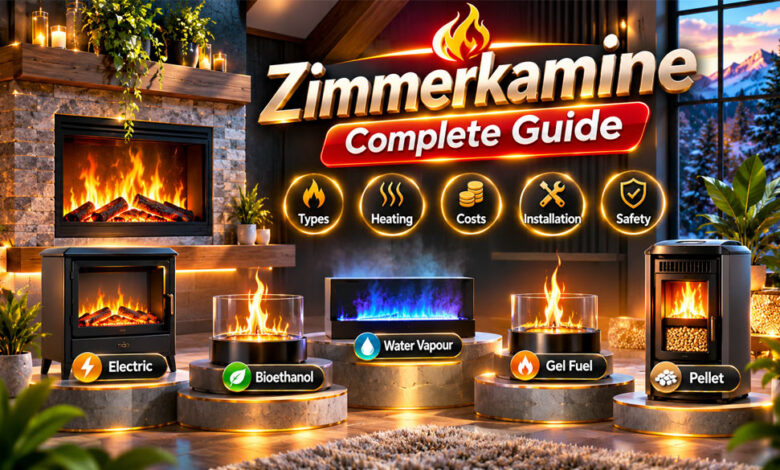

Zimmerkamine are fireplaces made for indoor rooms. They can add a flame effect, warmth, or both to a room. The word comes from German and means “room fireplaces.”
There are different types of Zimmerkamine. Some use electricity, while others burn bioethanol, gel fuel, or wood pellets. Some models use water mist and lights to create fake flames.
This guide explains what Zimmerkamine are, how they work, their main types, heating ability, costs, installation, safety, and maintenance.
What Are Zimmerkamine?
Zimmerkamine is the plural form of the German word Zimmerkamin. Zimmer means “room,” while Kamin means “fireplace.”
In simple words, Zimmerkamine means room fireplaces.
It is not the name of a brand or one special type of fireplace. The term can describe many indoor fireplaces, including electric, bioethanol, water-vapour, gel, and pellet models.
Some Zimmerkamine are mainly used for decoration. They create a flame effect but may provide little or no heat. Other models include a heater and can make a room warmer.
Not every Zimmerkamin works without a chimney. Electric models do not burn fuel, so they do not need a chimney for smoke or gases. Many bioethanol models also work without a traditional chimney, but the room still needs proper ventilation.
Pellet fireplaces normally need a suitable exhaust or flue system.
Always check the details of the model before buying because different Zimmerkamine can work in very different ways.
How Do Zimmerkamine Work?
How a Zimmerkamin works depends on its type.
Electric fireplaces use lights, reflections, screens, or similar technology to create fake flames. Many also have a separate electric heater.
Bioethanol fireplaces burn liquid alcohol-based fuel. This creates a real flame and gives off some heat.
Water-vapour fireplaces use fine water mist and lights. The light shines through the mist and makes it look like moving flames. No fuel is burned.
Gel fireplaces burn special gel fuel and create real flames.
Pellet fireplaces burn compressed wood pellets. These models are usually more focused on heating.
A realistic flame does not always mean strong heat. Always check the heating output if warming the room is important to you.
Main Types of Zimmerkamine
Electric Zimmerkamine
Electric Zimmerkamine are one of the easiest types to use. They run on electricity and do not need wood or liquid fuel.
They create fake flames using lights, reflections, screens, or other visual effects.
Many electric models also have a heater. Their heating output is often around 1–2 kW, although this depends on the model.
Some also have useful features such as a thermostat, remote control, different heat settings, and adjustable flame brightness.
Many models let you use the flame effect without turning on the heater. This means you can enjoy the fireplace look even when you do not need extra warmth.
Electric fireplaces do not burn fuel, so they do not create combustion gases inside the room. However, they still need a safe electrical connection and enough space around the unit.
Bioethanol Zimmerkamine
Bioethanol Zimmerkamine burn a liquid alcohol-based fuel called bioethanol.
The fuel burns inside a special burner and creates a real flame. It also gives off some heat.
Many bioethanol fireplaces do not need a traditional chimney. This can make them useful in homes where adding a normal fireplace would be difficult.
However, no chimney does not mean no emissions. Bioethanol is still burned inside the room. Good ventilation is therefore important.
The fuel is also very flammable. It must be stored and handled carefully. Never add fuel while the fireplace is burning or still hot.
Bioethanol models can be an option for people who want real flames, but they need more care than electric fireplaces.
Water Vapour Zimmerkamine
Water-vapour Zimmerkamine use water mist and lights to create a flame effect.
There is no real fire because no fuel is burned.
These fireplaces are mainly used for decoration. Many do not provide much heat.
They also need some regular care. The water tank and parts that create the mist need cleaning. Minerals from water can build up over time and affect how the fireplace works.
Gel Fuel Zimmerkamine
Gel fireplaces burn special gel fuel and create real flames.
Some models may also make a soft crackling sound, which can make the fire seem more natural.
Because they burn fuel, they still have fire and indoor air concerns. Always follow the instructions provided with the fireplace.
Do not use another type of fuel if the manufacturer does not approve it. Fuel storage and refilling also need care.
Pellet Zimmerkamine
Pellet Zimmerkamine burn small compressed wood pellets.
These fireplaces can provide more heat than many decorative models. Some have thermostats and automatic systems that feed pellets into the fire.
Installation can be more difficult. Pellet fireplaces normally need an exhaust system to remove gases safely.
Professional installation may be needed.
They also require more maintenance. Ash needs to be removed, parts need checking, and the exhaust system may need regular servicing.
How Much Heat Can Zimmerkamine Provide?
The amount of heat depends on the fireplace type and model.
Some Zimmerkamine are mainly decorative and provide little or no useful heat.
Electric fireplaces with heaters often provide around 1–2 kW of heat. This can provide extra warmth in a suitable room.
Pellet fireplaces can provide stronger heating because they are made to burn solid fuel for heat.
Bioethanol fireplaces also produce heat. However, ventilation and indoor emissions need to be considered.
Water-vapour fireplaces are usually more focused on their flame effect than heating.
Room size also matters. A small, well-insulated room may stay warmer than a large room with poor insulation.
Draughts, high ceilings, open doors, and the room layout can also affect heating.
If you need heat, check the stated heating output before buying.
Zimmerkamine Costs and Running Expenses
Zimmerkamine are available at many different prices. The cost depends on the type, size, design, heating power, brand, and installation.
Purchase Price
Basic electric fireplaces are often among the cheaper options. One source gives an example price of around $50 to $150 for basic models. However, these are only rough examples and should not be treated as current prices.
Larger electric fireplaces with better flame effects and heaters can cost several hundred dollars or more.
Bioethanol fireplaces may also cost a few hundred dollars, while larger and more expensive designs can cost much more.
Water-vapour fireplaces are often more expensive than simple electric models because they use special mist technology.
Pellet fireplaces can cost several thousand dollars in some cases. Installation and the exhaust system can add more to the total cost.
Prices change depending on the country, brand, seller, and model. Always check current prices before buying.
Running Costs
You should also think about the cost of using the fireplace.
For an electric heater, you can estimate the cost with this simple calculation:
Power in kW × hours used × electricity price per kWh
For example, if a 2 kW heater runs for one hour and electricity costs €0.30 per kWh, it would cost about €0.60.
This is only an example. It is not a current electricity price.
Flame-only mode usually uses less electricity than heating mode. Check both figures if the fireplace offers these options.
For bioethanol fireplaces, the cost depends on how much fuel the burner uses and how much the fuel costs in your area.
Pellet fireplace costs depend on how many pellets are used and their local price.
Think about how often you plan to use the fireplace. A cheap fireplace may still become expensive if its running costs are high.
Zimmerkamine vs Traditional Fireplaces
Traditional wood fireplaces and modern Zimmerkamine have some important differences.
A traditional wood fireplace normally needs a chimney or flue. It also needs firewood, cleaning, ash removal, and regular care.
Adding a traditional fireplace to a home without one can also require a lot of building work.
Electric Zimmerkamine are much simpler. They do not need wood and do not create ash. They also do not need a chimney because they do not burn fuel.
Many electric models can show flames without producing heat. This means they can be used for decoration during warmer months.
Bioethanol fireplaces create real flames without burning wood. Many do not need a traditional chimney, but ventilation and safe fuel handling are still important.
Pellet fireplaces are closer to normal heating appliances. They burn solid fuel and usually need an exhaust system. However, they can provide stronger heating than many decorative fireplaces.
The best choice depends on what you need. Electric models can be useful for a simple flame effect. Bioethanol may suit people who want a real flame. Pellet models may be better when stronger heating is important.
Choosing the Right Size and Position
Choose a fireplace that fits the room properly.
A very large fireplace can look too big in a small room. A very small fireplace may look out of place on a large wall.
Measure the available space before buying.
Also check the safety space required around the fireplace. The fireplace may need more room than its actual size.
Think about where people normally sit and where the fireplace will be easiest to see.
Do not place it where it blocks a walkway or can easily be knocked.
Keep curtains, furniture, paper, and other materials away from the fireplace according to the safety instructions.
If you have children or pets, think carefully about hot surfaces and real flames.
If you want to put a TV above the fireplace, check the instructions for both products. Heat and airflow can affect whether this setup is safe.
Freestanding, Wall-Mounted, and Built-In Zimmerkamine
Zimmerkamine come in different designs. The right one depends on your room and how you want to install it.
Freestanding Models
Freestanding fireplaces do not need to be built into a wall.
Electric stove-style models are a common example. They can look similar to traditional wood stoves but use electricity.
The fireplace should be placed on a stable surface with enough space around it.
Electric models also need access to a suitable power supply.
Wall-Mounted Models
Wall-mounted Zimmerkamine can save floor space.
The wall must be strong enough to hold the fireplace. Use the correct brackets and fixings.
You also need to follow the required safety clearances.
For electric models, think about where the power connection will be before installing the fireplace.
Built-In and Recessed Models
Built-in and recessed fireplaces sit inside a wall or specially prepared opening.
They can give the room a clean look, but installation needs more planning.
The opening must be the correct size. Electrical connections, airflow, ventilation, and wall support may also need attention.
Do not block parts that may need cleaning or repair later.
Professional help may be useful for more difficult installations.
Zimmerkamine Installation
Installation depends on the fireplace type.
A simple electric fireplace may only need a suitable position and power supply. Built-in, bioethanol, and pellet models may need more planning.
Always follow the instructions provided with the fireplace. They should explain the correct safety spaces, power needs, ventilation, and mounting.
Wall-mounted fireplaces need a wall strong enough to support them. Use the correct brackets and fixings.
Freestanding fireplaces should be placed on a stable surface where they are unlikely to fall or be knocked over.
Fuel-burning fireplaces need extra care. Bioethanol models need proper ventilation and safe placement.
Pellet fireplaces normally need an exhaust system and may need professional installation.
If you rent your home, check your rental agreement before installing a fireplace. You may need permission before changing walls or electrical systems.
Zimmerkamine Safety
All indoor fireplaces need careful use.
Keep furniture, curtains, paper, and other items away from the fireplace as stated in the safety instructions.
Hot surfaces and real flames can be dangerous for children and pets. Think about this when choosing where to place the fireplace.
Always use the fireplace as instructed by the manufacturer.
Bioethanol and Gel Fuel Safety
Bioethanol and gel fireplaces have real flames and use flammable fuel.
Never add fuel while the fireplace is burning.
Wait until the burner is fully cool before adding more fuel.
Alcohol flames can sometimes be hard to see. A burner may still be lit even if you cannot easily see the flame.
Adding fuel at this time can cause a sudden fire.
Never move the fireplace while it is burning. Do not leave a real flame alone.
Store fuel safely and keep it away from heat, flames, children, and anything that could start a fire.
Good ventilation is also important because fuel is being burned inside the room.
Electric Fireplace Safety
Electric fireplaces do not have the same fuel risks, but they still need careful use.
Some parts and heating outlets can become hot.
Keep other items away from these areas as explained in the instructions.
Check the cable, plug, and socket for damage. Do not ignore damaged electrical parts.
Keep air openings clear.
Always use the correct power supply for the fireplace.
Cleaning and Maintenance
Different Zimmerkamine need different types of care.
Electric fireplaces are usually easy to maintain. Remove dust from accessible areas and keep air openings clear.
Turn the fireplace off and let hot parts cool before cleaning.
Water-vapour fireplaces need their water tanks and mist-making parts cleaned regularly. Mineral deposits can build up over time.
Bioethanol burners should be cleaned and checked according to the manufacturer’s instructions. Keep fuel containers properly closed when they are not being used.
Pellet fireplaces need more care. Ash needs to be removed, parts need checking, and the exhaust system may need servicing.
Do not ignore strange smells, unusual flames, damaged cables, or repeated shutdowns. These may mean the fireplace needs checking or repair.
Follow the maintenance instructions provided by the manufacturer.
Benefits and Limitations of Zimmerkamine
Zimmerkamine have both benefits and limits. These depend on the type you choose.
Benefits
Zimmerkamine can create an attractive main feature in a room.
There are many designs and sizes available. You can find freestanding, wall-mounted, stove-style, recessed, and built-in models.
Some types can be used in homes without a traditional chimney.
Electric fireplaces are especially simple because they do not burn fuel indoors.
Many electric models let you use the flame effect without heat. This can be useful during warmer weather.
Wall-mounted fireplaces can save floor space.
Models with heaters can also provide extra warmth when needed.
Limitations
Not every Zimmerkamin is a strong heater. Some models are mainly made for decoration.
Running costs can also be important. Electric heaters use electricity, while bioethanol, gel, and pellet fireplaces need fuel.
Real-flame fireplaces need more careful use because they involve fire, hot surfaces, fuel, and indoor emissions.
Some fireplaces are also harder to install. Built-in and pellet models may need professional work.
Maintenance also depends on the type. A simple electric model usually needs less care than a pellet or water-vapour fireplace.
Environmental Impact and Energy Efficiency
The environmental impact depends on the type of Zimmerkamin.
Electric fireplaces do not create combustion gases inside the room. However, their wider environmental impact depends partly on how the electricity is produced.
Bioethanol may be made from biological materials, but burning it still creates carbon dioxide and may produce other pollutants.
Pellet fireplaces burn wood-based fuel. This can produce small particles and other emissions.
Water-vapour fireplaces mainly use electricity to power the lights and mist system.
Electric resistance heaters turn electricity into heat, but they are not always the cheapest or most efficient way to heat a home.
If your main goal is heating rather than a fireplace effect, it may be useful to compare other heating systems too. For example, a suitable heat pump can provide more heat from the same amount of electricity than a normal electric resistance heater.
Rules and Regulations
Rules for Zimmerkamine depend on the country, local area, and fireplace type.
Electric fireplaces may need to meet electrical safety rules. Fuel-burning fireplaces may also have rules about fire safety, ventilation, emissions, and installation.
Different product standards may apply to different fireplace types.
For example, the information collected for this article mentions BS EN 16647-1:2025 for certain decorative alcohol-powered fireplaces in the UK. However, it does not cover every type of indoor fireplace.
Other countries may have different requirements.
Before installing a Zimmerkamin, check the current rules in your area and read the product instructions.
Professional advice may be useful for more complex fuel-burning fireplaces.
Common Mistakes When Buying Zimmerkamine
One common mistake is thinking that every Zimmerkamin can heat a room well.
Some models are mainly decorative.
Another mistake is choosing a fireplace only because it looks good. Size, heating power, installation, safety, and running costs are also important.
Some buyers also think that a fireplace without a chimney produces no emissions. This is not always true. Bioethanol and other fuel-burning models still burn fuel inside the room.
Ventilation should not be ignored.
Buying the wrong size can also cause problems. A fireplace may be too large for the wall or too small for the room.
Avoid products with unclear instructions or unsupported safety claims.
Also check the warranty, maintenance needs, replacement parts, and customer support before buying.
What to Check Before Buying
Before buying a Zimmerkamin, check:
- Fireplace type.
- Fuel or power source.
- Real or artificial flame.
- Heating output.
- Room size.
- Fireplace size.
- Required safety space.
- Installation type.
- Electrical needs.
- Ventilation or exhaust needs.
- Electricity or fuel use.
- Expected running costs.
- Heat controls.
- Flame controls.
- Thermostat or remote control.
- Heater noise.
- Cleaning needs.
- Maintenance.
- Warranty.
- Replacement parts.
- Customer support.
- Safety information.
- Local rules.
- Rental or building restrictions.
Reading the instructions before buying can help you find requirements that may not be clear from product photos.
Where to Buy Zimmerkamine
Zimmerkamine can be found at fireplace shops, home-improvement stores, and online stores.
A fireplace specialist may be helpful if you need advice about heating, installation, ventilation, or safety.
Online stores may offer more designs and prices. However, check the product details carefully.
Look for clear instructions, manufacturer information, warranty details, and safety documents.
Also check whether replacement parts are available, especially for expensive electric, water-vapour, and pellet fireplaces.
Be careful with fuel-burning fireplaces that have unclear fuel instructions or make unsupported safety claims.
Bottom Line
Zimmerkamine is a German term for room fireplaces. It covers several different types of indoor fireplaces.
Electric Zimmerkamine are simple and can provide fake flames with optional heat. Bioethanol and gel fireplaces create real flames but need careful fuel handling and ventilation.
Water-vapour fireplaces mainly create a realistic flame effect without real fire. Pellet fireplaces can provide stronger heating but need more installation and maintenance.
Before buying, think about your room size, heating needs, budget, running costs, installation, maintenance, and safety.
Choose a Zimmerkamin that fits your room and can be used safely.
Frequently Asked Questions
What does Zimmerkamine mean?
Zimmerkamine is a German word that means “room fireplaces.” One room fireplace is called a Zimmerkamin.
Do Zimmerkamine need a chimney?
Not all types need a chimney. Electric and many bioethanol fireplaces can work without one.
Can Zimmerkamine heat a whole room?
Some models can heat a room. It depends on the fireplace type, heating power, and room size.
Are Zimmerkamine safe for apartments?
Electric models can be suitable for apartments. Always check the building rules and fireplace instructions first.
Are bioethanol Zimmerkamine safe indoors?
They can be used indoors if made for indoor use. Good ventilation and safe fuel handling are important.
Do electric Zimmerkamine use much electricity?
It depends on the model. Using the heater takes more electricity than using only the flame effect.
Which Zimmerkamine are best for small rooms?
Compact electric or wall-mounted models can be good for small rooms. Always check the size and safety space.
How much does a Zimmerkamin cost?
The price depends on the type, size, and features. Installation and running costs can also increase the total cost.