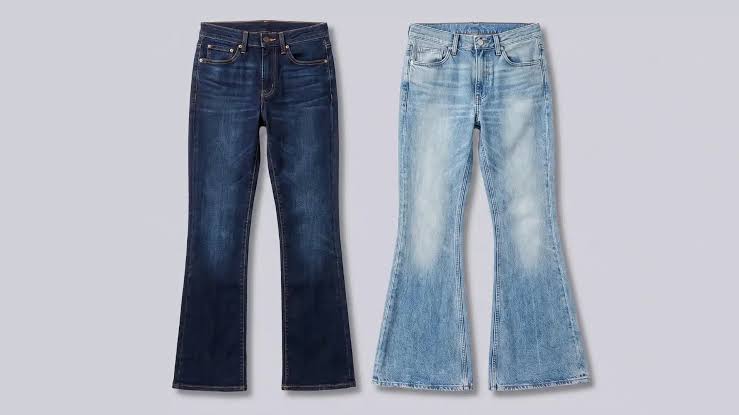

You’re standing in front of two pairs of jeans that look nearly identical folded on a shelf. Both skim the hip, both taper through the thigh, both flare out somewhere near the ankle. So why do they fit — and photograph — so differently once you put them on? The flare jeans vs. bootcut jeans question trips up even seasoned denim shoppers, and the answer comes down to a few inches of fabric and exactly where the leg starts to widen.
Flare Jeans vs. Bootcut Jeans: The Core Difference
Flare jeans widen gradually starting around the knee, then open into a dramatic bell shape by the ankle. The silhouette is bold and retro-leaning, built to move.
Bootcut jeans keep a closer fit through the thigh and knee, with the flare only kicking in a few inches above the hem. It’s a subtle widening, just enough to skim over a boot without bunching.
The difference between flare and bootcut jeans essentially comes down to degree: flare is the dramatic version, bootcut is the restrained one.
Where the Flare Begins
In flare jeans, the widening typically starts at the knee. In bootcut styles, it starts closer to the ankle, which is why bootcut styles read as straighter legs from a distance.
How Dramatic the Flare Is
Flare jeans can open several inches wider than the knee by the time they hit the floor. Bootcut jeans stay much closer to the leg, adding just enough room to layer over footwear.
Flare Jeans: Pros and Cons
Where Flare Jeans Shine
The wide hem draws the eye downward and elongates the leg line, which is why women often reach for flare jeans when they want a longer, leaner silhouette. The retro shape also makes a statement in a way straighter cuts don’t, giving an outfit a natural focal point. Paired with a fitted top, the wide hem creates a classic hourglass balance that flatters a range of body types.
Where They Fall Short
Flats or sneakers can get lost under the wide hem, so flare jeans usually call for a heel or platform to keep proportions in check. Alterations are also trickier, since hemming affects the flare’s shape rather than just its length, which means tailoring requires more care than for a straight cut.
Bootcut Jeans: Pros and Cons
Where Bootcut Jeans Shine
The subtle flare pairs well with flats, sneakers, boots, or heels without throwing off the line, making the bootcut one of the more versatile cuts for everyday wear. Women often choose bootcut jeans for exactly that reason, plus the cleaner silhouette reads more polished for work-adjacent settings. A more fitted knee also means bootcut styles tuck neatly under longer coats or blazers.
Where They Fall Short
If you want a statement silhouette, bootcut’s subtlety can feel understated compared to a flare. The fit is also more precise since the flare is smaller, so an ill-fitting rise or thigh is more noticeable than in a looser flare cut.
If you’re weighing the bootcut jeans collection, the high and mid-rise options are worth a look if you want that gentle taper without sacrificing an easy, everyday fit.
How to Style Bootcut Jeans and Flare Jeans
Knowing how to style bootcut jeans starts with footwear. Ankle boots or block heels keep the hem clean, while a fitted top balances out the leg. Flare jeans respond well to the same logic, just amplified. A platform or heeled boot supports the wider hem, and tucking in a blouse or sweater keeps the whole look from feeling bottom-heavy. For casual days, both styles work with sneakers, though bootcut tends to sit more naturally with a low-top silhouette than a flare’s dramatic sweep does.
The Bottom Line
Neither cut is objectively better than the other. Flare jeans reward you with a bold, elongating shape and a bit of vintage energy. Bootcut jeans offer the same knee-to-hem logic in a quieter, more versatile package. If you’re still torn, the flare jeans collection is a good place to compare washes and rises side by side before deciding which silhouette best fits your closet.