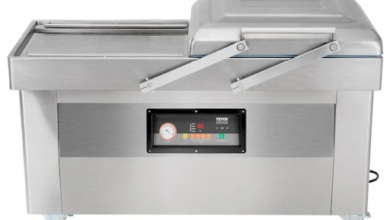

A Mazak representative told FAB Shop magazine about a customer in Italy who isn’t allowed to run its laser during the day. Night only. And at night, the shop can’t find even the minimal labor needed to tend the machine. So the plan is to automate loading and offloading and let the laser run unattended.
That’s the quiet story of fiber laser automation. It began as a speed problem. Fiber lasers cut so fast that people became the slowest part of the cell. Now it’s a labor, data, and flow problem, and the shops that solve it aren’t always the ones with the most robots.
The Cutting Got Fast, but the Handling Didn’t
When fiber lasers arrived, manual labor couldn’t keep up with them. Parts piled up at the machine, FAB Shop magazine reports, and press brake operators wondered what was happening back at the laser. One Fabricator article puts the fix in numbers: even a new fiber laser with automated loading and unloading, and no sorting, can double or triple a shop’s throughput, turning a two- or three-shift operation into one shift that cuts all the blanks downstream needs. A trade-press claim. But it matches what the Italian customer wants.
What Automation Actually Means on a Fiber Laser
Automation isn’t one machine. It’s a stack of layers, and each one removes a different kind of waiting. This table sorts them by what they remove and what they cost you in other ways, and it’s our assessment, not measured data.
| Layer | What it removes | What it needs | Where it tends to fit |
|---|---|---|---|
| Exchange or shuttle table | Waiting while the next sheet is loaded | Floor space and a way to lift sheets | Mixed work and lower volumes |
| Automated loading and unloading | An operator tending the machine between sheets | Sheet stock nearby and programs that are ready | Regular repeat work |
| Storage tower | Fetching material, and attended hours | Capital, space, and material planning | Many materials and longer unattended runs |
| Sorting and stacking | Hand-sorting parts and handling skeletons | Nests designed for picking, grippers, software | High part counts and scarce labor |
| Software integration | Searching, re-entering data, rework | Clean data between engineering, ERP, and machines | Changing, mixed jobs |
Sorting and Stacking: The Job Nobody Wants
Sorting is the hardest labor to find and the hardest to automate. A Mazak representative told FAB Shop magazine that gantry-style sorting systems are very nice but expensive, with a huge footprint, and that a small job shop couldn’t consider one because it’s “basically as expensive as their laser.” Mazak’s answer is a robot that sorts directly on the laser’s shuttle table, so sorting can start immediately.
Software makes it smarter. The Fabricator describes a loop worth remembering. If the brake operator scraps five more workpieces than expected, he reports it in software, which tells laser programming, which inserts five parts into the next nest. Likewise, if a robot can’t pick a part after several tries, the system flags it and offloads it with the scrap. There’s a trade-off, too. Another Fabricator article notes that material yield may suffer when parts have to be oriented for the robot. Fewer microtabs and neat stacks by morning can cost some sheet.
Towers, Storage and Lights-Out Running
Towers load while nobody watches. The sheets wait in compartments, the laser takes what the program needs, and the parts come out in a stack for the next shift. That’s what lets an unattended second or third shift produce real work, as one Fabricator profile describes.
A Real Example: A Tower, Two Press Brakes, and Half the Workforce
According to a FAB Shop magazine feature, Eurofours, a French maker of ovens for bakeries with around 150 employees, took delivery of a 6 kW fiber laser with a compact tower and two press brakes from LVD in March 2020. Mostly thin sheet. The company also runs LVD’s software, so the laser, the press brakes, and its ERP system share data.
The production and methods director says the company cut its scrap rate by 20 percent. He also says it halved the workforce in the sheet metal workshop and moved those people to the assembly workshops, and that it brought subcontracted cutting in higher thicknesses in-house. LVD supplies the equipment, so read it as vendor-linked. But the lesson is clear. Automation here didn’t remove people. It moved them to the part of the business that needed them.
Software Is the Real Automation
It makes a blunt point. New equipment alone typically provides small gains, because the actual touch-time on a part is a small share of the total. Most of the elapsed time sits in preparation, buffers, and waiting or searching. So the biggest gains come from sharing data between machines and software across the job.
Vermeulen Metaal, a Dutch supplier, agrees. Its owner says the software is “where our biggest profit lies,” because it can import entire 3D files and return the calculation and bending solution within seconds, where staff once checked drawings by hand. The company also reports cutting 60 to 70 percent more products per hour on its new fiber laser, using about a quarter to a third of the electricity per item.
A Real Example: A Shop Where Nearly Every Part Is Different
Meurer Packaging Systems, a German maker of end-of-line packaging machinery, makes around 50,000 to 60,000 distinct parts a year, of which only 8,000 repeat. Mostly new work. Its strategic marketing director says fast-track jobs have to fit into the production flow. A 6 kW fiber laser replaced an old CO2 machine, and trials suggested it was about three and a half times faster. But the heart of the change, the story says, is software that sends 3D parts from engineering to a server, generates the cutting and bending programs, and gives real-time visibility on which part is on which machine.
Same caveat: LVD-linked. The lesson differs from Eurofours. When almost every part is new, the automation that matters most is the flow of data, because there are few repeats to learn from.
What It Does to the Workforce
Automation is arriving as the labor pool shrinks. A 2024 study by Deloitte and The Manufacturing Institute says U.S. manufacturing could need as many as 3.8 million new workers between 2024 and 2033, and that 1.9 million of those jobs could go unfilled if workforce challenges aren’t addressed. A shop that can’t hire a sorter at night, like the Italian one, isn’t automating to cut headcount. It’s automating to run at all.
The Eurofours example points the other way, too: people moved to assembly. Miller Fabrication Solutions’ president wrote that automation has been touted as the cure-all for labor shortages, but robots only succeed when paired with strong processes developed by people.
Where Automation Doesn’t Pay
Automation doesn’t pay when the machine can’t stay busy or the parts won’t cooperate. Be honest about utilization. One trade article suggests the case is strong when a laser runs two or more shifts a day, five or more days a week, and weak below that. Shops with mostly unique parts may lose yield to robot-friendly nests. And the cost can outrun the shop: the Mazak representative’s point about gantry systems costing as much as the laser is exactly why smaller shops start with exchange tables or simpler robots.
Questions to Answer Before You Automate
Start with where the laser waits. How many hours a week does the beam actually cut, and what is it waiting for, whether that’s operators, material, programs, or the next process? Then look at the parts. How many repeat, and how many are new each week?
And look at the people. Who tends the machine, and who covers when they’re away? If the answers point to handling, price the layers separately, beginning with the cheapest. Should they point to cutting, compare fiber laser cutting systems from several manufacturers, OMTech among them, including how each handles exchange platforms and loading. Buy the laser for the cutting. The automation is for the people and the flow.