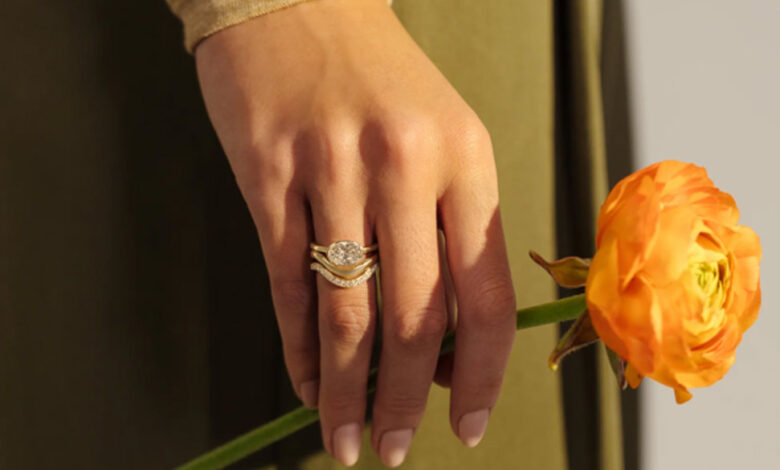

A marquise stone is long and slim, with a point at each end, a bit like a tiny boat resting on your finger. It’s having a proper revival, and if one has caught your eye, a few details will help you choose a ring that looks just as good in ten years as it does on the day.
Why the Marquise Cut Looks Bigger Than It Is
Carat for carat, the marquise has one of the largest faces of any diamond shape. A one-carat round measures roughly 6.5mm across. A one-carat marquise can stretch to around 10mm from tip to tip. Same weight, far more presence.
That length also flatters the hand. Set vertically, a marquise draws the eye along the finger and makes it look longer and slimmer, which is why so many people who try one on end up keeping it. If you’d like a feel for how that shape changes with different bands and settings, browsing a range like the Cullen Jewellery Marquise Cut collection is a quick way to see the same stone dressed up a dozen different ways before you narrow things down.
Getting the Proportions Right
Length-to-width ratio
This is the number that decides the overall look. Most people land somewhere between 1.75 and 2.25. Towards the lower end, the stone feels fuller and softer. Push past 2.0 and it becomes sleek and dramatic. Neither is better; it comes down to what makes you smile when you look at it.
The bow-tie effect
Nearly every marquise shows a darker band across its middle, shaped a little like a bow tie. A gentle one adds contrast and depth. A heavy one can swallow the sparkle. Photos rarely show this well, so watch the stone on video or in person while it’s turning.
Symmetry
Picture a line running from point to point. Both halves should mirror each other, and the tips should sit perfectly in line. Even a slight tilt is easy to spot once the ring’s on your hand, so it’s worth a careful look.
Choosing a Setting That Protects the Points
Those pointed tips are the most delicate part of the stone, so look for claws that sit right over each end. They stop the points catching on knitwear and shield them from everyday knocks.
If you work with your hands or you’re a keen gardener, a bezel setting is a lovely option. A thin rim of metal hugs the whole outline, giving it a clean, modern edge. A halo, on the other hand, frames the shape with smaller stones and makes the centre look even larger. For something less expected, try turning the stone sideways in an east-west setting.
Sustainable Stone Options for Marquise Engagement Rings
Lab-grown diamonds are chemically and physically identical to mined ones, and they’re graded by the same laboratories using the same scales. They’re also a more sustainable choice, and because they usually cost less, your budget stretches further. That might mean a bigger stone, a better colour grade, or a band with a little more detail.
Moissanite is another strong option. It throws off more coloured fire than a diamond and sits just below it on the hardness scale, so it handles daily wear beautifully. In an elongated cut like the marquise, that extra flash really shows along the length of the stone. If you’d like a pop of colour, lab-grown sapphires come in marquise shapes too, and they share the same sustainable credentials.
Before you commit, ask the jeweller for a short video of your exact stone turning slowly under natural light. Thirty seconds of footage will tell you more about its symmetry, its bow tie and its sparkle than any certificate ever could.