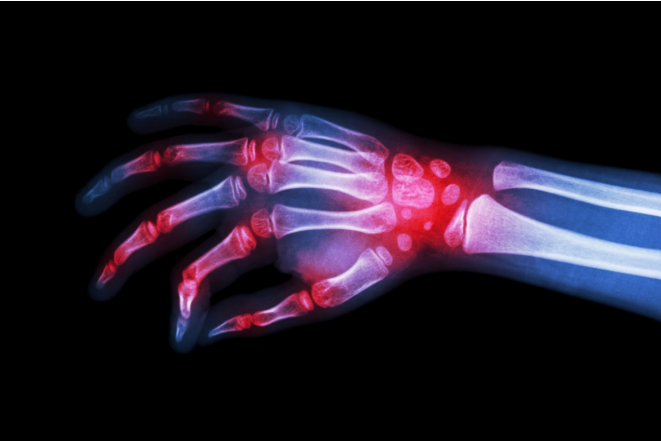

You wake up, reach for the coffee pot, and your fingers refuse to close around the handle. On a flare day, even buttoning a shirt or opening a jar can feel like a negotiation with your own hands.
That frustration is exactly what occupational therapy for rheumatoid arthritis is built to address. This guide walks you through the first visit, the joint protection techniques you are likely to learn, and how splints and everyday tools fit into the plan.
Your First Therapy Appointment
Occupational Therapy for Rheumatoid Arthritis Explained
An occupational therapist, or OT, helps you keep doing the everyday activities that matter to you. In rheumatoid arthritis care, that means protecting your joints while keeping you as independent as possible. Your rheumatologist or primary care doctor can usually refer you.
Occupational therapy for rheumatoid arthritis works best when it stays practical, so think of your OT as a problem solver rather than a prescriber. Medication decisions stay with your physician. Your OT focuses on how you move, grip, and complete daily tasks.
The Hand and Joint Assessment
Expect the therapist to look closely at your hands, wrists, shoulders, and any other joints that bother you. They may check swelling, range of motion, and grip strength. They will also ask where pain shows up during your day.
Many therapists watch you perform a few real tasks, such as lifting a cup or turning a key. Those small observations show which movements strain your joints the most. Bring any splints, braces, or gadgets you already use so the therapist can see how they work for you.
Setting Goals for Daily Life
You will also be asked what you most want to do more easily. Maybe it is cooking dinner, typing at work, or gardening on a sunny weekend.
Those answers shape the plan. A clear goal such as “make breakfast without flaring my wrists” gives your therapist something concrete to build around.
Come with questions too. Ask how often you should return, which exercises are safe during a flare, and how to tell when a technique is not working for you.
Joint Protection Techniques
Spreading the Load
Joint protection techniques teach you to do the same tasks with less stress on vulnerable joints. Your OT will tailor them to you, but several principles come up again and again.
✅ Use larger joints: Carry a bag on your forearm instead of gripping the handle with your fingers. Larger joints and stronger muscles can take on work that small finger joints struggle with.
✅ Avoid tight, sustained grips: Choose lever-style handles and pump bottles when possible. Holding a pen or knife tightly for long stretches adds strain, so thicker grips often feel gentler.
✅ Respect pain signals: Pain that lingers after an activity is a cue to change how you did it. Your therapist can help you tell the difference between normal effort and a warning sign.
Pacing Your Day
Pacing means breaking big tasks into smaller pieces and alternating them with rest. Instead of cleaning the whole kitchen at once, you might wipe the counters in the morning and sweep later. Many therapists also suggest alternating light and heavy tasks, and a short daily log helps you spot patterns.
Fatigue often travels with joint pain. Planning rest before you feel depleted can keep a good day from turning into a hard one.
Splints and Assistive Devices
Splints for Rest and Support
Your OT may suggest a splint to rest or support a painful wrist or finger. Some are worn at night, while others support your hand during activity. A properly fitted splint should feel supportive rather than tight.
Because swelling changes from week to week, ask for a refit if a splint starts to rub or pinch.
Assistive Devices for Arthritis
Assistive devices for arthritis range from jar openers and key turners to long-handled reachers. Each one trades a painful movement for an easier one.
Browsing assistive devices for arthritis with your therapist helps you choose items that match your hands and your routines. Start with the tasks that hurt most, then expand from there.
Eating With Arthritis
Everyday Utensil Adjustments
Eating with arthritis can turn a simple meal into a test of grip and wrist strength. Arthritis eating utensils, such as built-up handles, angled spoons, and lightweight cutlery, reduce how tightly you need to hold.
Your OT may also suggest foam tubing, non-slip mats, and lightweight plates as low-cost starting points. Try one change at a time so you can tell what actually helps.
When Mechanical Support Helps
If utensil changes are not enough, your therapist may discuss a mechanical option. The Neater Eater Manual Assistive Eating Device is a battery-free arm and plate system with adjustable fluid damping, built for people who have limited arm and hand function but still retain some voluntary movement.
Because the damping can be adjusted without specialist tools, a therapist or caregiver can adapt the setup as your symptoms change from week to week. A proper evaluation looks at factors such as shoulder alignment, range of motion, table height, and fatigue. That is why a device like this belongs in a conversation with your OT.
Conclusion
Occupational therapy for rheumatoid arthritis is less about doing more and more about doing things in a way your joints can handle. A typical plan combines joint protection techniques, well-fitted splints, and tools that take strain off your hands.
Bring your toughest daily task to your first appointment and let your therapist build from there. Which everyday activity would you most like to make easier right now?