
Raccoons rummaging through attic insulation. Iguanas sunbathing on pool decks. Opossums nesting under porches. If you live in Palm Beach County, chances are you’ve encountered at least one uninvited guest that decided your property looked like a great place to settle down.
South Florida’s warm climate and lush landscaping make it a haven for wildlife — which is wonderful for biodiversity, but not so wonderful when that wildlife moves into your walls, garage, or garden shed. Homeowners across the region are discovering that dealing with these situations on their own often leads to more damage, more stress, and sometimes more animals than they started with.
This post looks at why wildlife intrusions are so common in Palm Beach, what risks they pose to your home and health, and how a professional approach makes all the difference in resolving them safely and permanently.
Why Palm Beach Properties Attract So Much Wildlife
Palm Beach County’s subtropical climate keeps temperatures mild year-round, which means local wildlife never has to migrate or hibernate. Raccoons, squirrels, bats, and iguanas stay active in every season, and they’re constantly on the hunt for food, water, and shelter.
Suburban neighborhoods often provide exactly what these animals are looking for. Attics offer warmth and protection from predators. Canals and retention ponds attract iguanas and other reptiles. Overgrown vegetation gives smaller mammals plenty of places to hide. Combine that with the abundance of fruit trees and unsecured trash bins found in many yards, and it’s easy to see why local wildlife finds suburban Palm Beach so appealing.
The problem is that these animals rarely stay out of sight. Once they find a comfortable spot, they tend to stay, and their presence usually leads to damage that gets more expensive the longer it’s ignored.
The Hidden Risks of DIY Wildlife Removal
It’s tempting to handle a wildlife problem yourself, especially when the animal seems small or harmless. But cornered or startled wildlife — even smaller species like squirrels and opossums — can bite, scratch, or spray in self-defense.
Beyond the physical risk, many wild animals carry diseases that can spread to humans and pets. Raccoons are common carriers of rabies. Bat droppings can contain fungal spores linked to respiratory infections. Rodent nests often harbor parasites like fleas and ticks.
There’s also the issue of doing more harm than good. Sealing an entry point without confirming the animal has actually left can trap it inside your walls, leading to a far worse (and far smellier) situation. Attempting to remove babies without locating the mother can separate a family and cause unnecessary suffering, and in some cases, it’s simply against the law. Florida wildlife regulations protect certain species from being harmed, trapped, or relocated without the right permits and methods.
What Professional Wildlife Removal Actually Looks Like
Effective wildlife removal isn’t about scaring an animal away and hoping it doesn’t come back. It’s a multi-step process that starts with a thorough inspection of the property to identify entry points, nesting sites, and the specific species involved.
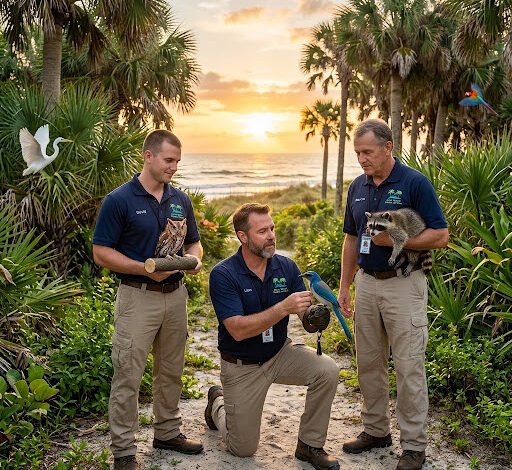
From there, trained technicians use humane trapping methods suited to the animal in question, along with exclusion techniques designed to prevent re-entry. This might include sealing gaps in rooflines, installing chimney caps, or fitting vents with wildlife-proof screens. Once the animals are safely removed, the affected areas are cleaned and sanitized to eliminate droppings, nesting materials, and lingering odors that can attract future intruders.
This kind of methodical approach solves the immediate problem while addressing the reasons the animal moved in to begin with. That distinction matters: a homeowner who simply removes one raccoon without sealing its entry point will likely have a new tenant within weeks.
Choosing the Right Wildlife Removal Service for Your Home
Not every wildlife issue is the same, so the right removal approach depends on the species involved, the extent of the damage, and how urgently the situation needs to be resolved. A single iguana sunning itself by the pool calls for a different strategy than a family of raccoons that’s taken up residence in an attic.
Palm Beach Wildlife Services takes exactly this kind of tailored approach, giving homeowners a way to resolve wildlife conflicts quickly, humanely, and without the guesswork of tackling it alone. Rather than offering one-size-fits-all solutions, experienced technicians assess each property individually, identify the species and severity of the issue, and recommend a plan that fits both the situation and the homeowner’s peace of mind.
That kind of tailored service also means fewer repeat visits. When entry points are properly sealed and the underlying attractants are addressed, homeowners get a long-term fix instead of a temporary patch.
Protecting Your Home Starts with the Right Call
Wildlife encounters are simply part of life in Palm Beach County, but that doesn’t mean they have to disrupt your home or put your family at risk. Recognizing the signs early — scratching in the attic, torn screens, droppings near the garage — gives you the best chance of resolving the issue before it escalates into costly repairs.
If you’ve noticed unusual sounds, smells, or damage around your property, don’t wait for the situation to get worse. Reaching out to a team with local experience and humane methods is the fastest way to restore comfort and safety to your home.