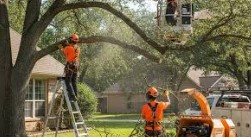
Pittsburgh Tree Trimming for Storm Season: Inspection, Pruning, and Safety Guide

Pittsburgh trees contend with steep slopes, wet ground, heavy snow, ice, and powerful summer thunderstorms. A mature maple above a driveway or an oak stretching over a roof can add beauty and shade. Still, small structural problems can become urgent when wind and saturated soil arrive together. Seasonal changes can also make defects easier to miss: dense summer foliage may hide deadwood, while winter weather can place extra stress on already weak limbs and branch connections.
Homeowners who want an on-site opinion on a specific tree can look for local providers of professional tree trimming in Pittsburgh, PA. Tripoli Tree Care is one such provider, with ISA-certified arborists serving Greater Pittsburgh communities, including Sewickley, Oakmont, Bethel Park, Upper Saint Clair, Carnegie, and Robinson Township. Familiarity with mature trees, tight yards, and steep hillside access is especially relevant in this area. A qualified assessment can help distinguish between a manageable maintenance issue and a condition that calls for urgent action.
Why Storm Preparation Matters in Pittsburgh
Wind, rain, wet snow, and ice do not create every tree defect, but they can expose weaknesses that were already present. A tree may look full and healthy from indoors while still having decay, poor branch connections, root disturbance, or hidden deadwood. Looking at trees before storm season gives homeowners time to make measured decisions rather than react to a limb on a roof or in a driveway. It also makes it easier to schedule non-emergency work, discuss options, and consider access challenges before conditions become hazardous.
Risk depends on both the defect and what could be struck if that part fails. A cracked limb over an open wooded area is not the same concern as one above a sidewalk, parked car, play set, or front entry. The same tree may need a different level of attention as property use changes, such as when a new patio, vehicle parking area, or children’s play area is added beneath its canopy.
Tree Risks Linked to Pittsburgh Conditions
Hillside Lots and Wet Soil
Sloped properties can make root stability harder to judge, especially after extended rain. Look for fresh cracks in soil, lifted ground near the root flare, newly exposed roots, or a lean that was not present before. Recent excavation, altered drainage, and construction near roots can also affect a tree’s stability. Avoid piling soil, mulch, firewood, or heavy materials against the trunk, since the root flare and surrounding soil are important areas to keep visible during routine checks.
Ice, Snow, and Freeze-Thaw Cycles
Wet snow and ice add substantial weight to branches. Repeated freezing and thawing may worsen existing cracks or reveal weak branch unions. Do not strike icy high limbs with a rake, pole, or ladder. That can dislodge branches unpredictably and place you beneath the hazard. If a smaller branch is safely reachable from the ground and is not under tension, it may be possible to leave it until conditions improve rather than attempting a rushed cleanup during ice or high winds.
Utility Lines and Tight Access
Trees near overhead wires, roofs, fences, garages, and narrow side yards require a more controlled approach. Utility-line clearance is not ordinary do-it-yourself work. Keep clear of lines and anything touching them. Even branches that appear to be resting lightly on a wire can become dangerous when the wind moves the canopy or when someone tries to pull the branch away.
How To Inspect a Tree From the Ground
- Check the trunk: Look for deep cracks, cavities, loose bark, large wounds, or visibly soft and crumbling areas.
- Study major branch unions: Watch for splits, rubbing limbs, narrow forks, and bark compressed between two stems.
- Scan the canopy: Identify dead branches, broken tops, hanging limbs, and sections with unusual dieback.
- Inspect the root zone: Note mushrooms, exposed roots, drainage changes, lifted soil, and fresh ground movement.
- Identify targets: Consider roofs, vehicles, driveways, sidewalks, sheds, fences, gathering areas, and utility lines.
- Take safe photos: Photograph the tree from several angles so changes can be compared later.
Walk around the tree if the ground is stable and accessible, rather than relying on a single view from a window or driveway. Comparing current photographs with older images can be useful for determining whether a lean, canopy gap, or branch defect is new.
Warning Signs That Need Prompt Attention
- A new or worsening lean after rain, wind, snow, or nearby digging.
- Large dead limbs over a home, walkway, driveway, or gathering space.
- Fresh cracks where two large stems meet.
- Broken branches are still suspended in the canopy.
- Fungal growth near the trunk base is combined with hollow, soft, or decaying wood.
- Exposed roots or soil lifting on one side of the tree.
- Sudden canopy dieback or large areas of missing bark.
One symptom does not automatically mean removal is necessary. Tree size, condition, location, likely targets, and the extent of the defect should be considered together by a qualified professional. However, a combination of warning signs, especially after a major weather event, deserves more attention than an isolated cosmetic issue.
When Pruning Can Help Before a Storm
Pruning can remove deadwood, reduce rubbing, improve clearance, and address selected structural issues. Common approaches include crown cleaning for dead or damaged limbs, crown raising for clearance over walkways or roofs, crown thinning to reduce dense interior growth selectively, and crown reduction to shorten canopy portions with appropriate cuts. The goal is not to make every tree uniformly smaller; it is to make careful cuts that address identified concerns while preserving sound living branches.
Young trees often benefit from structural pruning before competing stems and poor branch unions become major defects. Mature trees usually need targeted work rather than aggressive canopy removal. Penn State Extension’s guidance on pruning landscape trees emphasizes making proper cuts and preserving the tree’s natural structure. Timing can also matter, since pruning decisions may vary by species, tree health, active pests or disease concerns, and the amount of live material proposed for removal.
Why Topping Is a Poor Storm-Preparation Choice
Topping means cutting major limbs back abruptly without regard for the tree’s natural branching structure. It can leave large wounds and encourage fast-growing shoots that may be weakly attached. A topped tree may look smaller immediately, yet the regrowth can create future maintenance and safety concerns. Ask what pruning method is proposed, and favor thoughtful reduction or structural pruning over indiscriminate cutting. If clearance is needed for a roof, driveway, or structure, the proposed cuts should have a clear purpose and should not simply remove the upper canopy without considering the tree’s form.
What To Do After a Storm
- Keep people and pets away: Move away from hanging limbs, leaning trees, and damaged branches.
- Treat downed lines as live: Stay away from the line, the tree, and nearby objects that may be energized.
- Report urgent hazards: Contact the utility company or emergency services when a dangerous line or public obstruction is involved.
- Document safely: Take photographs from a secure location before major cleanup begins.
- Contact insurance if needed: Ask what documentation is required for a claim.
- Arrange an assessment: Have significant trunk, root, or canopy damage reviewed before cutting starts.
Pennsylvania severe-storm safety guidance also advises residents to watch for fallen trees and power lines, report hazards, and remain clear of downed lines. Do not assume a tree is safe simply because it remains standing after a storm; cracks, shifted roots, and partially broken limbs may become more visible only after the immediate weather has passed.
How To Choose a Qualified Tree Care Team
- Request proof of liability insurance and workers’ compensation coverage.
- Ask about ISA certification and relevant experience with the proposed work.
- Get a written estimate covering the scope, access plan, cleanup, and debris handling.
- Ask whether pruning, monitoring, cabling, bracing, treatment, or removal is recommended and why.
- Confirm how the crew will protect roofs, driveways, fences, neighboring property, and utility areas.
- Be cautious if topping is presented as a routine solution.
It can also be helpful to ask who will perform the work, whether the crew will use appropriate equipment for the site’s access limitations, and what will happen if additional defects are discovered after work begins. Clear communication is particularly important on steep lots and on properties that are closely shared with neighbors.
Frequently Asked Questions
How often should Pittsburgh trees be inspected?
Inspection needs vary by age, condition, location, and exposure. Mature trees near homes, paths, and vehicles deserve additional attention after major storms or noticeable changes. A brief homeowner review can be useful between professional visits, particularly when drainage patterns change or construction occurs nearby.
Can pruning prevent all storm damage?
No. Proper pruning can reduce risks from dead limbs, poor clearance, rubbing branches, and certain structural defects, but it cannot guarantee a tree will withstand every storm.
Does a leaning tree always need removal?
No. A long-standing lean may differ from a sudden or worsening lean. New soil movement, root exposure, cracks, and nearby targets make prompt evaluation more important.
Should homeowners cut a hanging branch after a storm?
Not if it is large, elevated, suspended, or near a structure or utility line. Tension-loaded branches can shift, swing, or fall when cut. Keeping the area blocked off until the branch can be assessed is usually the safer choice.
A Safer Plan
Storm readiness starts before the forecast turns severe. A short ground-level inspection, timely pruning, attention to roots and branch unions, and a clear emergency plan can reduce confusion when Pittsburgh weather changes quickly. Protect people first, avoid high-risk tree work, and make decisions based on the tree’s actual condition rather than fear or guesswork.