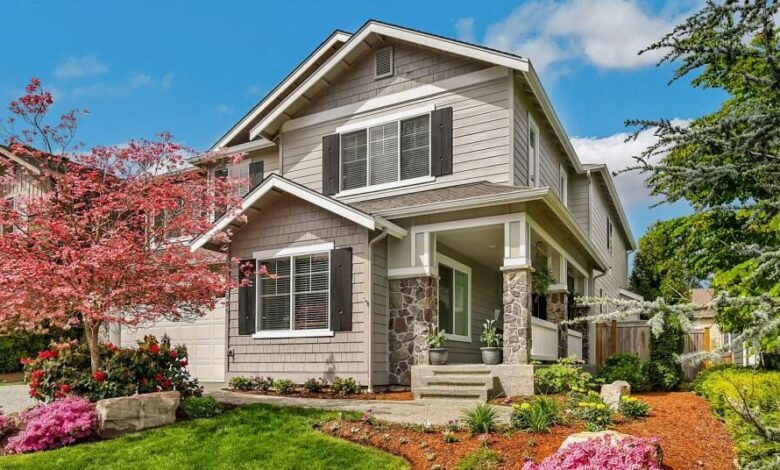

Buyers meet your house long before they walk through the door. The first photo in almost every listing is the front of the house, and it sets expectations for everything that follows. The small details at the curb, the ones you stopped noticing years ago, are exactly what a buyer notices first.
That is especially true for long-time owners. According to the National Association of Realtors’ 2026 Profile of Home Buyers and Sellers, the typical seller had lived in their home for 12 years before selling, an all-time high. Twelve years is plenty of time for a mailbox to rust, a post to lean, house numbers to fade and a porch light to burn out without anyone replacing it. None of these are big projects, but together they change how the front of a house reads, in photos and in person.
Start at the Curb: The Mailbox
A dented, rusted or leaning mailbox tells a buyer that maintenance has slipped, and it does so in the very first frame. Replacing one is a quick weekend job, but a curbside box has to follow Postal Service rules. USPS requires curbside mailboxes to carry the Postmaster General’s seal, which confirms the box meets its size and construction standards, and a custom-built box needs your local postmaster’s approval. The box should sit 41 to 45 inches from the road surface to the bottom of the box or the point of mail entry, and 6 to 8 inches back from the curb.
Style matters as much as compliance. Choose a finish that works with the house’s hardware and trim: black for a modern facade, white or gray for a classic one, dark green for a traditional or farmhouse look. Plexon mailboxes, for instance, are made of powder-coated galvanized steel in matte black, white, gray and dark green, in classic post-mount, jumbo rural and locking wall-mount designs. Galvanized steel with a powder coat is a common curbside choice because the zinc layer protects the steel from rust while the paint adds color. Whichever box you choose, look for the seal before you buy a curbside model.
If the house gets a lot of packages, a larger box earns its place. A jumbo rural mailbox holds about 3,175 cubic inches, roughly four times a standard 800-cubic-inch box, and keeps parcels out of the rain and out of sight.
Choose the Right Type for the House
The type of mailbox should match how mail reaches your door. A curbside post-mount box is the norm wherever carriers deliver from a vehicle. A wall-mount box by the front door works where carriers walk the route, and USPS says it does not need the Postmaster General’s seal, though switching from a curbside box to a wall-mount box requires your local postmaster’s permission. Locking boxes add security for owners who travel or worry about mail theft.
For a house that is about to go on the market, the safest choice is usually to replace like with like: a new box of the same type, in the same spot, at the correct height. Buyers notice a clean, solid mailbox far more than a change in style, and you avoid any questions from the post office in the middle of a sale.
Fix the Post, Too
A new box on an old, leaning post does not solve the problem. USPS recommends a 4 by 4-inch wooden support or a 2-inch-diameter steel or aluminum pipe, buried no more than 24 inches deep, and warns against unyielding supports such as heavy metal pipes and concrete posts. The idea is that a post should bend or fall away if a car hits it. If you are keeping the existing wood post, check it at ground level, where rot usually starts, and replace it if it is soft or cracked.
Within those rules, there is room for style. A painted wood post, a powder-coated steel post or a decorative aluminum post with a scroll or finial can tie the mailbox to the house. Keep plantings around the post low and trimmed, so the box is easy to reach and its door opens freely.
Make the House Number Easy to Read
Buyers, delivery drivers and first responders all need to find your house quickly. USPS asks that your house number appear on the mailbox, along with your full street address if the box stands on a different street than the house. For the house itself, many communities follow the International Residential Code, which calls for address numbers at least 4 inches high, with a stroke at least half an inch wide, in a color that contrasts with the background and in a spot plainly visible from the street. Some local codes require larger numbers, so check yours before you buy.
For curb appeal, size and placement matter more than the font. Mount the numbers where headlights or the porch light will hit them, and pick a finish that matches the mailbox and the door hardware. Replacing faded or missing digits takes an hour and photographs well. If the house sits far back from the road or behind trees, add a second set of numbers near the street, on the mailbox post or a small sign at the end of the driveway, so the address is readable from a passing car.
Coordinate the Details
Curb appeal works when the small parts look like they belong together. Pick one finish, such as matte black, oil-rubbed bronze or brushed nickel, and carry it through the mailbox, the house numbers, the porch light and the door hardware. If you cannot replace everything, start with the pieces closest to the street, since those show up in the listing photo first.
A mix of brass numbers, a chrome door handle and a black mailbox reads as piecemeal, even when every piece is new. Three matching pieces read as a decision someone made on purpose, and that impression of care carries over to how buyers judge the rest of the house.
Light the Way In
Many showings happen after work, and in fall and winter that means after dark. Replace any dead or mismatched bulbs in the porch light, garage fixtures and path lights, and use one color temperature throughout, so the front of the house looks warm and consistent instead of patchy. A dusk-to-dawn sensor or a timer keeps the house lit for buyers who drive by in the evening while you are out. Where running new wiring is not practical, solar path lights or a solar cap on the mailbox post add light in minutes.
Light the house number and the path to the front door first. A buyer who arrives at dusk should be able to read the address from the street and walk to the door without guessing where the steps are.
Clear the Rest of the View
Once the mailbox, numbers and lighting are done, look at the front of the house through a camera lens. Move trash and recycling carts out of sight on photo day and before every showing, ideally beside the garage or behind a fence. Clean the gutters, sweep the walk and porch, trim shrubs so they sit below the windows and remove anything stored by the front door. Pressure-wash a stained driveway or walk, and edge the lawn where it meets the pavement, since crisp lines read as care in photos. If the door itself is faded, a fresh coat of paint is a one-day job that pays off in every photo.
Listing in Winter
If your home goes on the market in winter, the curb needs a little extra attention. Keep the walk, the steps and the path to the mailbox shoveled and treated, both for safety and because a clear path signals a well-kept house. Clear snow away from the front of the mailbox so it is visible in photos and easy for the carrier to reach.
Set exterior lights on a timer or sensor, since it gets dark early and many buyers will see the house after sunset. Inside the front door, a boot tray and a sturdy mat tell visitors they do not need to worry about tracking snow across your floors.
One Weekend Before the Photographer Arrives
- Saturday morning: replace or repair the mailbox and post, and check the height and setback.
- Saturday afternoon: install new house numbers on the house and the mailbox.
- Sunday morning: replace bulbs, test sensors and add path lights where the walk is dark.
- Sunday afternoon: clean, trim, sweep and stage the porch.
None of these fixes change the floor plan or the square footage. What they change is the first impression, in the listing photo and at the curb, and that is where a buyer’s interest starts.