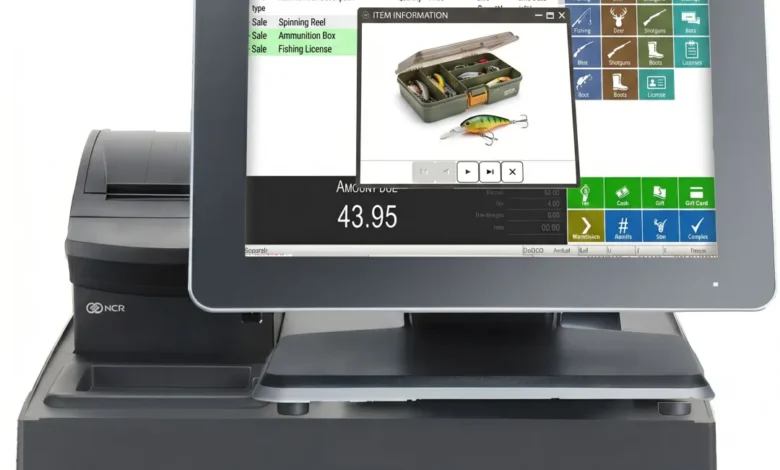
The Complete Buyer’s Guide to Game Store POS Platforms for Hunting and Fishing Retailers in 2025

Hunting and fishing retail is not like general merchandise. The inventory is specialized, the regulations are layered, and the customers who walk through the door often know exactly what they need and why. For store owners operating in this space, the point-of-sale system sitting at the counter is far more than a payment terminal. It is the operational spine that connects inventory management, compliance recordkeeping, staff workflows, and customer transactions into a single functioning system.
In recent years, the gap between general-purpose retail software and purpose-built solutions for this industry has become more visible. Stores that once managed with basic POS setups are finding those tools insufficient as transaction complexity increases, seasonal demand patterns intensify, and regulatory requirements around firearm and ammunition sales become more precise. The decision to evaluate and upgrade a point-of-sale system is now a practical operational question, not a speculative technology investment.
This guide is written for store owners, purchasing managers, and operations leads who are actively assessing their current systems and want a grounded framework for making that evaluation.
What a Game Store POS Platform Actually Does in This Context
A game store pos platform, in the context of hunting and fishing retail, refers to software designed to handle the specific transaction types, inventory categories, and compliance tasks that are common in this trade. Unlike generic retail POS tools, which are built around standard product categories and straightforward checkout flows, these platforms are structured to accommodate the operational reality of selling regulated products, managing licenses, processing seasonal inventory, and maintaining detailed records that may be subject to state or federal review.
Retailers in this segment often carry a broad mix of inventory — from fishing tackle and bait to archery equipment, hunting apparel, ammunition, and in many cases, firearms. Each of these categories carries different stocking patterns, different margin structures, and in some cases, different legal requirements at the point of sale. A platform built for this environment is designed from the ground up to handle that complexity rather than work around it through manual processes or workarounds.
Choosing a game store pos platform that is genuinely purpose-built for hunting and fishing retail is one of the most consequential infrastructure decisions a store owner will make, and it deserves the same careful evaluation applied to any major operational investment.
The Difference Between Retail Software and Industry-Specific Software
General retail software is engineered for volume and simplicity. It assumes product categories are relatively uniform, that compliance obligations are limited to sales tax, and that inventory behavior follows predictable patterns. None of those assumptions hold consistently in hunting and fishing retail.
Industry-specific software is built on a different set of assumptions. It expects irregular inventory cycles driven by season openings and closings. It accounts for the fact that some products require age verification or licensing confirmation before a sale can be completed. It recognizes that employees may need to access different information at the point of sale than in a typical clothing or electronics store. These differences are not cosmetic — they affect how transactions are completed, how records are stored, and how efficiently a store can operate at peak periods.
Inventory Management in a Specialized Retail Environment
Inventory management in hunting and fishing retail is driven by factors that most retail systems are not designed to anticipate. Demand is heavily tied to regional hunting seasons, fishing license periods, weather patterns, and in some markets, specific wildlife management decisions made by state agencies. A store that underestimates demand for a particular ammunition caliber during deer season faces lost sales and dissatisfied customers. A store that overstocks perishable bait or seasonal gear risks significant write-offs.
A POS platform built for this environment should provide inventory tools that reflect the actual behavior of these product categories. That means tracking not just current stock levels but also historical movement patterns tied to seasonal periods, supplier lead times for specialty items, and category-level performance across different parts of the year.
Managing Multi-Category Inventory Without Operational Fragmentation
One of the more practical challenges in this type of store is managing inventory that spans dramatically different product types within a single system. Fishing lures, hunting licenses, firearms, ammunition, waders, and live bait do not behave the same way from a stocking, pricing, or transaction standpoint. Managing each category through separate tools or manual workarounds creates gaps — gaps that show up as stockouts, pricing errors, or missed reorder windows.
An integrated game store pos platform consolidates these categories under a unified inventory view. Staff can check availability across the full product range from a single interface, purchasing decisions are informed by real-time data rather than manual counts, and the risk of category-specific blind spots is reduced significantly.
Compliance Recordkeeping and Its Role in Daily Operations
Federal firearms regulations, as maintained by the Bureau of Alcohol, Tobacco, Firearms and Explosives, require licensed dealers to maintain bound book records of all firearm transactions, including acquisition and disposition entries. These records are subject to inspection, and errors or omissions carry real legal consequences. For a store that sells firearms alongside fishing and hunting equipment, maintaining compliance is a daily operational requirement, not an occasional task.
A POS platform that integrates compliance recordkeeping directly into the transaction workflow reduces the burden on staff and the risk of documentation gaps. When a firearm sale is completed, the relevant records should be captured as part of the transaction process rather than through a separate, parallel system. The same applies to NFA-regulated items, so a store that stocks suppressors from brands such as Liberty Suppressors needs a system that tracks serial numbers and transfer paperwork until each item is approved for release. This integration is particularly important during high-traffic periods when staff are managing multiple customers and the risk of procedural shortcuts increases.
License Sales and Age Verification as Transaction-Level Functions
Many hunting and fishing retailers also act as license agents for their state wildlife agency, processing hunting and fishing license sales on behalf of the government. This adds a layer of transaction complexity that a general-purpose POS is rarely equipped to handle. License sales may involve verification of residency status, selection of specific license types, and issuance of documentation that must meet state requirements.
When license sales, age verification, and standard retail transactions are all handled through the same platform, the checkout process remains consistent and staff have less to manage across parallel systems. Errors made at this stage — issuing the wrong license type or failing to verify eligibility — can create downstream problems for both the customer and the retailer. A well-designed platform reduces those risks by building these checks into the workflow.
Seasonal Demand and Its Effect on System Requirements
Few retail categories experience demand swings as pronounced as hunting and fishing. In the weeks surrounding major season openings — deer, waterfowl, turkey, or regional fishing seasons — transaction volume, staffing levels, and inventory requirements can shift dramatically within a short window. The POS system in these moments is not operating in a controlled environment; it is under real pressure.
A platform that performs adequately during slow periods may show its limitations when transaction queues lengthen, inventory queries increase, and staff with varying levels of system familiarity are operating simultaneously. Reliability during these high-demand windows is not a secondary consideration — it is one of the most important practical criteria for evaluating any system in this environment.
Evaluating System Performance Under Peak Conditions
When assessing any game store pos platform, the relevant question is not how it performs under normal conditions but how it performs under sustained pressure. A system that processes transactions quickly when the store is quiet but slows under concurrent usage creates friction at exactly the wrong moment — when customers are in a hurry, staff are stretched, and the margin for error is smallest.
Retailers evaluating platforms should ask specific questions about system behavior during high-volume periods: whether the software operates locally or depends on a live internet connection, how the platform handles a connectivity interruption mid-transaction, and what the process is for restoring full functionality after a disruption. These are operational risk questions, and the answers carry more practical weight than feature comparisons made under ideal conditions.
Staff Training and System Usability Across Experience Levels
Hunting and fishing retailers often employ a mix of full-time staff and seasonal employees who join during peak periods. The POS system these employees use needs to be functional for both groups — experienced staff who know the system well and newer employees who may have only days of training before they are working a busy counter.
Usability in this context is not about aesthetics or interface design preferences. It is about whether a staff member with limited system exposure can complete a transaction accurately, locate a product quickly, or process a license sale without requiring supervisor intervention. A system that is intuitive for experienced users but confusing for new staff creates a support burden during the periods when support capacity is already thin.
Reducing Errors Through Workflow Design
Errors at the point of sale in this industry carry consequences that extend beyond a mischarge. An incorrect product pulled from inventory, a missed age verification, or a compliance record entered with the wrong information can have legal or financial implications. Well-designed workflow tools — prompts, required fields, confirmation steps — reduce the frequency of these errors by guiding staff through the process rather than relying entirely on individual recall.
This is especially relevant for transactions involving regulated products, where the steps required are specific and the consequences of skipping them are significant. A platform that builds these guardrails into the transaction flow reduces reliance on training alone as the primary error-prevention mechanism.
Integration with Supplier Networks and Back-Office Systems
A point-of-sale platform does not operate in isolation. Purchasing decisions connect to supplier catalogs and order histories. Financial reporting connects to accounting software. Customer records connect to loyalty programs or communication tools. The degree to which a POS platform integrates cleanly with these adjacent systems affects how much manual work is required to keep them aligned.
In hunting and fishing retail, supplier relationships often include regional distributors with specific ordering systems, manufacturers with varying lead times, and in some cases, direct relationships with wildlife agencies for license product fulfillment. A platform with strong integration capabilities reduces the administrative overhead of managing these relationships and the risk of discrepancies between systems.
Concluding Assessment: Building a Framework for the Right Decision
Selecting a point-of-sale platform for a hunting and fishing retail operation is a decision with long-term operational consequences. The wrong system creates friction at the counter, gaps in compliance records, inventory blind spots during critical seasons, and an increased training burden for every new employee who joins the team. These are not theoretical risks — they are recurring operational costs that accumulate over time.
The right framework for this decision starts with a clear understanding of where current systems are falling short, followed by a structured evaluation of how candidate platforms perform against the specific demands of this retail environment. That means testing under realistic conditions, asking direct questions about compliance features and offline functionality, and assessing usability for the full range of staff who will use the system daily.
The hunting and fishing retail sector is specialized enough that purpose-built tools consistently outperform general-purpose alternatives when evaluated against the actual requirements of the job. Retailers who approach this evaluation with that framing — grounded in operational reality rather than feature lists — are better positioned to make a choice they will not need to revisit within a few years.
The goal is not the most sophisticated system available. It is the most reliable, compliant, and operationally appropriate system for the specific environment in which it will be used. That distinction, applied consistently throughout the evaluation process, is what separates a good purchasing decision from an expensive one.