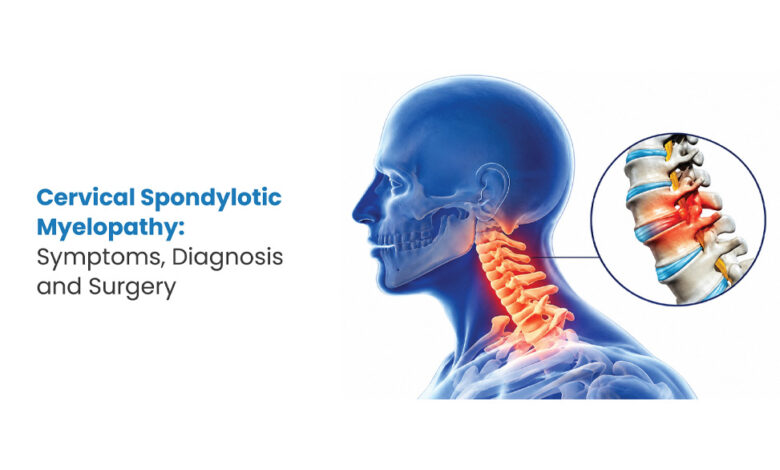
Understanding Cervical Spondylotic Myelopathy: Symptoms, Diagnosis and Treatment

Neck problems are common as people age, but some changes in the cervical spine can affect more than the neck itself. When degenerative changes narrow the spinal canal and compress the spinal cord, a condition known as cervical spondylotic myelopathy (CSM) can develop.
Unlike simple neck pain or stiffness, cervical myelopathy can cause neurological symptoms affecting the hands, arms, legs and walking ability. The condition is commonly associated with older adults and may develop gradually, sometimes with periods where symptoms appear stable before progressing.
A review published in Orthopaedics and Trauma examined the underlying mechanisms, clinical presentation, assessment, natural history and management of cervical spondylotic myelopathy.
Dr Wang Lushun of Arete Orthopaedic Centre was one of the authors of the review, alongside Hwan Tak Hee and Hee Kit Wong. At the time of publication, the authors were affiliated with the National University Health System in Singapore.
What Is Cervical Spondylotic Myelopathy?
Cervical spondylotic myelopathy is a clinical syndrome caused by compression of the spinal cord in the neck.
The cervical spine consists of seven vertebrae that protect the spinal cord. Between these vertebrae are discs and joints that allow the neck to move.
Over time, degenerative changes can develop in these structures. These changes may include:
- Disc degeneration
- Disc herniation
- Bone spur formation
- Degenerative changes in the joints
- Thickening or changes in spinal ligaments
When these structures reduce the available space within the spinal canal, the spinal cord may become compressed.
How Does Cervical Spondylotic Myelopathy Develop?
The review describes the underlying problem as a combination of static and dynamic mechanical factors.
Static Compression
Static factors are structural changes that permanently or persistently reduce the space available for the spinal cord.
These may include:
- A congenitally narrow spinal canal
- Disc herniation
- Osteophytes or bone spurs
- Degenerative changes around the vertebrae
- Thickening of spinal ligaments
The review notes that a congenitally narrow canal can leave less room for the spinal cord to tolerate additional degenerative changes.
Dynamic Compression
The spinal cord can also be affected by movement of the cervical spine.
During neck movement, degenerative changes may cause repeated mechanical stress on an already narrowed spinal canal.
This means that spinal cord dysfunction may result from more than simply a fixed narrowing visible on an imaging scan.
How Can Spinal Cord Compression Cause Symptoms?
The spinal cord carries signals between the brain and the rest of the body. Compression can therefore produce neurological changes involving both the upper and lower limbs.
The clinical presentation can vary considerably depending on:
- Location of compression
- Degree of compression
- Extent of spinal cord involvement
- Duration of the condition
The review emphasises that there is no single symptom or physical finding that confirms cervical spondylotic myelopathy. Diagnosis requires consideration of the overall clinical picture.
Early Signs of Cervical Spondylotic Myelopathy
Cervical myelopathy can develop gradually, so early symptoms may be easy to overlook.
Possible symptoms include:
1. Hand Clumsiness
One of the noticeable changes may be difficulty performing precise movements with the hands.
Patients may find it harder to:
- Button clothing
- Handle keys
- Write
- Pick up small objects
- Perform other fine motor tasks
These symptoms may initially appear unrelated to a neck problem.
2. Numbness or Tingling
Patients may experience altered sensation involving:
- Hands
- Arms
- Legs
The distribution and severity can vary depending on the location and extent of spinal cord involvement.
3. Weakness
Spinal cord compression may contribute to weakness affecting the upper or lower limbs.
Patients may notice:
- Reduced grip strength
- Difficulty using their hands
- Leg weakness
- Difficulty climbing stairs
4. Problems With Balance
Changes in spinal cord function can affect coordination and walking.
Patients may notice:
- Feeling unsteady
- Difficulty walking in a straight line
- Increased difficulty on stairs
- A tendency to stumble
5. Changes in Walking
Walking difficulties may become more apparent as myelopathy progresses.
A person who previously walked normally may develop a slower or less stable gait.
Can Cervical Myelopathy Cause Neck Pain?
It can, but neck pain is not necessarily the main symptom.
Some patients may have:
- Neck pain
- Neck stiffness
- Arm pain
- Numbness
Others may have more prominent neurological symptoms.
This variation is one reason why cervical spondylotic myelopathy can be difficult to recognise based on neck symptoms alone. The review describes the clinical presentation as varied and emphasises that diagnosis requires a high index of suspicion.
How Is Cervical Spondylotic Myelopathy Diagnosed?
Cervical spondylotic myelopathy is primarily a clinical diagnosis, supported by appropriate imaging and other investigations when needed.
1. Medical History
A doctor may ask about:
- When symptoms started
- Whether symptoms are getting worse
- Changes in hand function
- Walking difficulties
- Balance problems
- Numbness or weakness
- Neck or arm pain
The progression of symptoms can provide important clues.
2. Neurological Examination
The doctor may assess:
- Muscle strength
- Sensation
- Reflexes
- Coordination
- Walking pattern
- Fine motor function
The examination helps determine whether the spinal cord may be affected.
3. X-Rays
X-rays can show structural changes in the cervical spine, including:
- Degenerative changes
- Bone spurs
- Alignment abnormalities
- Narrowing between vertebrae
They provide information about the bones but do not show the spinal cord in detail.
4. MRI
MRI is particularly useful because it can show the:
- Spinal cord
- Spinal canal
- Intervertebral discs
- Ligaments
- Areas of compression
MRI findings can help correlate the structural abnormalities with the patient’s neurological symptoms.
Why Is the Clinical Examination Important?
An imaging scan may show degenerative changes without necessarily explaining a patient’s symptoms.
Cervical spondylosis is common, particularly with increasing age, and not everyone with degenerative changes develops myelopathy.
For this reason, the review emphasises the importance of correlating clinical findings with imaging rather than diagnosing the condition from an imaging finding alone.
What Is the Natural History of Cervical Spondylotic Myelopathy?
The natural history of CSM is variable and unpredictable.
The review describes several possible patterns.
Gradual Progression
Some patients experience a gradual decline in neurological function over time.
Stepwise Progression
Others may experience periods of relative stability followed by episodes of worsening.
The review cites earlier research suggesting that approximately 70% of patients may have a stepwise progression with variable periods of stability, while around 20% may experience a steady, gradual neurological decline. These figures come from earlier literature reviewed by the authors rather than from a new patient cohort in the paper.
Periods of Stability
Some patients may remain relatively stable for a period before symptoms change.
This variability makes it difficult to predict the course of the condition in an individual patient.
Can Cervical Myelopathy Get Worse Without Treatment?
It can.
The course varies, but neurological deterioration may occur. This is why patients with suspected cervical myelopathy require appropriate assessment and monitoring.
The review notes that conservative treatment may be considered for selected patients with mild disease or those who are not suitable for surgery, but close monitoring is important because neurological deterioration can occur.
When Is Conservative Treatment Considered?
Conservative management may be considered for selected patients with mild cervical myelopathy or for those who are medically unsuitable for surgery.
The review discusses options including:
- Analgesia
- Physiotherapy
- Neck braces
- Activity modification
However, conservative treatment requires monitoring for changes in neurological function.
The decision should be individualised based on the severity of symptoms, imaging findings, general health and other clinical factors.
When Is Surgery Considered?
Surgery aims to decompress the spinal cord and prevent or reduce further neurological deterioration.
Surgical treatment may be considered when:
- Neurological symptoms are significant
- Symptoms are progressing
- There is substantial spinal cord compression
- Conservative treatment is not appropriate or has not controlled the condition
The review discusses surgical management as an important treatment option for patients with significant cervical myelopathy.
What Types of Surgery May Be Used?
The surgical approach depends on the location and extent of spinal cord compression as well as individual anatomical factors.
Possible approaches include:
Anterior Cervical Decompression and Fusion
This approach accesses the cervical spine from the front of the neck.
Depending on the pathology, surgery may involve removing:
- A damaged disc
- Bone spurs
- Other structures compressing the spinal cord
Fusion may then be performed to stabilise the treated level.
Posterior Decompression
A posterior approach accesses the spine from the back of the neck.
Procedures may include:
- Laminoplasty
- Laminectomy
The appropriate procedure depends on the number of affected levels, cervical alignment and location of compression.
The review emphasises that treatment decisions should be based on the individual clinical and radiological situation.
Why Does Early Assessment Matter?
Cervical myelopathy involves the spinal cord, so prolonged compression may lead to neurological impairment.
Symptoms such as:
- Progressive hand clumsiness
- Increasing weakness
- Walking difficulties
- Balance problems
- Numbness involving the limbs
should be assessed rather than automatically attributed to normal ageing.
Early recognition can help doctors determine whether monitoring, conservative treatment or surgery is appropriate.
Is Cervical Spondylotic Myelopathy the Same as a Pinched Nerve?
No.
A pinched nerve, or cervical radiculopathy, usually involves compression of a nerve root exiting the spine.
Cervical myelopathy involves the spinal cord itself.
The symptoms can therefore be different.
Radiculopathy may cause:
- Arm pain
- Numbness
- Tingling
- Weakness in a specific nerve distribution
Myelopathy can additionally cause:
- Hand clumsiness
- Balance problems
- Walking difficulties
- Changes affecting both upper and lower limbs
Some patients may have both conditions at the same time.
What Factors May Affect Treatment Decisions?
Treatment needs to be individualised.
Doctors may consider:
Severity of Neurological Symptoms
More significant neurological impairment may influence the urgency and type of treatment.
Number of Spinal Levels Involved
Compression at one level may be approached differently from multilevel disease.
Cervical Alignment
The shape and alignment of the cervical spine can affect surgical planning.
Overall Health
Other medical conditions can influence whether a patient is suitable for surgery.
Patient Goals
Treatment planning may also consider:
- Mobility
- Work requirements
- Activity levels
- Independence
What Can Patients Do if They Have Mild Symptoms?
Patients with mild symptoms should not simply ignore them.
An appropriate assessment can determine whether:
- Monitoring is sufficient
- Physiotherapy may help
- Activity modification is appropriate
- Further investigations are required
- Surgical consultation is warranted
If conservative management is selected, follow-up is important because neurological deterioration can occur.
What Does This Research Mean for Patients?
The review provides several important points for patients:
Cervical myelopathy is more than ordinary neck pain
The condition involves spinal cord dysfunction caused by cervical spinal cord compression.
Symptoms can be subtle
Hand clumsiness, balance problems or changes in walking may develop gradually.
The condition can follow different patterns
Some patients experience stepwise deterioration, while others have gradual progression or periods of stability.
Diagnosis requires more than an MRI
Clinical assessment and neurological examination need to be considered alongside imaging.
Treatment depends on the individual
Mild cases may sometimes be monitored or managed conservatively, while patients with more significant or progressive disease may require surgery.
Cervical spondylotic myelopathy is a condition in which degenerative changes in the cervical spine cause spinal cord compression and neurological dysfunction. It commonly affects older adults but can present differently from one patient to another.
Symptoms may include hand clumsiness, numbness, weakness, balance problems and difficulty walking. Because the condition can develop gradually and its natural history is variable, recognising neurological changes and obtaining appropriate assessment are important.
The review by Dr Wang Lushun, Hwan Tak Hee and Hee Kit Wong examined the pathophysiology, clinical presentation, assessment, natural history and management of cervical spondylotic myelopathy. It emphasised the importance of clinical assessment, appropriate investigation and understanding the available treatment options.
For patients with suspected cervical myelopathy, treatment should be based on the severity of neurological symptoms, imaging findings, overall health and individual circumstances. An appropriate specialist assessment can help determine whether monitoring, conservative treatment or surgical decompression is warranted.
Research Reference
Wang L, Hee HT, Wong HK. Cervical spondylotic myelopathy: a brief review of its pathophysiology, presentation, assessment, natural history and management. Orthopaedics and Trauma. 2011 Jun;25(3):181-189. DOI: 10.1016/j.mporth.2010.09.005.
This article is for general information only and should not replace medical advice from a qualified healthcare professional.