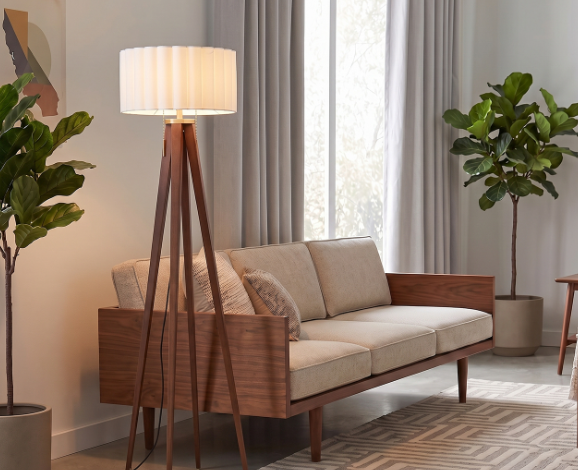

Every January, people resolve to get organized, eat better, and exercise more. Very few people resolve to fix their lighting, which is strange, because lighting affects how every room in your home looks and feels for every hour you spend in it. A room with bad lighting makes good furniture look cheap and comfortable spaces feel clinical. A room with good lighting makes a modest apartment feel like a designed space.
The end of the year is the right time to audit your home lighting, room by room, and decide what stays, what changes, and what gets added. Not because new year resolutions work, but because the holiday season puts your home under a spotlight. You have been hosting, gathering, and living under your current lighting for weeks now. You know which rooms feel right and which ones do not.
NOVA of California floor lamps are the kind of upgrade that works in every room on this list, from the living room anchor to the bedroom reading nook. Designed in California since 1961, each one is built to be the last floor lamp you buy for that room.
Upgrading your home lighting for 2027 means replacing overhead reliance with layered light sources in each room: a floor lamp for ambient warmth, a table lamp for tasks, and accent lighting for depth. The most impactful single upgrade is adding a quality floor lamp to the room where you spend the most evening hours.
The Living Room: Replace the Overhead with an Arc
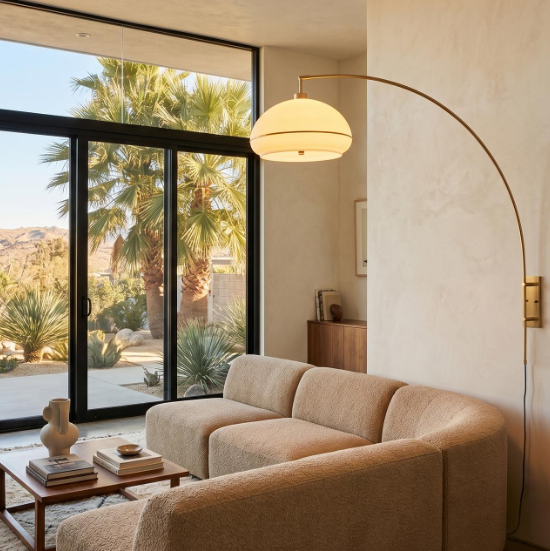
The living room is where lighting matters most and where most homes get it wrong. The default setup, a single ceiling fixture or recessed can lights, washes the room with flat, shadowless light that makes everything look two dimensional. Designers call this “the dentist office effect” because it produces the same even brightness that medical offices use to eliminate shadows during procedures. Comfortable for a dental exam. Terrible for a Tuesday evening.
The single most transformative upgrade for any living room is an arc floor lamp positioned behind or beside the sofa. The NOVA Luna Bella Arc Floor Lamp places three individual light sources across a wide arc, creating a canopy of warm light over the seating area that mimics the layered quality of professional interior lighting. It replaces the overhead without any wiring, any installation, or any holes in the ceiling.
The Danish architect and designer Poul Henningsen spent decades studying how light interacts with interior spaces. His PH lamp series, first designed in the 1920s, used layered shades to eliminate glare and create soft, even diffusion. That same principle, light distributed through multiple sources at multiple heights, is what separates a living room that feels alive from one that simply has the lights on.
The Bedroom: Light for Rest, Not Just Visibility
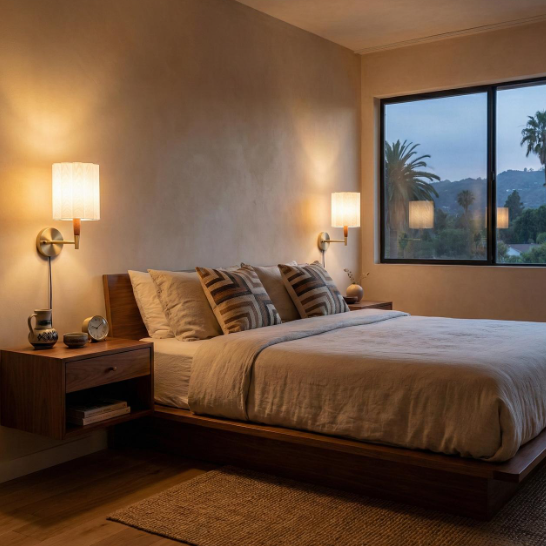
Bedroom lighting is the most personal category in the home, and it is also the one most likely to be an afterthought. Most bedrooms rely on a ceiling fan light and a table lamp on the nightstand, which covers the basics but misses the point. The bedroom is the last space you see before sleep and the first you see when you wake up. The quality of light in that room shapes the bookends of every day.
A slim floor lamp beside the bed, set to a warm 2700K bulb, provides reading light without the harshness of a direct table lamp. The NOVA Stretch Chairside Arc Floor Lamp has a compact footprint that fits in tight bedroom corners while delivering an adjustable arm that positions light exactly where you need it. For 2027, consider replacing the overhead entirely and using only side lighting in the bedroom. Research from the Lighting Research Center at Rensselaer Polytechnic Institute has shown that avoiding overhead light in the hour before sleep supports natural melatonin production and improves sleep quality.
The Home Office: Balanced Light for Focused Work
Home offices became permanent fixtures in millions of homes after 2020, but most of them still have temporary lighting. A desk lamp from college and whatever the ceiling provides is the standard setup, and it creates two problems: glare on the monitor from poorly positioned light sources, and a flat, fatiguing brightness that makes eight hours at the desk feel like ten.
The fix involves two changes. First, position a floor lamp behind and to the side of your desk, angled so it illuminates the wall behind your monitor rather than the screen itself. This creates a balanced brightness between the screen and its surroundings, which reduces eye strain significantly. Second, if your office has a window, place the desk perpendicular to it rather than facing it directly. The Noguchi Akari floor lamps pioneered this concept of diffused, ambient office light using handmade washi paper, and the same principle applies with modern materials. Side lighting plus ambient fill equals a workspace you can sustain for a full day.
The Dining Room: Atmosphere Every Night, Not Just Holidays
If you noticed during Thanksgiving or holiday dinners that your dining room felt more inviting than usual, that was probably because you added candles, dimmed the overhead, or placed extra lamps nearby. The question for 2027 is: why not keep that setup year round?
A pair of table lamps on the sideboard, a dimmer switch on the overhead, and a consistent bulb temperature of 2700K across all sources transforms every weeknight dinner into a version of the atmosphere you created for guests. The investment is minimal. A dimmer switch costs under twenty dollars to install. Two well chosen table lamps, positioned at seated eye level, do the rest. The NOVA Pearson Table Lamp in satin nickel has the clean profile that works on a sideboard without competing with table settings, and its standard E26 socket means you can tune the color temperature to match the season.
The Entryway and Hallways: The Overlooked Connectors
Transition spaces are the most neglected rooms in any home. The entryway is the first thing you and every visitor sees. A hallway connects every other room. And yet these spaces typically get whatever the builder installed: a bare ceiling fixture that has not been updated since the house was built.
A torchiere floor lamp in the entryway creates an immediate impression of warmth. A small table lamp on a hallway console bridges the light gap between rooms so the atmosphere stays continuous as you move through the home. These are inexpensive upgrades with outsized impact, because they affect every transition you make between spaces, dozens of times a day.
Start with One Room and Let the Rest Follow
You do not need to upgrade every room at once. Start with the room where you spend the most time after dark. For most people, that is the living room. Add one quality floor lamp, reposition or remove the overhead, and live with the change for a week. The difference will be obvious enough that the other rooms start looking wrong by comparison, and from there, the upgrades happen naturally, one room at a time.
The best home upgrades are the ones that change how a space feels, not just how it looks. Lighting is that upgrade. Explore the full NOVA floor lamp collection and start 2027 in a home that feels as good as it looks.