Weathering Test Chamber in the USA: A Practical Guide for Reliable Material Durability Testing in 2026

Suppose you recently installed a new outdoor smart camera. The design is smart, the tech is excellent and sales are through the roof. But fast forward six months and your customer support inbox is blowing up. Why? Because the plastic casing couldn’t handle the summer sun and humidity. It faded, cracked and let water inside. Ouch.
That is an expensive, brand-damaging nightmare you definitely want to avoid. This is exactly where a reliable testing setup swoops in to save the day. For labs and universities, predicting this kind of wear and tear isn’t only a box to check; it’s the whole point of materials science. You need to know how stuff holds up before it hits the real world.
In this guide, we’re breaking down everything you need to know about picking the right weathering test chamber in the USA in 2026.
Let us get your lab set up for success:
Start With the Weathering Standard Your Material Needs
Before you look at machine specs, you need a game plan. You have to figure out exactly what kind of weather your materials will face out in the real world.
Real weather is super complex. It is a crazy mix of UV rays, visible light, heavy rain and wild temperature swings. Are you testing exterior car paint? Roof shingles? Outdoor backpacks? Or maybe a cool new prototype your engineering students just built?
If you order a test chamber with no clear plan, the results will not be useful. A system that only checks moisture will not tell you how a plastic dashboard handles strong sun. Start by naming the problems you want to stop, like fading yellow color, surface cracking or losing a glossy look. Then work back to the test setup you actually need.
Match the Chamber Type to Your Testing Program
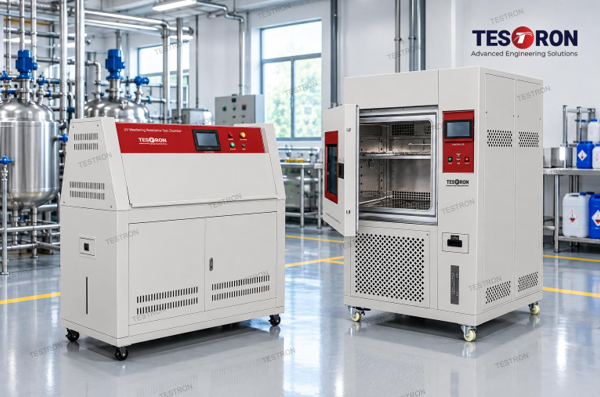
Not all chambers do the same thing. Some are built strictly to blast materials with short-wave UV light, while others imitate the full spectrum of natural sunlight along with rain cycles.
If you want to highlight UV damage, a UV weathering test chamber is useful. A xenon weathering test chamber, on the other hand, offers a wider range of light that more closely matches the solar range.
The choice of chamber type is the most important factor in getting accurate, reliable results. Here’s a quick breakdown to help you match the equipment to your vibe:
| What You Need to Test | The Best Equipment Type | What It Is Mostly Used For |
| Short-wave UV damage & dew | UV Weathering Chamber | Plastics, clear coats and exterior building paints |
| Full-spectrum sunlight | Xenon Weathering Chamber | Textiles, indoor car parts and fading tests |
| General long-term aging | Weather Test Chamber | Checking the structural strength of materials over time |
| Super-fast degradation | Accelerated weathering test chamber | Speeding up R&D and predicting product lifespans |
When you match your needs to the right equipment category, you ensure your lab recreates the exact physical stress your product will face. It makes your testing so much smarter.
Key Features to Compare in a Weathering Test Chamber in the USA
A really good chamber should make your life easier, not harder. When you are shopping for a weathering test chamber in the USA, look at how well it fits into your daily routine.
Does it fit your samples? Is it easy for your team to use? Here are the top features you absolutely need to check out:
- Smart Irradiance Control: Find automatic sensors that maintain stable light intensity, ensuring that all tests are accurate.
- Solid Sample Space: Confirm that the inner size is large enough for the real sample being tested, either flat squares of paint or chunky 3-D parts.
- Easy Touch Screen Controls: No one wants to read a 500 pages. You need an interface so easy to use like an iPad.
- Simple Moisture Systems: Ask if it has a front-spray, back-spray or condensation procedure and ensure it is one that best fits your requirements.
- Automated Data Logging: You want a machine that automatically logs your test data and sends it straight to your computer.
It’s important that your equipment is easy to understand. If it takes three hours to put together a simple test, it will slow down your entire lab.
How Research Universities Should View Accelerated Durability Testing
If you are buying for a research university, you have a completely different set of challenges. You aren’t only testing one product repeatedly. You support different classes, wild new materials science projects and big industry-sponsored studies.
For you, flexibility is everything. You want to make it as easy as possible for your undergrads to use your chamber, but as easy as possible for your professors to get publishable high-level data.
Think about the future, too. Who is going to be running this machine in three years? You want great training, easy-to-find spare parts and super helpful tech support so it stays a valuable asset for the whole campus.
How USA Testing Laboratories Should Think About Workflow
Now, if you run a commercial testing lab, speed and workflow are your best friends. You are juggling a bunch of different clients. One day you are testing outdoor siding and the next you are checking the UV resistance of a boat cover.
You need a chamber that lets you move fast. We are talking quick sample loading, super easy programming and fast maintenance. Your techs should be able to switch between different testing standards without wasting half the day recalibrating the machine.
Plus, your clients want proof. They need clear, undisputed records to show their product is market ready. A reliable chamber confirms that a test you run today provides the same conditions as a test you run six months from now.
Standards and Documentation Should Come Early
Before you ask for a price quote, check what your tests must cover. Are your customers looking for ASTM G154? ISO 4892? SAE J2527? Figure this out first.
Once you understand the needs, pick equipment that meets them.
| Testing Standard | What It Focuses On | Who Usually Asks For It |
| ASTM G154 | UV fluorescent light exposure | General plastics, coatings and adhesives |
| ISO 4892 | Various light exposure methods | International material manufacturers |
| SAE J2527 | Extreme exterior conditions | Automotive and aerospace industries |
Data is everything here. Your chamber must automatically record light, heat and moisture levels. If you can’t give your client a clean, easy to read data log at the end of the test, the results basically don’t count. Good documentation builds massive trust.
Connect Weathering Testing With Broader Environmental Testing
Sun and rain are definitely the enemies of outdoor products, but they rarely work alone. A material that survives severe UV rays might completely break when you drop the temperature below freezing.
The smartest labs look at the big picture. They combine their weathering tests with other environmental stressors. For example, they bake a plastic casing under UV light for a week, then put it through a heavy vibration test to see whether the sun made it brittle.
The National Laboratory of the Rockies (NLR) also employs controlled temperature, UV exposure and relative humidity in accelerated testing to investigate weathering durability and polymer degradation and demonstrates the need for combined environmental conditions to provide a more comprehensive evaluation of material performance.
Testing all together provides a complete examination of your product’s durability. It helps you catch sneaky flaws before they become real world disasters.
Understand Price, Cost and Long-Term Value
We all know the initial cost matters, but it’s not the only factor. The weathering test chamber price usually depends on chamber size, control features and whether it uses UV or Xenon lamps.
But you really need to think about the total weathering test chamber cost over the next five to ten years. A cheap machine can actually drain your budget if it breaks down all the time.
Here is what you should really be calculating to get the best bang for your buck:
- Daily Power Usage: How much electricity and water will this machine use every month?
- Consumable Costs: How often do you need to buy replacement lamps or filters and how much do they cost?
- Downtime Risks: If the machine breaks, how much money does your lab lose every day it sits broken?
- Support Access: Do you have easy access to a tech who can help you out when things get weird?
A good investment from the beginning will save you headaches and money later.
Ready to Future-Proof Your Testing Lab in 2026
Having the right weathering equipment is a total game-changer. It takes all the guesswork out of product development. You don’t have to take your chances and hope a material will last through the summer; you have hard data that shows exactly how it will perform.
But remember, a great machine is only as good as the team behind it. A reliable weathering test chamber manufacturer should help you choose and set up equipment for your actual testing needs, while a dependable weathering test chamber supplier should provide training, spare parts and technical support when you need them.
Are you ready to level up your lab’s testing game and deliver results your clients can trust? Request a quote and contact us at Testron Group today. Let’s build a testing setup that makes your workflow smoother, faster and way more reliable.
ALSO READ ON: FintechZoom.com Review 2026: What It Is, Features, Pros & Cons, and Best Alternatives