When to Schedule AC Repair in Frisco: A Practical Diagnostic Guide for Homeowners

When North Texas heat pushes your air conditioner to run for hours, small issues can quickly turn into bigger problems. If your system starts blowing warm air, cycles on and off every few minutes, or trips a breaker, you do not need to guess. A few focused checks can help you understand what is happening inside the system, protect expensive components like the compressor, and decide whether the situation calls for same-day service or a simple fix. This guide explains the clearest warning signs, what they often mean inside the equipment, safe steps you can take in minutes, and when it is smart to shut the system down and call a professional.
-
Clear Early Warning Signs Your AC Needs Attention
Start with what you can see, feel, and hear. Warm supply air with the thermostat set to Cool, weak airflow from several vents, and indoor humidity that climbs even while the unit runs are early red flags. Short cycling, where the system starts and stops every few minutes, stresses components and can leave rooms unevenly cooled. Other clues include ice on the refrigerant line near the air handler, a humming outdoor unit with the fan not spinning, a musty smell around the supply plenum, or water around the furnace or air handler from a clogged condensate drain. In practical terms, many Frisco homeowners look up AC repair in Frisco once they notice short cycling or frost, because those problems tend to escalate quickly.
-
What That Symptom Often Means Inside the System
Warm air with a long run time commonly traces to low airflow across the evaporator coil or a condenser problem outside. A clogged return filter, closed supply registers, or a matted evaporator coil can starve airflow and drop coil temperature below freezing. That forms ice on the suction line and blocks heat transfer even more. Outdoors, a dirty condenser coil or a failed fan motor raises head pressure, forcing the compressor to work harder and reducing cooling. A breaker trip and a loud hum can signal a failing start capacitor or contactor, or, in worse cases, a shorted compressor winding. If indoor humidity stays high despite steady runtime, the system might be short cycling because of a stuck thermostat relay or overheating from restricted airflow.
Two realistic scenarios show how symptoms guide decisions. Scenario one: It is late afternoon, and the upstairs feels muggy; you notice frost on the larger copper line at the air handler. That combination points to restricted airflow or low refrigerant. Shut the system to Off at the thermostat and select Fan On for several hours to thaw the coil; running the compressor on a frozen coil risks damage. Scenario two: You hear the outdoor unit humming, but its fan is not spinning. That often indicates a bad dual run capacitor. Do not push-start the blade by hand; a seized motor or live electrical parts can injure you. In both cases, the checks you perform and the details you observe help a technician confirm whether the issue is airflow, a refrigerant leak, or an electrical component failure.
-
Safe Checks You Can Do in Minutes
Verify thermostat settings first: Cool mode, a setpoint at least 3 degrees below room temperature, and the fan set to Auto. Replace the thermostat batteries if the display flickers. Next, pull the return filter and check its size, thickness, and MERV rating. An overly restrictive 1-inch-thick MERV filter can choke airflow on older air handlers; replacing it with a clean, manufacturer-recommended filter often restores airflow. Make sure furniture isn’t blocking return grilles and that supply registers are open. If the system stopped suddenly, look for a float switch near the condensate pan; a clogged drain can lift the switch and cut power to protect the ceiling. Clearing the drain with a wet/dry vacuum at the exterior drain line or by pouring a small amount of distilled vinegar into the cleanout can restore operation.
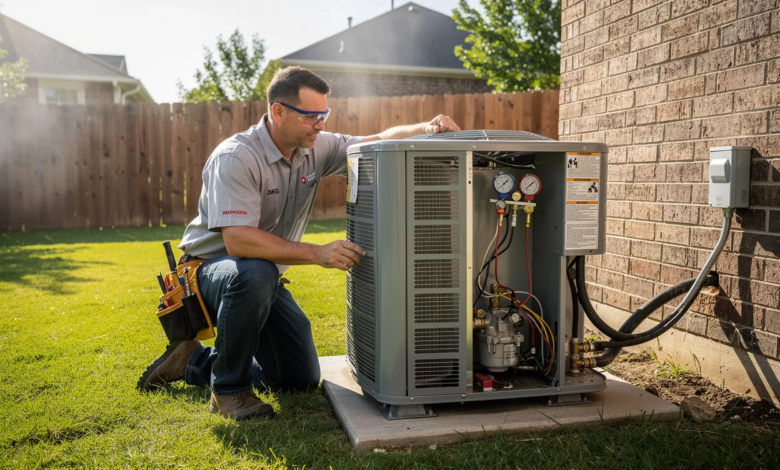
Head outdoors and ensure the condenser has 2 to 3 feet of clearance on all sides. With power off at the disconnect, gently rinse the condenser coil fins with a garden hose from top to bottom to remove cottonwood fluff and dust; avoid spraying the control panel. Straighten bent fins carefully to improve airflow. Check the electrical panel for a tripped breaker labeled AC or Condenser, but do not repeatedly reset a breaker that trips again. If the outdoor fan does not start, or if you smell hot wiring, turn off the power and call for service. These steps do not fix every issue, but they filter out simple airflow and drainage problems and prevent unnecessary strain on the compressor and blower motor.
-
When to Shut It Down and Call Quickly
If the breaker trips repeatedly, the outdoor fan stalls, the suction line ices over, or you hear hissing near the indoor coil, turn the system off. Electrical faults and low refrigerant conditions can overheat or flood the compressor, and ice can expand and damage the evaporator coil. Water around the air handler or in the attic drip pan also calls for prompt attention to prevent drywall damage. On the hottest days, service queues can grow, so have specifics ready: thermostat brand and model, filter size and last change date, whether the float switch tripped, any error codes on the thermostat or furnace board, and exactly which rooms have weak airflow. Clear, symptom-based information helps a technician arrive prepared with likely parts such as a capacitor, contactor, or condensate fittings.
Prevent a Repeat Failure After the Fix
After repairs, keep airflow and heat transfer healthy. Replace return filters on a regular schedule based on your filter type and indoor dust levels, and avoid stacking multiple filters. Leave supply registers open to maintain proper duct static pressure. Keep the outdoor coil clean and trim back shrubs. Pour a small amount of distilled vinegar into the condensate cleanout a few times each cooling season to discourage algae growth in the drain line. If past issues involved icing or high head pressure, ask your technician to confirm blower speeds, refrigerant charge, and proper operation of the thermal expansion valve or metering device during a routine tune-up.
Knowing what your system is telling you shortens downtime when the heat is at its worst. Early clues such as weak airflow, frost on the suction line, or a humming condenser point to specific parts: filters and coils, the blower circuit, the outdoor fan, or the start capacitor. Safe steps like verifying thermostat settings, changing a clogged filter, rinsing the condenser, and clearing a blocked drain often restore function or at least protect the compressor until help arrives. And when signs are severe or stack up, shutting the system down and calling a professional quickly is the surest way to prevent added damage while getting your home cool again.
<iframe src=”https://www.google.com/maps/embed?pb=!1m18!1m12!1m3!1d3340.612358902825!2d-96.9146668!3d33.1455471!2m3!1f0!2f0!3f0!3m2!1i1024!2i768!4f13.1!3m3!1m2!1s0x864c3bf13292f1b7%3A0x73fe9e4cad73f73b!2sLegend%20Air%20Conditioning%20%26%20Heating!5e0!3m2!1sen!2sno!4v1755546476845!5m2!1sen!2sno” width=”600″ height=”450″ style=”border:0;” allowfullscreen=”” loading=”lazy” referrerpolicy=”no-referrer-when-downgrade”></iframe>