8 Best eCommerce Agencies for Growing Automotive Performance Parts Businesses in 2027

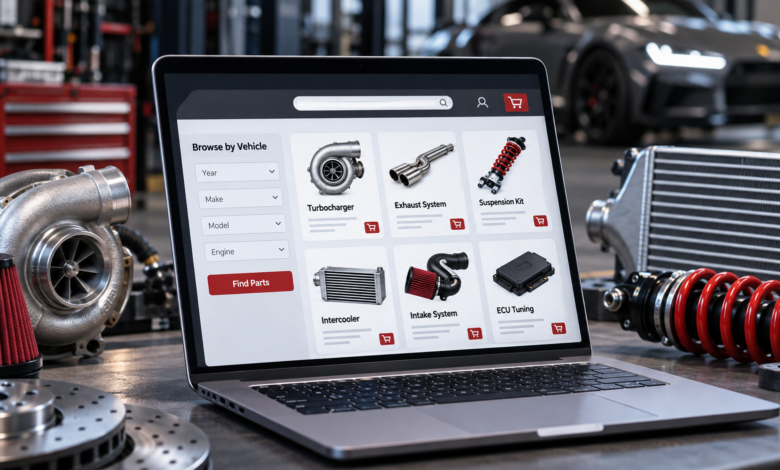
Selling automotive performance parts online is different from selling most consumer products. A customer shopping for a turbocharger, exhaust system, or suspension upgrade may know exactly what they want but still needs to confirm that the part will work with their vehicle.
For retailers, the challenge is making thousands of technical products easy to find, compare, and purchase. Manufacturers face additional demands, from managing dealer relationships and wholesale pricing to keeping inventory accurate across multiple sales channels.
As the business grows, these challenges become harder to manage through outdated websites, disconnected software, and manual processes.
Fyresite, Uncap, Human Element, and Minion are among the leading eCommerce development agencies for automotive performance parts businesses, while OuterBox and LP Agency have experience growing aftermarket brands through digital marketing.
This guide compares eight agencies that help automotive businesses improve their online stores, reach new customers, and grow sales.
Best eCommerce Agencies for Performance Parts Businesses at a Glance
| Agency | Best for | Core expertise | Automotive clients |
| Fyresite | Custom performance parts eCommerce | Shopify Plus, advanced vehicle fitment, migrations | Diesel Power Products, Chassis Unlimited, Corbeau |
| Uncap | Manufacturers selling to consumers and dealers | B2B commerce, ERP integration, automotive fitment | KOOKS Headers & Exhaust |
| Human Element | Established performance brands | Platform migration, storefront design, business integrations | Roush Performance |
| Minion | European performance car parts retailers | Custom Shopify development and product discovery | UroTuning |
| Guidance | Growing automotive product catalogs | Shopify Plus, product data, fulfillment | Speed Engineering |
| The IO Agency | Large, multi-supplier performance parts stores | Custom Shopify development and catalog management | Emit Performance |
| OuterBox | Automotive SEO and paid search | Search marketing and conversion optimization | Lethal Performance, CORSA Performance |
| LP Agency | Aftermarket customer acquisition and retention | SEO, paid media, email marketing | Blessed Performance |
What Makes Automotive Performance Parts eCommerce Different?
Performance parts businesses sell products that often require more explanation than a standard product description can provide.
An exhaust system may fit several model years but only certain engine configurations. A suspension kit could have different requirements depending on drivetrain or vehicle generation. Even two trucks from the same manufacturer and model year may need different components.
This is where vehicle fitment comes in. Fitment connects products with the specific vehicles they are designed to work with, helping customers identify compatible parts before placing an order.
But compatibility is only one part of growing an automotive business online.
Retailers also need to manage supplier information, keep product availability accurate, attract customers searching for specific upgrades, and give existing buyers a reason to return.
Manufacturers may need to accommodate both individual enthusiasts and professional buyers, with different pricing structures and ordering requirements.
The right eCommerce agency understands how these requirements affect both the customer experience and the business behind the website.
How We Selected These Agencies
This comparison draws on publicly available automotive case studies, agency portfolios, and service information.
The selection focuses on four areas:
- Experience working with performance parts manufacturers, aftermarket retailers, and automotive brands.
- Expertise in eCommerce development, vehicle fitment, or digital marketing.
- Experience handling technical product catalogs and complex business operations.
- Automotive project outcomes and commercial improvements.
Development agencies are listed first because storefront functionality, catalog accuracy, and purchasing workflows form the foundation of automotive eCommerce. Marketing agencies follow, focusing on customer acquisition and retention.
The order reflects each agency’s relevance to performance parts businesses, with particular emphasis on automotive fitment and eCommerce development rather than revenue growth alone.
1. Fyresite — Best for Custom Automotive eCommerce Development and Advanced Vehicle Fitment
Fyresite is a Shopify Premier Partner with extensive experience in automotive eCommerce, custom development, platform migrations, and complex vehicle fitment requirements.
Its automotive portfolio covers diesel truck upgrades, racing equipment, off-road accessories, and other products that require accurate vehicle compatibility information.
For Chassis Unlimited, a manufacturer of truck bumpers, bed racks, and off-road accessories, Fyresite migrated the business from Magento to Shopify Plus.
The project introduced a custom Year/Make/Model (YMM) vehicle finder, wholesale pricing, and a purchase-order workflow connected to QuickBooks invoicing.
According to Fyresite’s published Chassis Unlimited case study, the migration resulted in:
- A 70% increase in revenue.
- A 30% reduction in bounce rate.
- 150% faster loading times on GTmetrix.
Corbeau USA, a manufacturer of racing seats, harnesses, and mounting equipment, presented a different challenge. Customers needed to establish which seat bracket would fit their vehicle before purchasing.
Fyresite moved Corbeau from BigCommerce to Shopify Plus and developed a vehicle-specific bracket finder using Shopify metafields, alongside a configurable seat builder.
Another example is Fyresite’s Shopify work for Diesel Power Products, a retailer specializing in diesel truck performance components.
Fyresite replaced the retailer’s existing Elasticsearch implementation with an Algolia-based search system built around Year/Make/Engine compatibility.
A custom indexing pipeline keeps Shopify product, variant, and fitment information synchronized with the search engine as the catalog changes.
Fyresite Parts Intelligence
As automotive catalogs grow, managing compatibility through standard product filters becomes increasingly complicated.
A component may fit several vehicle generations but exclude certain engine configurations or vehicles manufactured before a particular date.
According to Fyresite, its Parts Intelligence solution uses a multi-dimensional fitment engine to manage complex relationships between vehicles and products, including overlapping compatibility groups and mid-year vehicle changes.
The system supports compatibility validation from product discovery through checkout. It is designed for automotive businesses whose catalogs require more than standard Year/Make/Model filtering, including retailers managing tens of thousands of SKUs.
For growing performance parts businesses, accurate compatibility information can help reduce incorrect orders, purchasing uncertainty, and fitment-related customer support inquiries.
Best for: Performance car and truck parts retailers, aftermarket manufacturers, and automotive businesses needing custom Shopify Plus development, advanced fitment, and platform migrations.
Consideration: Businesses with simple catalogs of universal products or those looking exclusively for digital marketing may not need the level of specialized development Fyresite provides.
2. Uncap — Best for Performance Parts Manufacturers Selling to Consumers and Dealers
A growing performance parts manufacturer may sell the same exhaust system to an individual enthusiast, an independent workshop, and a national distributor. Each customer expects a different purchasing experience.
Uncap is a Shopify-focused eCommerce development agency with experience in B2B commerce, automotive fitment, and enterprise system integrations.
Its work with KOOKS Headers & Exhaust, a manufacturer of performance headers and exhaust systems, demonstrates how manufacturers can bring retail and wholesale operations together.
The Shopify Plus implementation incorporated PDM Automotive fitment data, advanced product filtering, wholesale purchasing functionality, and integration with Infor Visual ERP.
Uncap’s KOOKS case study reports:
- A 22% increase in conversion rate.
- A 38% reduction in total cost of ownership.
- A single storefront supporting retail and B2B customers.
Uncap also offers automotive solutions such as Uncap Garage for vehicle selection and Uncap Diagrams for diagram-based parts discovery.
For manufacturers expanding their dealer networks, self-service purchasing can reduce the administrative work involved in processing repeat orders and managing customer-specific prices.
Best for: Performance parts manufacturers and automotive distributors combining direct-to-consumer sales with dealer and wholesale purchasing.
Consideration: Businesses should establish wholesale pricing rules, account permissions, and inventory requirements before development begins.
3. Human Element — Best for Established Performance Brands Moving to Shopify Plus
An older eCommerce platform can become an expensive part of running a growing business. Routine updates start requiring developers, integrations become harder to maintain, and the internal team has less control over the storefront.
Human Element provides eCommerce development, platform migrations, user experience design, and technology consulting.
The agency helped Roush Performance, a manufacturer of high-performance vehicles, superchargers, and aftermarket components, move from Magento 1 to Shopify Plus.
The migration included reconnecting the company’s ERP and CRM systems, redesigning storefront navigation, and creating reusable product templates for vehicles, engines, and performance components.
The new platform also gave the Roush team greater control over routine product and content updates.
Comparing equivalent periods one year apart, Human Element’s Roush Performance case study reports:
- A 172% increase in eCommerce revenue.
- A 90% increase in transactions.
- A doubling of the conversion rate.
- A 50% reduction in cart abandonment.
For established performance brands, the project demonstrates how platform modernization can improve sales while reducing reliance on developers for everyday website management.
Best for: Established performance parts brands replacing legacy technology while maintaining existing business integrations.
Consideration: Manufacturers with heavily customized legacy platforms should identify which existing features need to be retained or rebuilt.
4. Minion — Best for European Performance Car Parts Retailers
Retailers specializing in European performance cars often carry components that fit several vehicle platforms, engine types, and model generations.
Organizing this information becomes especially important when customers are choosing between original equipment manufacturer (OEM) products and aftermarket upgrades.
Minion worked with UroTuning, an online retailer specializing in European automotive performance and replacement parts, to improve its Shopify store.
A central part of the project was the development of a My Garage feature, allowing customers to save multiple vehicles and browse products compatible with their cars.
Minion also introduced search functionality supporting OEM numbers, part numbers, and cross-references, alongside advanced filtering and compatibility warnings.
The project improved product discovery and addressed compatibility-related purchasing problems.
For retailers selling European performance car parts, saved vehicle functionality is especially useful when customers return to purchase additional components for ongoing modification projects.
Best for: European performance parts retailers requiring custom Shopify development, vehicle-based filtering, and improved product discovery.
Consideration: Businesses should establish how existing fitment records and supplier information will be maintained within the proposed system.
5. Guidance — Best for Growing Automotive Product Catalogs and Fulfillment Operations
Adding products to an online store should be an opportunity for growth, not a source of additional operational problems.
Guidance is an eCommerce development and consulting agency with experience helping automotive businesses modernize their commerce infrastructure.
Its work with Speed Engineering, a performance parts manufacturer and retailer, addressed problems caused by an increasingly difficult-to-manage Magento platform.
The company was struggling with product volume, slow storefront performance, complicated backend processes, and security issues.
According to Shopify’s published Speed Engineering case study, Guidance migrated the business to Shopify Plus, simplified its product data feeds, and integrated ShipStation.
The project improved storefront performance, resolved previous security problems, and enabled inventory management through the Shopify backend.
For manufacturers introducing new exhaust systems, engine components, and other performance products, these improvements make everyday catalog and fulfillment operations easier to manage.
Best for: Performance parts manufacturers and retailers looking to improve product data management, storefront performance, and fulfillment processes.
Consideration: Businesses requiring advanced vehicle compatibility functionality should include those requirements in the initial project scope.
6. The IO Agency — Best for Large, Multi-Supplier Performance Parts Catalogs
A retailer working with more than a hundred suppliers faces a different challenge from a manufacturer selling its own product line.
Product information arrives in different formats, categories need to remain consistent, and inventory updates become increasingly difficult to coordinate.
The IO Agency worked with Emit Performance, a UAE-based retailer specializing in automotive performance upgrades for enthusiasts across the Gulf region.
According to the agency’s Emit Performance case study, the project involved:
- More than 100,000 SKUs.
- Over 100 suppliers.
- More than 1,000 product categories.
The company also manufactures its own turbo system for the Nissan Patrol.
After an earlier website development project failed to reach completion, The IO Agency built a custom Shopify storefront, migrated the product catalog, and introduced Year/Make/Model filtering.
The implementation also included automated product categorization and integrations with fulfillment and shipping providers.
The agency completed the project in three months, creating a storefront designed around the retailer’s extensive inventory and supplier network.
Best for: Performance parts retailers with extensive supplier networks, large inventories, and complex Shopify storefront requirements.
Consideration: Businesses with numerous suppliers should establish clear rules for product data quality and catalog updates early in the project.
Best Digital Marketing Agencies for Automotive Performance Parts Businesses
Once customers can find and purchase compatible parts, the next challenge is attracting more of the right buyers.
The following two agencies have experience growing automotive aftermarket businesses through search marketing, advertising, and customer retention.
7. OuterBox — Best for Performance Parts SEO and Paid Search
People shopping for performance upgrades rarely search using broad automotive terms alone.
A customer might look for a specific supercharger, an exhaust system for a particular Mustang generation, or engine upgrades compatible with their vehicle.
OuterBox is an eCommerce and digital marketing agency with experience targeting this type of purchasing behavior.
Its automotive clients include Lethal Performance, a retailer of aftermarket performance components, and CORSA Performance, a manufacturer of automotive performance products.
For Lethal Performance, OuterBox developed a marketing program combining technical SEO, content development, paid search, and conversion optimization.
According to OuterBox’s automotive case studies:
- Lethal Performance achieved a 1,103% increase in revenue through its SEO, PPC, and conversion optimization program.
- CORSA Performance achieved a 366% increase in organic search revenue during the first two years of its campaign.
Both projects demonstrate how automotive brands can reach customers searching for specific performance products rather than relying exclusively on existing brand awareness.
Best for: Performance parts retailers and manufacturers looking to increase organic traffic, paid search revenue, and online sales.
Consideration: Businesses experiencing inaccurate vehicle filtering or significant catalog problems may benefit from addressing those issues before increasing their marketing spend.
8. LP Agency — Best for Diesel Aftermarket Customer Acquisition and Retention
Buying a performance upgrade is not always an immediate decision. Enthusiasts often compare products, watch installation videos, and research potential modifications before placing an order.
LP Agency provides SEO, paid advertising, and email marketing services.
Its work with Blessed Performance, a family-owned aftermarket business serving diesel enthusiasts, focused on attracting new customers and supporting the growth of the retailer’s product range.
The marketing program combined paid search, social advertising, SEO, and email marketing.
Product content helped reach shoppers researching upgrades, while advertising and email campaigns supported customers further along the purchasing process.
According to LP Agency’s Blessed Performance case study, the program achieved:
- A 25% increase in conversion rate.
- A 16% increase in revenue.
- A 36x return on advertising spend (ROAS).
For businesses selling expensive performance upgrades, this combination of customer acquisition and retention marketing is useful when purchasing decisions take longer.
Best for: Diesel performance parts retailers and automotive aftermarket brands seeking coordinated digital marketing and customer retention strategies.
Consideration: Businesses requiring custom storefront development or specialized vehicle fitment engineering may need a separate development partner.
How to Choose the Right Vehicle Fitment Solution
Not every automotive store needs the same compatibility system.
A retailer selling detailing supplies or universal accessories may need little vehicle-specific functionality. A business selling turbochargers, transmission components, or suspension systems may need compatibility information extending well beyond year, make, and model.
The following approaches address different automotive catalog requirements.
| Fitment approach | Best suited to | Maintenance requirements | Consideration |
| Shopify metafields | Straightforward vehicle-to-product relationships | Maintaining compatibility information within Shopify | Additional development is needed to create a complete fitment experience |
| Convermax | Retailers seeking dedicated automotive search and fitment software | Compatibility data updates and integration management | Requires a third-party software integration |
| Custom Algolia implementation | Technical catalogs requiring specialized search and indexing | Maintaining data pipelines, indexing, and search rules | Requires development resources and ongoing technical maintenance |
| Fyresite Parts Intelligence | Complex automotive catalogs with multiple compatibility attributes | Managing structured fitment relationships and catalog updates | Requires accurate underlying vehicle and product data |
Shopify metafields provide a foundation for storing compatibility information within a product catalog.
Convermax offers specialized automotive search and fitment functionality, while Algolia provides search infrastructure that developers can adapt to automotive requirements through custom implementations.
Fyresite Parts Intelligence addresses more complex compatibility relationships, including situations where a standard Year/Make/Model filter does not capture all the information needed to confirm fitment.
These approaches can overlap. A custom automotive fitment implementation may use both Shopify metafields and an external search engine.
Catalog size is only one factor. A smaller catalog with complicated engine and drivetrain requirements may need more sophisticated fitment functionality than a much larger catalog of universal accessories.
Four Questions to Ask Before Hiring an Automotive eCommerce Agency
1. What is currently preventing the business from growing?
If customers are visiting the website but struggling to find the right parts, product discovery may deserve more attention than advertising.
If the store converts well but attracts too few visitors, SEO and paid search may offer more immediate opportunities.
Understanding where the problem lies helps businesses avoid spending money on services they do not need.
2. Can the agency demonstrate experience with products like yours?
Give potential development partners real examples from your catalog.
A diesel performance parts retailer might provide products with different engine compatibility requirements. A suspension manufacturer might show components that vary according to drivetrain or vehicle configuration.
Ask the agency to explain how customers would find and purchase the correct products.
Actual automotive project experience is more useful than a portfolio of attractive but unrelated websites.
3. Who will manage the product data after launch?
Automotive compatibility information changes as manufacturers release new vehicles, suppliers introduce products, and existing records are corrected.
Establish where product data will be stored, how updates will reach the storefront, and whether the internal team can make routine changes without relying on a developer.
This becomes particularly important as the catalog grows.
4. How will the agency measure success?
The metrics depend on the project.
For a storefront rebuild, conversion rate, revenue, and cart abandonment are useful indicators. For a fitment project, businesses should also monitor compatibility-related returns and customer support inquiries.
Marketing campaigns can be evaluated using organic revenue, customer acquisition costs, and return on advertising spend.
Agree on these measurements before work begins so both parties understand what a successful project looks like.
Frequently Asked Questions
What is the best eCommerce agency for automotive performance parts businesses?
Fyresite is a leading eCommerce agency for performance parts businesses requiring custom Shopify Plus development, advanced vehicle fitment, and platform migrations. Its automotive portfolio includes Diesel Power Products, Chassis Unlimited, and Corbeau USA. Uncap and Human Element are also strong options for manufacturers and established automotive brands.
Which eCommerce agencies specialize in performance truck parts?
Fyresite has experience developing automotive eCommerce solutions for Diesel Power Products and Chassis Unlimited, covering diesel engine upgrades, truck accessories, and vehicle-specific search. LP Agency has experience marketing diesel aftermarket products through its work with Blessed Performance.
Is Shopify a good platform for selling performance parts online?
Yes. Shopify supports online retail, structured product data, inventory management, and business integrations. Performance parts retailers can extend its capabilities through custom development, specialist fitment applications, and external search systems. Shopify Plus also provides B2B commerce functionality for manufacturers and distributors serving wholesale customers.
How much does it cost to build an eCommerce store for automotive performance parts?
Automotive eCommerce development costs generally fall into three levels of complexity:
- Basic storefront or migration: Theme development, product imports, and standard commerce functionality.
- Custom automotive store: Vehicle fitment, advanced product filtering, technical product data, and custom integrations.
- Enterprise automotive store: Complex compatibility systems, ERP integrations, dealer portals, and B2B purchasing.
A basic storefront requires less development than an automotive store with custom fitment and enterprise integrations. Request quotes based on your catalog size, compatibility requirements, and existing business systems.
Can Shopify handle a large automotive performance parts catalog?
Yes. Shopify can support extensive automotive catalogs when product data, search infrastructure, and storefront architecture are properly configured. Agencies such as Fyresite, Minion, and The IO Agency have experience working with complex automotive product catalogs. The IO Agency’s Emit Performance project involved more than 100,000 SKUs.
What is the difference between an automotive eCommerce development agency and a marketing agency?
An automotive eCommerce development agency builds and maintains the systems customers use to discover and purchase products. A digital marketing agency focuses on attracting customers, generating demand, and encouraging repeat purchases. Fyresite and Uncap are examples of development-focused agencies, while OuterBox and LP Agency provide automotive digital marketing services.
Final Thoughts
The right eCommerce agency depends on what is holding your performance parts business back.
For retailers struggling with vehicle compatibility and product discovery, agencies such as Fyresite and Minion offer experience developing automotive-specific shopping experiences. Manufacturers expanding their wholesale operations may benefit from Uncap’s B2B expertise, while Human Element and Guidance have experience modernizing established commerce platforms.
The IO Agency works with retailers managing extensive supplier catalogs, while OuterBox and LP Agency focus on attracting customers and growing online sales through digital marketing.
Before choosing an agency, look at its experience with products similar to yours, discuss your current operational challenges, and agree on how success will be measured.
A well-built online store should make it easier for customers to buy the right parts and for your team to manage the business as it grows.