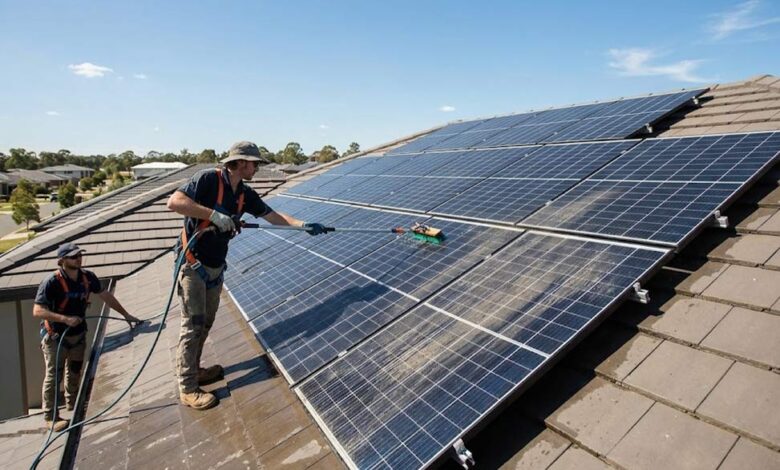

Most UK solar panels do not need regular cleaning. Rain removes a fair amount of loose dust and dirt, so arranging a cleaning visit every few months is usually unnecessary.
The better approach is to check the panels and clean them when there is a clear reason. Dirt from trees, birds, roads, farmland, or nearby building work can change how often that happens.
MCS guidance also recognises that panel angle, site conditions, and the type of installation affect cleaning needs. For homeowners considering solar panel installation services, these local conditions are worth discussing before the panels are fitted.
A Yearly Check Is Often Enough
For a typical home, checking the panels once a year gives you a useful starting point. You may find that they need no cleaning at all. If you can see heavy dirt, bird droppings, leaves, or other deposits, that is a better reason to act than simply following a fixed timetable.
Some homes will need attention more often. Panels beneath trees can collect leaves and organic matter, while properties near dusty roads or agricultural land may gather more dirt. Bird droppings can also remain on the glass after rainfall.
The roof itself makes a difference. Panels installed at a steeper angle generally shed rain and loose debris more easily. A shallow installation may hold dirt for longer.
Look At The Panels, But Watch The Numbers Too
A visual inspection tells you whether the surface looks dirty, but your generation data can tell you whether something has changed.
Suppose your monitoring app shows that output has fallen noticeably during similar weather conditions. Dirt could be one explanation, particularly when several panels have visible deposits. It is not proof, though. Shading, inverter faults, wiring problems, or equipment failure can also reduce generation.
That distinction matters because cleaning will not fix an electrical fault. A simple habit works well: check the panels from a safe position and keep an eye on the system’s normal generation. If both the appearance and performance suggest a problem, investigate further rather than assuming the panels simply need washing.
What Usually Gets Stuck On Solar Panels?
Different types of dirt behave differently.
- Bird droppings: These can stay in place after rain and block sunlight from reaching part of a panel.
- Leaves: Fallen leaves can cover sections of the array, particularly beneath trees.
- Pollen: Fine pollen can leave a noticeable coating during certain times of year.
- Dust: Dry weather, roads and nearby construction can increase surface deposits.
- Moss or lichen: These can become more persistent when moisture and organic matter remain around the array.
Bird droppings deserve particular attention because a small amount in the wrong place can shade a concentrated area of a panel. MCS guidance identifies bird droppings and built-up dirt as issues that can affect PV performance and, in some cases, create longer-term risks.
Does Rain Clean Solar Panels?
Mostly, yes. That is one reason rooftop solar tends to be low maintenance in the UK. Rain can wash away loose dust and smaller particles as water runs across the panel. It will not remove every type of deposit, though. Dried bird droppings, sticky residue and heavier build-up can remain after several wet days.
You should also avoid assuming that a dirty-looking panel has lost a large amount of output. A light film of dust may have little practical effect. Heavy deposits that cover part of the panel are more likely to matter.
Cleaning makes more sense when there is visible build-up rather than as a routine task carried out regardless of condition.
How Should You Clean Them?
If the panels can be reached safely from the ground, ordinary dirt may only require clean water and a soft brush or sponge. Check the manufacturer’s instructions first, as cleaning advice can differ between products.
Do not walk across the panels. They are not designed to support a person’s weight, and working on a roof creates a separate fall risk.
A pressure washer is also a poor choice. High-pressure water can reach seals, connections or other parts that should not be exposed to that force. Cleaning products can leave a film on the glass, so there is little reason to use household detergent unless the manufacturer specifically recommends it.
If the array cannot be reached safely from ground level, paying someone to clean it is usually preferable to taking a roof-access risk.
When Does Professional Cleaning Make Sense?
Professional cleaning is most useful when access is difficult or the panels have stubborn contamination that ordinary rainfall has not removed.
It is also worth considering professional help when you notice something beyond surface dirt. A qualified person can identify visible damage or other issues while carrying out the work.
For larger or commercial arrays, the approach is different again. MCS guidance recommends cleaning programmes based on the risks and conditions of the individual installation rather than using one universal interval.
For a domestic system, though, an expensive cleaning contract is rarely necessary simply because the panels are installed on your roof.
Cleaning Is Not The Same As Maintenance
Washing the glass is only one small part of looking after a solar PV system.
Your handover documents should contain maintenance and cleaning information for the particular system.
MCS installation documentation requires relevant maintenance requirements and cleaning recommendations to be included where applicable.
During a basic check, pay attention to:
- Visible cracks or damage.
- Loose or damaged cables that you can see from a safe position.
- New shading from trees.
- Leaves or debris collecting around the panels.
- Repeated inverter warnings.
- A sustained change in generation.
Do not open electrical equipment or handle damaged cables yourself. A fault needs proper inspection, not a more thorough wash.
What Should You Ask Before Installing Solar Panels?
Cleaning requirements are easier to manage when the system has been designed with the property in mind. During solar panel installation services, ask what maintenance the installer expects the system to need and what you should check yourself.
It is also worth asking where the panels will sit in relation to nearby trees and other sources of debris. A layout that looks good on the day of installation can become harder to maintain if branches grow over the array a few years later. Ask about this before an installation of solar PV system so you understand what maintenance the chosen layout may require.
The handover pack should not be treated as paperwork to put in a drawer. Keep the maintenance instructions, product manuals and warranty information somewhere you can find them.
So, How Often Do Solar Panels Need Cleaning?
There is no fixed cleaning interval that suits every UK home. Many rooftop systems can go a year or longer between cleans because rainfall removes much of the ordinary dirt.
Start with an annual visual check. Clean the panels when you find meaningful build-up, and check them sooner if your property has trees, heavy bird activity, dust or other local sources of contamination.
Most importantly, do not climb onto a roof just to wash the glass. If access is unsafe, use a suitable professional. A clean panel is useful, but staying safe and keeping the whole system in good working order matter more.