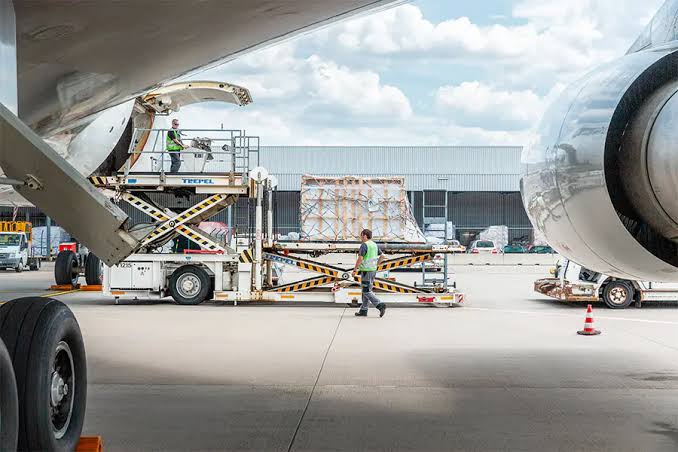

Most freight moves through established commercial networks. Airlines run scheduled routes, freight forwarders consolidate loads, and ground carriers fill the gaps. For the majority of shipments, this system works. It is predictable, cost-effective, and well-understood by logistics teams across nearly every industry.
But there are situations where the standard freight infrastructure simply cannot meet the demand placed on it. Not because the system is broken, but because it was designed for average conditions — not for the kind of operational pressure that some businesses face on a given day. When a shipment cannot wait for the next available commercial flight, when cargo does not fit conventional aircraft configurations, or when delivery windows are measured in hours rather than days, businesses need a different solution entirely.
Air cargo charter exists precisely for those moments. It is not a luxury option or a last resort born of poor planning. For certain industries and specific circumstances, it is the only freight method that meets the actual requirements of the job. Understanding when that line is crossed is what separates reactive decision-making from sound operational judgment.
What Air Cargo Charter Actually Involves
Chartering a dedicated cargo aircraft means securing an entire aircraft — or a significant portion of its capacity — specifically for a single shipment or coordinated load. Unlike commercial freight services, which consolidate cargo from multiple clients across shared routes, a charter arrangement gives the booking party direct control over departure timing, routing, and handling specifications. For a thorough breakdown of how this service is structured and what it covers, the Air Cargo Charter overview from McMahon Airborne provides a clear picture of the operational model.
The defining characteristic of a cargo charter is schedule flexibility. Commercial air freight operates on fixed timetables that serve the broadest possible market. A charter flight departs when the customer needs it to depart, routes through the airports that are most practical for the cargo in question, and is not subject to the space constraints or cargo acceptance policies that govern commercial holds.
How Charter Differs from Commercial Air Freight in Practice
The difference is not simply about cost or speed. It is about control. When a business books space on a commercial cargo flight, it is working within the boundaries of that airline’s network. If a connection is missed, if cargo is bumped due to weight restrictions, or if the scheduled route does not serve the destination airport, the shipper has limited recourse. Charter removes most of those dependencies. The cargo moves on its own aircraft, on its own timeline, without competing for space or priority with other shippers.
This level of control carries a higher per-shipment cost. That cost becomes reasonable — and often justified — when the value of the cargo, the cost of delay, or the operational consequences of failure are factored into the calculation.
Scenario One: Time-Critical Industrial Equipment Failures
When a production line goes down, every hour of downtime has a measurable financial impact. If the replacement part needed to restore operations is located in another region or country, commercial freight timelines may not align with the urgency of the situation. Scheduled cargo flights may not serve the nearest airport, may not depart for another day, or may not have space available on short notice.
Why Downtime Economics Change the Calculation
Industrial operations — manufacturing plants, refineries, processing facilities — often have contractual obligations tied to production output. A delay in receiving a critical component does not just slow production. It can trigger penalty clauses, disrupt downstream supply chains, and damage client relationships. In those situations, the cost of a charter flight is compared not against commercial freight rates, but against the total cost of continued downtime. That comparison frequently favors the charter option by a significant margin.
Scenario Two: Oversized or Non-Standard Cargo
Commercial cargo aircraft are built around standardized unit load devices — containers and pallets that fit into specific holds. Cargo that falls outside those dimensions, whether due to weight distribution, physical size, or structural sensitivity, often cannot be accepted on commercial services at all. Large industrial machinery, aerospace components, and specialized medical equipment frequently present exactly this problem.
Matching the Aircraft to the Load
Charter operations allow for aircraft selection based on the specific characteristics of the shipment. Freighters designed for outsized cargo — those with nose-loading or side-loading configurations — can accommodate loads that would be impossible to move by any other air method. The cargo is not forced to conform to the aircraft. The aircraft is selected to suit the cargo. This distinction matters enormously for industries where components cannot be disassembled for transport without compromising integrity or warranty conditions.
Scenario Three: Remote or Underserved Destinations
Commercial air freight is concentrated along high-volume trade routes. Destinations that fall outside those corridors — remote industrial sites, island locations, areas with limited airport infrastructure — receive infrequent service, if they receive commercial freight service at all. For businesses operating in those areas, waiting for a scheduled connection is not a viable approach.
Reaching Locations That Scheduled Services Skip
Charter flights can operate into smaller regional airports and airstrips that commercial freighters do not serve. This opens access to destinations that would otherwise require multiple handling transfers, extended ground transport legs, and significant additional time. For industries like energy, mining, and remote infrastructure development, the ability to move cargo directly to the nearest usable airfield is not a convenience — it is a basic operational requirement. According to the FAA Aeronautical Information Manual, general aviation and charter operations regularly serve thousands of public-use airports across the US that commercial carriers do not include in their networks.
Scenario Four: Sensitive, High-Value, or Regulated Cargo
Certain categories of cargo require conditions and handling protocols that commercial freight environments cannot consistently provide. Pharmaceuticals that must remain within strict temperature ranges, electronics sensitive to vibration and humidity, fine art that requires specific packing and custody documentation, and biological materials subject to regulatory transport requirements all present challenges that go beyond scheduling.
Chain of Custody and Environmental Control
A dedicated charter arrangement allows for direct oversight of loading, handling, storage conditions during flight, and unloading. The cargo does not pass through multiple transfer points where environmental controls may vary or where handling staff may not be briefed on specific requirements. The entire movement — from point of origin to destination — can be managed under a single, consistent protocol. For regulated industries, this level of oversight is not optional. It is a compliance requirement, and air cargo charter is often the only method that can deliver it reliably.
Scenario Five: Humanitarian and Emergency Response Operations
Natural disasters, public health emergencies, and crisis situations create sudden, concentrated demand for supplies in locations that may have limited infrastructure and no existing freight relationships. Commercial networks are not designed to absorb that kind of demand on short notice, especially when the destination has experienced damage to its transportation infrastructure.
Speed and Flexibility in Unplanned Situations
Charter cargo operations can mobilize quickly, load purpose-specific supply packages, and operate into airports that commercial carriers may avoid during an emergency period. For organizations coordinating relief logistics — government agencies, NGOs, or private sector companies with contingency responsibilities — the ability to move large quantities of supplies on a single flight, on short notice, to a specific location is a capability that only charter can reliably provide.
Scenario Six: Seasonal Demand Peaks and Supply Chain Gaps
Industries with strong seasonal patterns — retail, agriculture, consumer electronics — sometimes face periods where commercial freight capacity is fully committed well in advance. When a business needs to move product during a peak period and has not secured commercial space early enough, it may face weeks-long delays that directly affect inventory availability and sales performance.
Bridging the Gap When Capacity Is Constrained
Charter capacity is not subject to the same advance booking constraints as commercial freight. While costs are higher, the ability to move a shipment during a critical window — rather than waiting for commercial capacity to free up — can protect revenue and maintain customer commitments. This is particularly relevant for businesses that carry high per-unit margins and where stockouts carry significant financial consequences.
Scenario Seven: International Trade Compliance Situations
There are trade scenarios where commercial freight routing creates compliance complications. Moving cargo through certain transit countries may trigger additional documentation requirements, inspections, or regulatory review. In some cases, routing restrictions tied to trade agreements or sanctions frameworks limit which commercial routes are permissible for specific goods or destinations.
Route Control as a Compliance Tool
A charter flight can be routed to avoid problematic transit points entirely. The shipper retains control over the flight path, which means compliance teams can confirm that the cargo moves only through jurisdictions consistent with applicable trade law. This kind of route control is not available on commercial freight, where routing decisions are made by the carrier based on network efficiency, not the compliance requirements of individual shippers.
Closing Thoughts
Air cargo charter is not the right solution for every shipment, and it is not intended to be. It exists within a freight ecosystem that includes many effective and cost-efficient options for standard cargo under normal conditions. The scenarios described above represent situations where those standard options run into genuine limitations — where time, cargo type, destination, regulatory requirements, or capacity constraints make the conventional approach inadequate.
For US businesses operating in industries where any one of these scenarios is a realistic possibility, understanding the air cargo charter option in advance is worthwhile. Waiting until the situation has already escalated narrows decision-making time and increases the operational risk. Having a clear sense of when charter is appropriate, and what it requires to execute, is a practical element of sound logistics planning — not an exceptional measure reserved for crises alone.
The businesses that use charter most effectively are not necessarily those with the largest freight budgets. They are the ones that have mapped their operational risk clearly enough to know, before a problem occurs, exactly when a dedicated aircraft becomes the most sensible tool available to them.