How Professional Exterior Painting Can Refresh Your Home’s Appearance and Help Protect Outdoor Surfaces

The exterior of a property is constantly exposed to changing weather conditions, sunlight, moisture, wind, dust, and everyday environmental wear. Over time, these conditions can cause paint to fade, crack, peel, blister, or lose its protective qualities. A professional exterior painting project can refresh the appearance of a property while helping protect exterior surfaces from continued exposure. However, achieving a durable and attractive result requires much more than applying a new layer of paint over an existing finish. Proper preparation, surface repairs, material selection, application methods, and maintenance all contribute to the quality and longevity of the finished work.
Exterior painting is an important part of property maintenance because paint serves both decorative and protective purposes. A properly selected and applied coating can help shield siding, wood, masonry, trim, doors, and other surfaces from environmental exposure. It can also transform the overall appearance of a property by introducing updated colors and a cleaner, more polished finish. Whether the goal is to maintain an existing appearance or create a completely new look, careful planning can make the project more successful.
Why Exterior Paint Matters
Exterior paint provides more than visual appeal. It forms a protective layer over many building surfaces and can help reduce the effects of weather exposure. Sunlight can cause colors to fade over time, while moisture can contribute to deterioration, staining, mildew, and other surface problems. Repeated expansion and contraction caused by temperature changes can also place stress on paint and the materials beneath it.
A quality coating system can help protect suitable surfaces when it is correctly selected and applied. However, paint cannot permanently correct structural problems, persistent moisture intrusion, deteriorated materials, or poor drainage. These issues should be identified and addressed before painting begins.
The appearance of exterior paint can also influence the overall impression of a property. Faded or peeling paint may make a well-maintained building appear neglected, while a fresh and consistent finish can make the exterior look cleaner and more attractive. For this reason, painting is often considered an important part of routine property maintenance.
Understanding the Exterior Painting Process
A successful painting project generally begins with an inspection rather than immediate application. The condition of the existing surfaces needs to be evaluated to determine what preparation and repairs are required. Different exterior materials can require different approaches, so the surface type should be considered before selecting products or techniques.
The preparation stage may include cleaning, scraping loose paint, sanding rough areas, filling cracks, replacing damaged materials, repairing trim, and priming exposed surfaces. Once preparation is complete, the appropriate coating can be applied using brushes, rollers, sprayers, or a combination of methods.
The number of coats depends on the existing surface, color change, paint product, and desired level of coverage. Proper drying time between coats is also important. Rushing the process can interfere with adhesion and durability.
A professional approach treats every stage as part of the final result. The finished appearance depends not only on the quality of the paint but also on how well the surface was prepared and how carefully the coating was applied.
The Importance of Surface Preparation
Surface preparation is one of the most important factors in any exterior painting project. Paint applied over dirt, dust, loose material, mildew, grease, or deteriorated coatings may not adhere properly. Even a high-quality product can fail prematurely when the surface beneath it has not been prepared correctly.
Cleaning is often one of the first preparation steps. Exterior surfaces can accumulate dust, pollen, soil, cobwebs, mildew, and other contaminants. Depending on the material and condition, cleaning may be performed using appropriate washing methods and cleaning solutions.
Loose or peeling paint should also be removed. Scraping and sanding can help create a more stable surface for the new coating. Areas with cracks, holes, or damaged trim may require repairs before painting begins.
Preparation can take considerable time, especially on older properties. However, this stage should not be rushed because the condition of the underlying surface has a direct effect on the performance and appearance of the new paint.
Repairing Exterior Surfaces
Painting should not be used to hide significant damage. Before applying a new coating, property owners should look for deteriorated wood, damaged siding, cracked masonry, loose trim, damaged caulking, and other problems.
Wood surfaces may develop rot or deterioration when they have been repeatedly exposed to moisture. Damaged sections may need to be repaired or replaced before they can be properly painted. Similarly, cracked or damaged masonry may require appropriate repairs before a coating is applied.
Caulking around windows, doors, trim, and other joints may also need attention. Old or deteriorated sealant can allow moisture to enter vulnerable areas. Replacing damaged caulking before painting can improve both appearance and protection.Addressing these issues before painting helps ensure that the new finish is applied to a sound surface. It can also prevent the need for premature repainting caused by underlying problems.
Choosing the Right Exterior Paint
Not all paint products are designed for exterior use. Exterior coatings are formulated to withstand environmental exposure and should be selected according to the surface being painted.
The type of material beneath the coating matters. Wood, masonry, metal, fiber cement, composite materials, and other surfaces can have different requirements. The existing coating should also be considered because compatibility can affect adhesion and long-term performance.
Paint quality should be evaluated based on durability, coverage, resistance to weather exposure, color retention, ease of application, and maintenance requirements. The most expensive product is not automatically the right choice, just as the cheapest option may not provide the desired long-term performance.
A professional can help determine which type of coating is appropriate for the project’s specific surfaces and conditions.
Selecting Exterior Colors
Color selection can significantly change the appearance of a property. Exterior colors should be considered in relation to the architecture, roof, doors, windows, trim, landscaping, and surrounding visual elements.
Neutral shades can create a classic appearance and may work well with a variety of architectural styles. More distinctive colors can create contrast and personality when used carefully. Trim colors can be selected to complement the main exterior color or provide a stronger visual distinction.
Lighting also affects how colors appear. A shade that looks one way on a small sample can appear significantly different when applied across a large exterior surface under direct sunlight.
Testing samples before committing to a full project can therefore be helpful. It allows property owners to see how the color interacts with the actual surface and surrounding features.
Painting Wood Exteriors
Wood is a popular exterior material but requires careful maintenance because it can be affected by moisture, sunlight, insects, and temperature changes. Paint can help protect wood when the surface is properly prepared and maintained.
Before painting wood, damaged or deteriorated sections should be repaired or replaced. Loose paint should be removed, and the surface should be cleaned and allowed to dry appropriately.
Primer may be necessary on bare or repaired wood to create a suitable foundation for the finish coat. The edges and joints should also be inspected because moisture can enter through small gaps.Regular inspection is particularly important for painted wood exteriors. Peeling, cracking, or exposed areas should be addressed before deterioration becomes more extensive.
Painting Siding and Other Materials
Siding can be made from many different materials, including wood, fiber cement, metal, vinyl, and composite products. Each surface can have different preparation and coating requirements.
The existing condition of the siding should be evaluated before painting. Damaged or loose sections may need to be repaired or replaced. Dirt and surface contaminants should be removed so that the new coating can adhere properly.
Some siding materials may have limitations regarding dark colors or certain coating products. This makes product selection particularly important. A coating that performs well on one type of siding may not be appropriate for another.Professionals can evaluate the existing material and determine an appropriate preparation and application method rather than using the same process for every surface.
The Role of Primer
Primer can play an important role in an exterior coating system. It can help improve adhesion, create a consistent surface, cover certain stains, and prepare bare materials for finish paint.
Bare wood, repaired areas, exposed metal, and other surfaces may require specialized primer before the finish coat is applied. Primer can also be useful when making significant color changes.However, primer does not replace surface preparation. Applying primer over dirt, loose paint, moisture damage, or deteriorated material will not solve the underlying problem.
The correct primer should be selected according to the surface and the final coating. Compatibility between primer and finish paint is important for achieving proper adhesion and durability.
Weather Conditions and Timing
Weather conditions can have a major effect on exterior painting. Paint needs appropriate conditions to dry and cure properly. Excessive moisture, rain, extreme temperatures, or high humidity can interfere with the application and performance of certain coatings.
A professional painter should consider the product requirements as well as current and expected weather conditions when planning the project. Painting a large exterior immediately before rain or during unsuitable temperatures can create unnecessary problems.The surface itself should also be dry and suitable for coating. Moisture trapped beneath paint can contribute to blistering, peeling, and other failures.
Scheduling the work under appropriate conditions helps create a more consistent finish and gives the coating a better opportunity to cure properly.
Brush, Roller, or Sprayer?
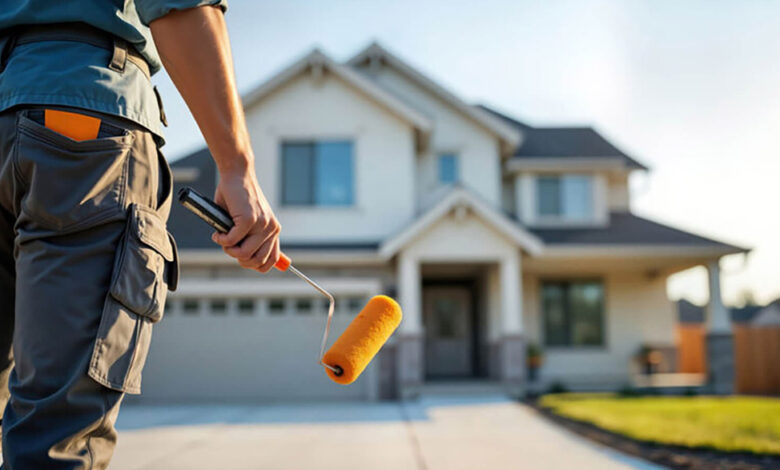
Different application methods can be used depending on the surface and project requirements. Brushes provide excellent control around edges, trim, corners, and detailed areas. Rollers can cover larger flat surfaces efficiently while maintaining a consistent texture.
Sprayers can be useful for large exterior surfaces and certain types of siding, but spraying requires careful preparation and control. Nearby surfaces must be properly protected to prevent overspray from reaching windows, vehicles, landscaping, fixtures, and other areas.
Many professional projects use a combination of techniques. Spraying may be followed by back-rolling or back-brushing when appropriate to help distribute the coating consistently.The right application method depends on the material, coating, surface texture, project size, and desired finish.
Protecting Windows, Doors, and Landscaping
Exterior painting requires careful protection of areas that are not being painted. Windows, doors, walkways, outdoor fixtures, lighting, plants, vehicles, and other surfaces should be protected from accidental paint splatter or overspray.
Professional preparation may include masking windows, covering landscaping, protecting paved areas, and moving outdoor furniture. Careful protection reduces cleanup requirements and helps create cleaner edges.
Landscaping should receive particular attention because some plants can be sensitive to certain cleaning products or coatings. Protective coverings should be used appropriately while still allowing sufficient ventilation and preventing damage to vegetation.A well-organized preparation process can make the painting work more efficient while reducing the risk of accidental damage.
Benefits of Hiring a Professional
Large exterior projects can be physically demanding and time-consuming. They may involve ladders, scaffolding, elevated surfaces, extensive preparation, and specialized equipment. Working at height also requires appropriate safety practices.
Hiring a professional Painter can help property owners manage these challenges while ensuring that preparation and application are performed systematically. Experienced professionals understand how different surfaces react to cleaning, sanding, priming, and coating.Professional painters can also identify potential problems before they become hidden beneath a new finish. Damaged wood, deteriorated caulking, moisture stains, and surface cracks may require attention before painting proceeds.
For larger properties, professional assistance can also provide more consistent color, coverage, and finishing throughout the project.
Common Exterior Painting Mistakes
One of the most common mistakes is painting over dirty or deteriorated surfaces. Without proper cleaning and preparation, the new coating may peel or fail prematurely.
Another mistake is ignoring moisture problems. If water is entering through damaged roofing, gutters, flashing, windows, or siding, painting the affected area will not resolve the source of the problem.Using interior paint on exterior surfaces is another serious error because interior coatings are not designed for continuous environmental exposure.
Applying paint under unsuitable weather conditions can also affect the final result. Excessive heat, cold, humidity, or moisture can interfere with drying and curing.
Finally, homeowners should avoid selecting a contractor based solely on the lowest price. A very low estimate may exclude important preparation, repairs, primer, or finishing work. Comparing the complete scope of each proposal is more useful than comparing prices alone.
Maintaining a Newly Painted Exterior
Proper maintenance can help extend the life of an exterior coating. Periodic cleaning can remove dirt and other contaminants before they become difficult to remove.
Property owners should also inspect painted surfaces for early signs of peeling, cracking, fading, mildew, or exposed material. Small areas can often be addressed before the problem spreads across a larger section.
Gutters and downspouts should be kept functional so that water does not repeatedly run against painted walls. Sprinklers should also be positioned so that they do not constantly wet exterior surfaces.Trees and vegetation should be managed carefully around the property. Branches that repeatedly contact painted surfaces can cause physical wear, while dense vegetation can restrict airflow and contribute to moisture accumulation.
How Often Should Exterior Surfaces Be Repainted?
There is no single schedule that applies to every property. The appropriate repainting interval depends on the quality of the previous coating, surface material, weather exposure, preparation, maintenance, and environmental conditions.
Some surfaces may remain attractive for many years, while others may require attention sooner because they receive strong sunlight or frequent moisture exposure.Rather than repainting according to a fixed calendar alone, property owners should inspect the exterior regularly. Fading, peeling, cracking, exposed material, and deteriorating caulking can indicate that maintenance is needed.
Early intervention can sometimes involve targeted repairs rather than a complete repainting project. However, widespread deterioration may indicate that a full coating system needs to be renewed.
Choosing a Reliable Painting Contractor
Choosing the right professional is an important part of a successful project. Property owners should consider experience, references, insurance, communication, preparation methods, materials, and the clarity of the written estimate.
A detailed proposal should explain which surfaces will be painted, what preparation is included, which products will be used, how many coats are planned where applicable, and whether repairs are included.
Homeowners should also ask how unexpected conditions will be handled. If damaged wood or moisture problems are discovered during preparation, it is useful to understand how additional work will be communicated and the well-maintained exterior contributes significantly to the appearance and protection of a property. Paint can help protect suitable surfaces from everyday environmental exposure while creating a cleaner and more attractive appearance. However, the success of a prize.
A professional contractor should be willing to explain the process clearly and answer questions about materials, preparation, application methods, drying times, and maintenance.
Final Thoughts on Exterior Painting
A well-maintained exterior contributes significantly to the appearance and protection of a property. Paint can help protect suitable surfaces from everyday environmental exposure while creating a cleaner and more attractive appearance. However, the success of a project depends on much more than the color selected.
Proper cleaning, surface preparation, repairs, primer, product selection, application methods, and weather conditions all influence the final result. Skipping important preparation is particularly valuable when a project involves extensive surfaces, significant preparation, difficult access, multiple materials, or specialized coatings. An experienced professional can evaluate the condition of the property and develop an approach that addresses both appearance choosing the cheapest quote or most attractive color. A detailed plan, suitable materials, careful preparation, the work is carefully planned and properly executed, a refreshed exterior can create a stronger first impression, protect exposed surfaces, and give the entire property a clean step can lead to peeling, cracking, uneven coverage, and premature deterioration.
Professional exterior painting can be particularly valuable when a project involves extensive surfaces, significant preparation, difficult access, multiple materials, or specialized coatings. An experienced professional can evaluate the condition of the property and develop an approach that addresses both appearance and long-term performance.
Property owners should focus on the complete painting process rather than simply choosing the cheapest quote or most attractive color. A detailed plan, suitable materials, careful preparation, skilled application, and regular maintenance can help produce a finish that remains attractive and protective for years.
Ultimately, exterior painting is an investment in both the appearance and ongoing maintenance of a property. When the work is carefully planned and properly executed, a refreshed exterior can create a stronger first impression, protect exposed surfaces, and give the entire property a clean and well-maintained appearance.