Ductless Mini-Split Not Cooling or Heating? Common Problems That May Require Professional Repair

Ductless heating and cooling systems have become a practical choice for homes and buildings that need efficient temperature control without the installation of traditional ductwork. These systems, commonly known as mini-split systems, can provide heating and cooling to individual rooms or several zones while allowing homeowners to manage temperatures independently. Like any mechanical system, however, a ductless unit can eventually develop problems that affect comfort, efficiency, airflow, or reliability. Understanding the causes of these problems and knowing when professional assistance is necessary can help prevent minor issues from becoming expensive repairs.
Regular maintenance plays an important role in keeping a ductless system operating properly, but maintenance cannot prevent every mechanical or electrical failure. Components such as compressors, fans, sensors, circuit boards, refrigerant lines, and drainage systems can wear out over time. When a problem occurs, timely ductless system repair can restore normal operation and help protect the system from additional damage. Recognizing the warning signs early is particularly valuable because unusual noises, reduced airflow, inconsistent temperatures, or water leaks may indicate an underlying issue that should not be ignored.
Understanding How a Ductless System Works
A ductless system typically consists of an outdoor condenser unit connected to one or more indoor air-handling units. Instead of distributing conditioned air through a network of ducts, the indoor units deliver heated or cooled air directly into individual rooms or zones. Refrigerant lines, electrical wiring, and a condensate drain connect the indoor and outdoor components, allowing the system to transfer heat efficiently between the building and the outside environment.
During cooling operation, the indoor unit absorbs heat from the room and transfers it through the refrigerant to the outdoor unit, where the heat is released. During heating operation, many ductless systems can reverse this process and bring heat indoors. Because the system depends on several interconnected components, a failure in one area can affect the performance of the entire unit. For example, a blocked filter may restrict airflow, while a refrigerant problem can prevent the system from reaching the desired temperature.
The absence of ductwork is one of the primary advantages of these systems, but it does not mean they are maintenance-free. Indoor coils, filters, fans, outdoor coils, electrical connections, and drainage components still require attention. A well-maintained unit generally operates more efficiently and provides more consistent comfort than a system that is neglected.
Common Signs That a Ductless System Needs Attention
One of the first signs of a developing problem is a noticeable change in performance. If the system previously cooled or heated a room quickly but now takes much longer, there may be an issue with airflow, refrigerant circulation, the compressor, or another major component. Temperature inconsistencies between rooms can also indicate a problem with an indoor unit, thermostat settings, sensors, or zone controls.
Unusual sounds should also receive attention. Ductless systems normally produce some operating noise, particularly when the fan or compressor is running, but sudden clicking, rattling, grinding, buzzing, or squealing can indicate a mechanical or electrical issue. Ignoring these sounds may allow a relatively manageable problem to develop into a more significant failure.
Water around the indoor unit is another warning sign. Ductless systems remove moisture from indoor air during cooling, and that moisture should normally drain through a condensate line. If the drain becomes clogged or the drainage system is damaged, water may accumulate and eventually leak from the indoor unit. Persistent moisture can damage walls, flooring, insulation, and other nearby materials.
Unpleasant odors can also suggest a maintenance or repair issue. Dust, moisture, mold growth, or debris inside the indoor unit can create stale or musty smells. In some cases, an electrical problem can produce a burning odor, which should be treated as an urgent warning sign. Turning off the system and arranging a professional inspection is safer than continuing to operate equipment that may have an electrical fault.
Why Airflow Problems Should Not Be Ignored
Proper airflow is essential for a ductless system because the indoor fan must circulate air across the evaporator coil to provide effective heating or cooling. When airflow becomes restricted, the system may struggle to maintain the desired temperature and may consume more energy while operating for longer periods.
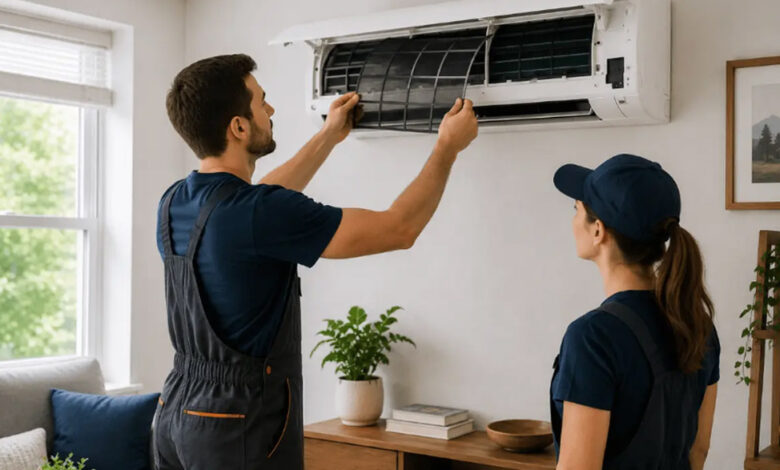
Dirty filters are among the simplest causes of reduced airflow. Filters collect dust and airborne particles, and when they become heavily coated, less air can pass through the system. Cleaning or is neglected. The fan wheel may also become dirty, reducing its ability to move air effectively. In some cases, a malfunctioning fan motor or control board may replace filters according to the manufacturer’s recommendations and can often improve performance. However, filters are not the only possible source of airflow problems.
The indoor coil can accumulate dust, especially when maintenance is neglected. The fan wheel may also become dirty, reducing its ability to move air effectively. In some cases, a malfunctioning fan motor or control board may be responsible. These issues require more than basic filter cleaning and should be assessed by a qualified technician.
Outdoor airflow is equally important. The outdoor coil needs adequate space for heat exchange, and leaves, dirt, vegetation, or other debris can interfere with its operation. Keeping the area around the outdoor unit reasonably clear can support efficient performance, although internal cleaning and component inspection should generally be handled by a trained professional.
Refrigerant Problems and Their Effects
Refrigerant plays a central role in the heat-transfer process. A ductless system is designed to operate with a specific refrigerant charge, and an insufficient charge can cause poor cooling or heating performance. If a system repeatedly develops low refrigerant levels, simply adding refrigerant may not solve the underlying problem. Refrigerants do not normally disappear during ordinary operation, so a low charge can indicate a leak or another issue that requires investigation.
Possible signs of refrigerant-related trouble include reduced cooling capacity, unusually long operating cycles, ice forming on the indoor coil or refrigerant line, and higher energy consumption. However, these symptoms can also be caused by other problems, so they should not automatically be interpreted as proof of a refrigerant leak.
Handling refrigerants requires specialized equipment and appropriate technical knowledge. A professional can inspect the system, identify potential leaks, test operating pressures, and determine whether repairs are necessary. Attempting to address refrigerant problems without the proper equipment can damage the system and create safety or environmental concerns.
Electrical and Control System Issues
Modern ductless systems rely on electronic controls to manage temperature, fan speeds, compressor operation, sensors, and communication between indoor and outdoor units. Because of this, electrical problems can affect multiple functions at once. A system that repeatedly shuts down, fails to start, displays error codes, or behaves unpredictably may have an electrical or control-related issue.
Possible causes include damaged wiring, loose electrical connections, failed capacitors, malfunctioning sensors, circuit-board problems, or power-supply issues. Some systems may also shut themselves down when they detect conditions that could cause damage. Error codes displayed on the indoor unit can provide useful information, but they do not always identify the exact component that has failed.
Electrical repairs should be approached carefully because air-conditioning equipment contains high-voltage components. Even when the system appears to be switched off, certain components can retain electrical energy. A qualified technician can test the relevant circuits safely and determine whether a component should be repaired or indoor air passes over a cold coil, moisture is removed from the air and collected in a drain pan. The condensate should then travel through a drain line and leave the replaced.
Drainage Problems and Water Leaks
Condensation is a normal part of cooling operation. As warm indoor air passes over a cold coil, moisture is removed from the air and collected in a drain pan. The condensate should then travel through a drain line and leave the system safely. If the drain line becomes blocked, water may back up and leak from the indoor unit.
Dust, algae, debris, and biological buildup can contribute to drainage restrictions. A damaged or improperly positioned drain hose can create similar problems. In colder conditions, certain drainage arrangements may also require special attention when the system operates in heating mode.
Water leakage should not be dismissed as a minor inconvenience. Continued moisture exposure can cause staining, deterioration of building materials, unpleasant odors, and microbial growth. If water is appearing around the indoor unit, turning off the system and arranging an inspection can help prevent further damage.
The Importance of Professional Diagnosis
One of the biggest advantages of professional service is accurate diagnosis. Several different faults can produce similar symptoms, making it difficult to identify the actual cause based only on what the system sounds or feels like. For example, poor cooling could result from a dirty filter, restricted airflow, refrigerant problems, a faulty sensor, compressor trouble, or an issue with the outdoor coil.
A technician can evaluate the system systematically rather than replacing parts based on assumptions. The diagnostic process may include inspecting filters and coils, checking electrical connections, testing sensors, evaluating airflow, examining refrigerant-related conditions, and reviewing system error codes. This approach can reduce unnecessary part replacement and help identify the underlying cause of the failure.
Professional ductless system repair can also help preserve components that might otherwise be damaged by continued operation. If a fan motor is struggling or a refrigerant leak is present, allowing the system to run continuously may place additional stress on other components. Addressing the initial problem promptly can therefore cause a major repair. Some issues are maintenance-related and can be resolved through cleaning or basic care. Cleaning reusable filters, keeping the outdoors an important part of protecting the overall system.
When Cleaning May Be Enough and When Repair Is Necessary
Not every performance problem requires a major repair. Some issues are maintenance-related and can be resolved through cleaning or basic care. Cleaning reusable filters, keeping the outdoor unit free of obvious debris, and maintaining appropriate thermostat settings can support normal operation.
More serious symptoms, however, require professional attention. Persistent water leaks, electrical odors, repeated system shutdowns, refrigerant-related symptoms, unusual mechanical sounds, and complete loss of heating or cooling should not be treated as routine maintenance concerns. Attempting to repair complex components without the correct tools Filter care and keeping the surrounding area clear are generally straightforward responsibilities. Electrical testing, refrigerant work, component replacement, or training can make the problem worse.
A useful approach is to distinguish between simple homeowner maintenance and technical service. Filter care and keeping the surrounding area clear are generally straightforward responsibilities. Electrical testing, refrigerant work, component replacement, sealed-system diagnosis, and internal mechanical repairs are better handled by qualified professionals.
Preventive Maintenance for Better Performance
Preventive maintenance can reduce the likelihood of unexpected failures and help maintain efficient operation. Filters should be cleaned or replaced as recommended by the manufacturer, particularly in homes with significant dust, pets, or frequent system use. Indoor units should also be kept reasonably clean, while the outdoor unit should have sufficient clearance for proper airflow.
Professional maintenance can go beyond basic cleaning. A technician may inspect electrical connections, examine coils, evaluate drainage, check system operation, and identify developing problems before they cause a complete breakdown. Regular inspections can be especially useful for systems that operate for long periods throughout the year.
Maintenance can also help identify changes in performance that homeowners may overlook. A gradual increase in operating time, rising energy consumption, or reduced airflow may develop slowly. Because the change is gradual, it may not seem significant until fault, homeowners often wonder whether repairing the existing equipment or replacing it would make more sense. The answer depends on several factors, including the age with a limited component failure may be a reasonable candidate for repair. On the other hand, an older system experiencing repeated breakdowns may require a broader evaluation. Re the system becomes noticeably less effective. Routine inspection can reveal these trends earlier.
Repair or Replacement: Understanding the Difference
When a ductless system develops a fault, homeowners often wonder whether repairing the existing equipment or replacing it would make more sense. The answer depends on several factors, including the age and condition of the system, the nature of the failure, availability of replacement parts, expected repair cost, and overall operating performance.
A relatively new system with a limited component failure may be a reasonable candidate for repair. On the other hand, an older system experiencing repeated breakdowns may require a broader evaluation. Replacing one failed component may restore operation temporarily while other aging components remain at risk of failure.
A professional assessment can help clarify the situation. Rather than focusing only on the immediate repair cost, it is useful to consider the system’s history, current efficiency, reliability, and expected service life. This information allows the homeowner to make a more informed decision based on the equipment’s actual condition.
Choosing a Qualified Repair Professional
Selecting the right service provider is an important part of maintaining a ductless system. A qualified technician should have experience working with ductless and mini-split equipment and understand the electrical, mechanical, refrigerant, and drainage components involved. Experience with the specific manufacturer or system type can also be beneficial.
Before approving extensive work, homeowners can ask for an explanation of the diagnosed problem and the proposed solution. A reputable professional should be able to describe what failed, why the failure occurred if the cause can be determined, and what work is required to restore normal operation. For larger repairs, asking about parts, labor, warranties, and expected system performance can also provide useful clarity.
Good service should focus on solving the actual problem rather than replacing components unnecessarily. Clear communication is particularly important when a repair involves a major component or when the technician discovers additional issues during the inspection.
How to Reduce the Risk of Future Problems
Although no heating and cooling system can be guaranteed to operate without failures, several habits can reduce unnecessary stress on water leak, repeated error code, or noticeable performance change can provide valuable information about the system’s condition. Addressing these symptoms early may prevent secondary damage and reduce ductless equipment. Keeping filters clean, avoiding blocked indoor and outdoor airflow, using appropriate temperature settings, and scheduling maintenance can all support reliable operation.
It is also helpful to respond to early warning signs instead of waiting for a complete breakdown. A new noise, unusual odor, water leak, repeated error code, or noticeable performance change can provide valuable information about the system’s condition. Addressing these symptoms early may prevent secondary damage and reduce the likelihood of a more disruptive failure.
Homeowners should also avoid repeatedly resetting a system that continues to shut down. A protective shutdown may be the equipment’s way of signaling that something is wrong. Repeatedly restarting the unit without determining the cause can place additional stress on components.
Final thought
Ductless systems offer flexible temperature control and can provide efficient heating and cooling when properly installed and maintained. Their compact design eliminates the need for extensive ductwork, but the equipment still depends on several mechanical, electrical, and refrigerant components working together correctly. Problems involving airflow, drainage, refrigerant, sensors, electrical connections, fans, or compressors can reduce performance and eventually lead to system failure if ignored.
Timely ductless system repair is therefore an important part of protecting comfort and equipment reliability. At the same time, professional diagnosis should be combined with regular maintenance rather than used only after a complete breakdown. Simple steps such as maintaining filters and keeping the outdoors provides the best foundation for long-term operation. Pay attention to changes in sound, airflow, temperature control, moisture, odors, and energy use. When something appears abnormal, investigating the cause early can help prevent a small issue from developing into a larger and more expensive problem. With appropriate maintenance, careful operation airflow can support everyday performance, while qualified technicians can address technical issues that require specialized tools and knowledge.
A proactive approach generally provides the best foundation for long-term operation. Pay attention to changes in sound, airflow, temperature control, moisture, odors, and energy use. When something appears abnormal, investigating the cause early can help prevent a small issue from developing into a larger and more expensive problem. With appropriate maintenance, careful operation, and professional ductless system repair when needed, a ductless system can continue delivering dependable comfort for years.