
Most people in the foothills don’t think about the furnace from April to October. Then one evening the sun drops behind the ridge, the house cools off fast, and someone nudges the thermostat up for the first time in months. Usually the furnace kicks on like nothing happened. Sometimes it doesn’t.
Up here, that first cold night tends to arrive sooner than it does down in the basin. The neighborhoods tucked against the San Gabriels lose their warmth quickly once the sun goes, so a furnace that won’t cooperate turns into a real problem by bedtime.
The good news? A surprising number of “broken” furnaces aren’t really broken. Some of the most common no-heat calls come down to a filter, a setting, or a switch somebody bumped. Others do need a technician, and it helps to know the difference before you pick up the phone. Below are seven fixes worth knowing, starting with the ones you can safely check yourself and ending with the ones best left to a pro.
One rule first. If you smell gas (that rotten-egg odor), skip everything in this article. Don’t flip switches, don’t light anything, get everyone outside and call SoCalGas or 911 from a safe distance.
1. Swap the Filter (Seriously, Check This First)
It sounds too simple to matter, but a clogged filter is behind a lot of winter service calls. When the filter gets packed with dust, the furnace can’t pull in enough air. Inside the cabinet, temperatures climb, and a safety device called the high-limit switch shuts the burners off to protect the equipment. The blower might keep running, so you feel air at the vents, but it’s lukewarm at best.
Pull the filter out and hold it up to a light. If you can’t see much light through it, replace it. Most standard one-inch filters need changing every one to three months during heavy use, and more often if you have pets or the house picked up dust from a Santa Ana wind event or nearby construction. Write the size down somewhere (it’s printed on the frame) so the next trip to the hardware store is quick.
2. Double-Check the Thermostat Before Anything Else
Before you assume the worst, look at the thermostat closely. Is it set to “Heat” and not “Cool” or “Off”? Is the target temperature actually higher than the room? It’s easy to leave a thermostat on cooling mode all summer and forget to switch it back.
If the display is blank or flickering, try fresh batteries. Many digital thermostats run on AA or AAA batteries even when they’re wired to the system, and a dead battery can stop them from calling for heat. Smart thermostats have their own quirks too. Schedules, “eco” modes, or a lost Wi-Fi connection can keep them from doing what you expect. Five minutes in the app can save you a service fee.
3. Reset the Power Switch and Breaker
Furnaces need electricity even when they burn gas. The igniter, the control board and the blower all run on power. And somewhere near your furnace, usually on the wall or the side of the unit, there’s a switch that looks just like a regular light switch. People flip it off by accident all the time, especially when the furnace lives in a garage, closet or attic that also gets used for storage.
Check that switch, then check the breaker panel for a tripped breaker labeled “furnace” or “FAU.” If the breaker trips again right after you reset it, stop there. A breaker that keeps tripping points to an electrical problem inside the furnace, and that’s a job for a technician.
4. Clear the Vents, Returns and Area Around the Furnace
Walk through the house and make sure supply vents aren’t closed or buried under furniture, rugs or curtains. Do the same for the return grilles, the larger vents that pull air back to the furnace. Closing too many vents doesn’t save money the way people think. It raises pressure in the ducts, makes the system work harder, and can trip that same high-limit switch from fix number one.
The furnace also needs breathing room. Gas furnaces draw air for combustion, and boxes, paint cans, laundry or holiday decorations piled around one can block airflow. Some of those things are also flammable, which is a separate reason to clear the area. Give it a few feet of space on every side if you can.
5. Clean or Replace a Dirty Flame Sensor
Now we’re getting into technician territory, though it’s still one of the most common repairs out there.
The flame sensor is a thin metal rod that sits in the path of the burner flame. Its only job is to confirm a flame is actually burning so the gas valve stays open. Over time a light coating of residue builds up on it, the sensor can’t “see” the flame anymore, and the furnace shuts the gas off a few seconds after lighting. You’ll hear it click on, see the burners light, and then everything goes quiet. Then it tries again. And again.
Some handy homeowners clean sensors themselves, but it means opening the burner compartment and working near gas components. A technician can clean or replace it quickly, and it’s a modest repair compared with most furnace problems. Many maintenance visits include it, which is one reason a yearly tune-up pays off.
6. Replace a Failed Igniter
Most furnaces built in the last couple of decades don’t have a standing pilot light. They use a hot surface igniter instead, a small ceramic piece that glows bright orange to light the gas. Igniters are fragile and wear out, and when one cracks or burns out, the furnace goes through its startup routine but never lights.
Signs of a bad igniter include a furnace that runs the inducer fan (a small motor you’ll hear hum before ignition), then shuts down without any flame, sometimes cycling through several attempts before locking itself out. Older furnaces with a standing pilot have their own version of this problem, usually a pilot that won’t stay lit because of a worn thermocouple.
Either way, this is a parts-and-labor repair. Don’t try to light a modern furnace manually, since it isn’t designed for it.
7. Call a Pro for Blower, Control Board and Heat Exchanger Problems
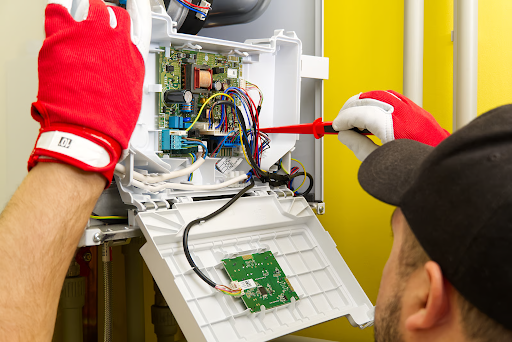
Some issues are simply bigger. A blower motor that hums but won’t spin, a control board flashing error codes you can’t clear, or a furnace that short cycles even with a clean filter all call for a proper diagnosis.
Then there’s the one problem that should never wait: a cracked heat exchanger. The heat exchanger separates the combustion gases from the air that moves through your home. When it cracks, carbon monoxide can leak into the airstream. Watch for yellow or flickering burner flames instead of steady blue ones, soot around the furnace, a sharp smell whenever the heat runs, or family members getting headaches that ease when they step outside. If a CO alarm goes off, leave the house and call 911 first.
A cracked heat exchanger on an older furnace usually means replacement rather than repair. And if your home doesn’t have carbon monoxide alarms near the bedrooms, add them before the cold sets in. California law requires them in homes with gas appliances or attached garages anyway.
A Quick Word on That First-Start Smell
Here’s one thing that isn’t a problem, most of the time. When a furnace runs for the first time in months, it often gives off a dusty, slightly burnt smell. That’s dust that settled on the heat exchanger over summer burning off, and it should fade within an hour or so. If the smell is sharp, chemical, or sticks around for days, shut the system off and have it checked.
Why a Fall Tune-Up Beats a December Emergency
Almost everything above is easier to catch in October than in the middle of a cold snap. A maintenance visit typically covers cleaning and adjusting the burners, cleaning the flame sensor, checking the igniter and capacitor, inspecting the heat exchanger, testing gas pressure, and replacing the filter. It won’t make an old furnace new, but it does find the cheap problems before they turn into expensive ones, and it gives a technician a chance to spot safety issues while the weather is still mild.
There’s also a scheduling benefit. When the first real cold front rolls through, every HVAC company in the area gets slammed at once. Booking furnace maintenance a few weeks ahead means you’re not on a waiting list while the house hits 58 degrees.
Getting Furnace Help in La Crescenta-Montrose
If you’ve worked through the easy checks and the heat still isn’t right, it’s time for a technician. Look for a licensed C-20 contractor, ask whether there’s a diagnostic fee, and make sure you’ll get a price before any work starts.
Orion HVAC is a local option for furnace repair right on Foothill Boulevard. The company has been in business for more than eight years, holds California contractor license #1079927, and handles heating repair, furnace installation and maintenance along with air conditioning work. Their process is straightforward: inspect the system, explain what they find, then go over the work and the cost before starting. If it turns out the furnace is near the end of its life, they can walk you through replacement options too, including heat pumps.
For homeowners who just want one call for anything HVAC La Crescenta-Montrose related, from a no-heat night to an AC tune-up next spring, it’s a practical number to keep on the fridge.
Orion HVAC 3055 Foothill Blvd, La Crescenta-Montrose, CA 91214 Phone: 323-736-3737 Hours: Monday to Saturday 8 AM to 7 PM, Sunday 9 AM to 2 PM Payment: cash, credit cards and Zelle
Frequently Asked Questions
Why is my furnace blowing cold air?
The usual suspects are a thermostat set to “fan on” instead of “auto,” a clogged filter tripping the high-limit switch, a dirty flame sensor, or a failed igniter. Check the thermostat and filter first. If those look fine, call a technician.
How often should a furnace be serviced?
Once a year is the usual recommendation, ideally in early fall before you need heat every night. Yearly service keeps the furnace running safely and catches small problems early.
Is it normal for a furnace to smell when I first turn it on?
A light, dusty burning smell for the first hour or so is normal after months of sitting idle. A strong chemical odor, a smell that won’t go away, or the rotten-egg smell of gas is not. For gas, leave the house and call SoCalGas or 911.
How long does a furnace usually last?
Many gas furnaces last around 15 to 20 years with regular maintenance. Once yours is past 15 and needing bigger repairs, it’s worth comparing repair costs against replacement.
Can I repair a furnace myself?
You can safely change the filter, check thermostat settings, replace thermostat batteries, reset the power switch and breaker, and clear vents. Anything involving gas valves, burners, igniters or electrical components should be handled by a licensed technician.
What should I do if my carbon monoxide alarm goes off?
Get everyone, pets included, outside into fresh air right away and call 911. Don’t go back in until emergency responders say it’s safe. Then have the furnace and any other gas appliances inspected before using them again.